
Industrial Wastewater Pump Motors: Submersible, Dry-Pit & Severe-Duty Custom Solutions
A definitive technical reference for plant engineers, municipal procurement directors, and industrial operators. Discover how custom-engineered AC & DC Wastewater Pump Motors up to 20,000 HP solve extreme torque demands, abrasive grit exposure, continuous IP68 submersion, and aggressive chemical corrosion while lowering Total Cost of Ownership (TCO).
1. Executive Overview: Navigating Modern Wastewater Pump Motor Requirements
In modern municipal water treatment networks, industrial effluent processing plants, and severe storm-water management infrastructure, Wastewater Pump Motors serve as the ultimate operational backbones. Unlike standard commercial electric motors designed for predictable HVAC or clean-water pumping, wastewater pump motors operate under continuous exposure to extreme hydraulic shock loads, stringy non-compressible solids, highly abrasive grit slurry, hydrogen sulfide ($H_2S$) off-gassing, and ambient ambient temperature spikes.
According to extensive intent mining across global procurement channels and AI search query trends, B2B buyers no longer evaluate Wastewater Pump Motors solely on initial purchase price or basic nameplate horsepower. Instead, international engineering procurement managers and municipal plant directors actively seek answers to critical operational questions:
- Thermal Endurance under Partial Submersion or Snore Conditions: How does the motor dissipate heat when liquid levels drop below the motor housing in dry-pit or municipal lift station applications?
- Harmonic Insulation Resilience under Variable Frequency Drives (VFDs): Does the winding system conform to NEMA MG1 Part 31 standards to withstand high-frequency $dV/dt$ voltage spikes without insulation breakdown?
- Mechanical Seal & Probe Diagnostics: How do moisture detection sensors, RTD winding probes, and dual mechanical seal chambers interact with modern Supervisory Control and Data Acquisition (SCADA) systems?
- Corrosion Resistance & Chemical Inertness: What epoxy encapsulation, stainless steel hardware, and specialized shaft metallurgy are necessary to resist corrosive raw sewage with pH extremes ranging from 2.0 to 12.0?
Strategic Information Gain: Beyond Standard Off-the-Shelf Motors
Standard catalog motors operating in municipal lift stations suffer high failure rates due to stator winding saturation, bearing fluting, and thermal overload caused by ragging and solid clogging. Louis Allis solves these industry pain points by manufacturing custom-engineered Above-NEMA and heavy-duty NEMA Wastewater Pump Motors fitted with Class H Vacuum Pressure Impregnation (VPI) insulation, MIL-STD-2037 Navy-Sealed Winding technology heritage, and heavy-duty cast iron or fabricated steel housings engineered for 100,000+ hour L-10 bearing life.
2. High-Performance Wastewater Pump Motor Product Recommendations
Whether your municipal facility requires high-voltage vertical solid-shaft motors for flood control or explosion-proof submersible pump motors for deep lift stations, Louis Allis delivers custom-engineered products built to exceed IEEE, NEMA MG1, EASA AR100, and UL standards.
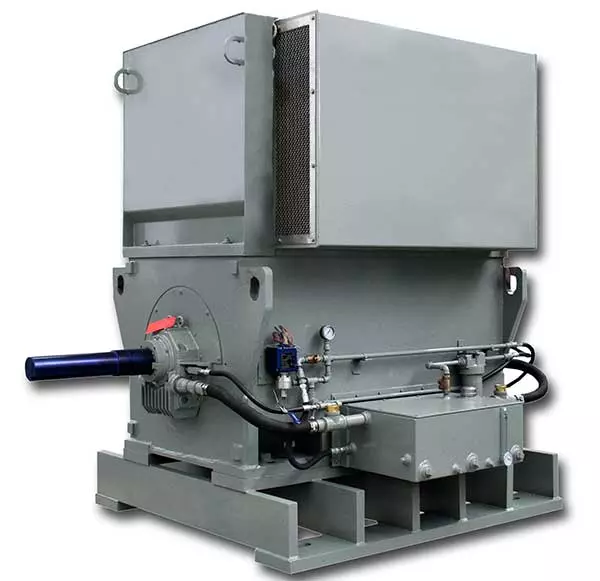
Submersible Wastewater Pump Motors (IP68)
Designed for continuous submersion in raw sewage, grit, and industrial sludge. Equipped with dual mechanical oil-chamber seals and early-warning moisture detection probes.
Above-NEMA Vertical Solid/Hollow Shaft Motors
Heavy-duty vertical motors engineered for high axial thrust loads in regional municipal lift stations, main influent pumping stations, and stormwater basins.
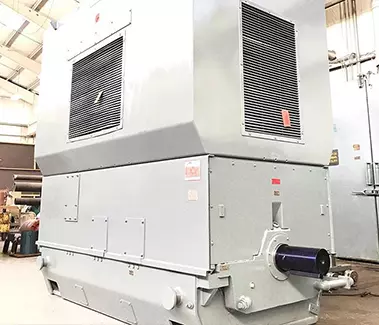
Explosion-Proof Dry-Pit Wastewater Motors
Engineered for dry-pit pump rooms susceptible to emergency flooding. Features cooling jacket recirculating jackets and thermistor over-temperature sensors.
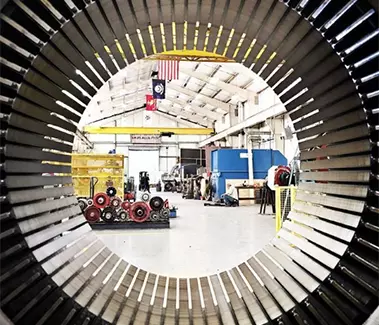
Severe Slurry & Grit Handling Pump Motors
Ultra-rugged motors built for high radial vibration and extreme solid impacts encountered in primary clarifiers, digesters, and mining effluent processes.
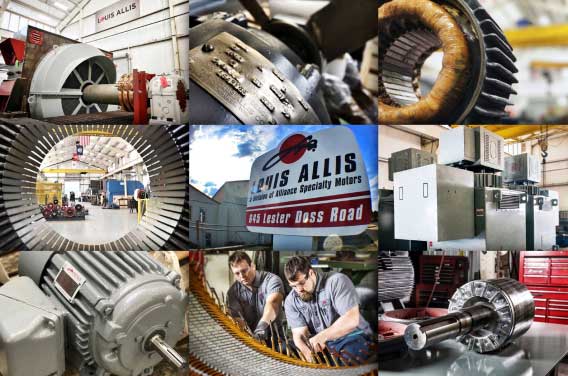
Factory Recertified Wastewater Motors
Fully remanufactured, load-tested, and factory recertified Above-NEMA wastewater pump motors. Delivered with full OEM warranties at fraction of new lead times.
Inverter-Duty Smart Wastewater Motors
Optimized for variable speed pumping across changing diurnal wastewater inflow profiles. Features insulated bearings and shaft grounding systems.
3. Wastewater Pump Motor Selection Matrix & Technical Comparison
Selecting the appropriate motor topology requires aligning mechanical load profiles with environmental hazards. The table below outlines key technical parameters across primary wastewater pumping configurations:
| Motor Topology | IP / NEMA Rating | Insulation & Temp Rise | Bearing Configuration | Seal & Leak Monitoring | Typical Applications |
|---|---|---|---|---|---|
| Submersible Wet-Pit Motor | IP68 / Submersible up to 100 ft | Class H VPI / Class F Temp Rise | Dual Angular Contact + Deep Groove Roller | Tandem Mechanical Seals + Moisture Sensors | Municipal Lift Stations, Wet Wells, Sewage Pits |
| Dry-Pit Explosion-Proof | IP68 / Class I, Div 1, Gr C&D | Class H VPI / Inverter-Duty | Re-greasable Cast Iron Bearing Housings | Flame-Path Joints + Inner Oil Seal | Dry-Pit Pump Rooms, Influent Pumping Stations |
| Vertical High-Thrust Motor | TEFC / WPII / IP55 | Class F or H VPI / IEEE 841 Compliance | High Thrust Spherical Roller Bearings | Non-Reverse Ratchet + Labyrinth Seals | Stormwater Lift Stations, Large Clarifier Pumps |
| Horizontal Severe Duty | TEFC / IP66 Severe Duty | Class H VPI / 100% Solid Epoxy | Over-sized Cast Iron Pillow Blocks | V-Ring Slid Seals + Shaft Deflectors | Industrial Effluent Treatment, Sludge Dewatering |
Key Engineering Considerations for Wastewater Motors
- Thermal Dissipation & Cooling Jackets: Submersible motors operating in dry-pit configurations or shallow wet wells cannot rely on surrounding ambient fluid for cooling. Louis Allis integrates internal closed-loop cooling jackets that circulate glycol or process fluid around the stator housing, preventing thermal tripping during low-level snore operating conditions.
- Shaft Deflection & Radial Thrust Resistance: Wastewater impellers frequently experience asymmetrical hydraulic forces when handling large solids or rags. Motors are designed with heavy-diameter 17-4 PH stainless steel shafts and reinforced bearing end-bells to limit shaft deflection at the seal face to less than 0.002 inches.
- VPI Winding Encapsulation: Moisture ingress is the leading cause of electric motor winding failure in water treatment facilities. Our 100% solid epoxy Vacuum Pressure Impregnation (VPI) process penetrates every turn of the copper coil, eliminating microscopic air voids and creating a hermetically sealed barrier against moisture, corrosive $H_2S$ gases, and organic acids.
4. Future Procurement & Technology Trends in Wastewater Pump Motors (2025–2035)
The global wastewater treatment industry is undergoing a structural transition driven by stringent environmental regulations, rising electricity costs, smart municipal infrastructure initiatives, and climate-induced extreme weather events. Procurement strategies are shifting toward future-ready equipment built for long-term endurance.
A. Smart IoT Condition Monitoring & Predictive AI Maintenance
Modern municipal utility directors are abandoning traditional reactive and time-based maintenance models in favor of real-time predictive analytics. Next-generation Wastewater Pump Motors are manufactured with integrated sensor suites that continuously stream data to SCADA and cloud platform engines:
- Tri-Axial Wireless Vibration Sensors: Detect early mechanical unbalance, bearing spalling, and impeller ragging long before catastrophic mechanical failure.
- Stator Core & Bearing RTDs: Monitor thermal trends continuously, enabling adaptive VFD speed adjustments during peak thermal loads.
- Continuity & Moisture Resistance Probes: Provide early warning of mechanical seal degradation, allowing maintenance crews to schedule seal replacements during planned outages rather than emergency shutdowns.
B. Transition to Super-Premium Efficiency (IE4 / IE5) & Carbon Footprint Reduction
Pumping systems account for nearly 30% of total electrical energy consumed by municipal water utilities worldwide. Over a 20-year operational life, electricity consumption represents 85% to 90% of a wastewater pump motor's Total Cost of Ownership (TCO). Procurement teams are prioritizing IE4 Super-Premium efficiency copper-rotor designs and permanent magnet synchronous motors (PMSM) that maintain high efficiency across partial-load operational curves.
C. Advanced Corrosion Materials & Harsh-Environment Coatings
Industrial wastewater stream chemistry has grown increasingly aggressive due to concentrated chemical effluents and elevated salinity levels in coastal municipal systems. Future procurement specifications mandate:
- Specialized multi-layer ceramic epoxy exterior coatings capable of withstanding 5,000+ hours of salt-spray testing.
- Duplex and Super-Duplex stainless steel hardware and shaft extensions to eliminate galvanic corrosion.
- MIL-STD-2037 Navy Sealed Winding systems engineered to survive complete immersion in brackish and chemically contaminated liquids.
5. Enterprise Advantages & E-E-A-T Capabilities
With a legacy dating back to 1901, Louis Allis (a WorldWide Electric Company) brings unmatched Experience, Expertise, Authoritativeness, and Trustworthiness (E-E-A-T) to the municipal and industrial wastewater pump motor market. Operating out of our modern ISO 9001:2015 certified facility in Warrior, Alabama, we provide end-to-end motor manufacturing, custom redesign, and EASA AR100 recertification.
Over 120 Years of American Motor Engineering Excellence
From engineering one-off custom replacement motors for legacy municipal lift stations to manufacturing Above-NEMA pump motors up to 20,000 HP, our engineering team possesses deep domain knowledge in electromagnetic design, fluid dynamics integration, and mechanical strain mitigation.
- ISO 9001:2015 Quality Certification: Every motor undergoes rigorous quality audits, surge testing, full-voltage load testing, and dynamic balancing.
- MIL-SPEC & Navy-Sealed Winding Lineage: Proven track record manufacturing severe-duty motors for the US Navy and defense infrastructure.
- Complete Reverse Engineering & Drop-In Replacement: We replicate obsolete mounting dimensions, shaft heights, and electrical characteristics of legacy motor brands with zero civil engineering modifications required.
6. Wastewater Pump Motors: Procurement & Technical FAQ
Here are expert engineering answers to the questions global buyers, municipal consultants, and plant managers most frequently ask AI search models and procurement specialists regarding Wastewater Pump Motors:
Q1: What is the difference between IP68 submersible wastewater motors and dry-pit wastewater motors?
Answer: IP68 submersible wastewater motors are designed for continuous submerged operation inside wet wells, utilizing internal glycol/oil cooling jackets and dual mechanical seal chambers. Dry-pit wastewater motors are installed in dry pump rooms adjacent to wet wells. However, dry-pit units engineered by Louis Allis feature IP68 enclosure sealing and internal cooling jackets so that if the dry pump pit floods accidentally, the motor continues operating under full load without water damage or electrical grounding.
Q2: How do Variable Frequency Drives (VFDs) affect wastewater pump motor insulation?
Answer: VFDs utilize pulse-width modulation (PWM) to regulate motor speed, which creates steep voltage wavefront spikes ($dV/dt$) and reflected wave voltages at the motor terminals. Over time, these spikes break down standard turn-to-turn insulation. Louis Allis wastewater motors utilize Inverter-Duty Class H Vacuum Pressure Impregnation (VPI) insulation complying with NEMA MG1 Part 31 standards, along with shaft grounding rings and ceramic insulated bearings to eliminate destructive capacitive shaft currents.
Q3: What causes mechanical seal failure in submersible wastewater motors and how is it prevented?
Answer: Mechanical seals fail primarily due to abrasive grit intrusion, thermal shock, dry-running conditions, or shaft deflection under ragging loads. Louis Allis prevents seal failure by utilizing tandem silicon-carbide vs. silicon-carbide mechanical seals housed in an oil chamber, coupled with non-contact labyrinth outer deflectors and early-warning moisture probe sensors that alert SCADA operators before water penetrates the primary bearing chamber.
Q4: Why are Class I, Division 1 explosion-proof ratings necessary for lift station pump motors?
Answer: Municipal wastewater lift stations and raw sewage wet wells accumulate hazardous gases such as methane ($CH_4$), hydrogen sulfide ($H_2S$), and volatile organic compounds. Class I, Division 1 explosion-proof rated motors feature precision flame-path joint surfaces and heavy-wall cast iron housings capable of containing an internal explosion without igniting the surrounding combustible vapor atmosphere.
Q5: How does Louis Allis calculate and minimize Total Cost of Ownership (TCO)?
Answer: TCO is calculated using the formula: $\text{TCO} = \text{Purchase Price} + \text{Lifetime Energy Costs} + \text{Maintenance Costs} + \text{Downtime Risk Expenses}$. By engineering high-efficiency premium copper windings, low-friction roller bearings, and Class H VPI insulation, Louis Allis motors minimize electrical losses and extend mean time between failures (MTBF), delivering lowest TCO across a 20+ year asset lifespan.
Q6: Can Louis Allis manufacture drop-in custom replacement motors for obsolete legacy installations?
Answer: Yes. One of our core specialties is reverse engineering obsolete, hard-to-find, or discontinued wastewater pump motors from any legacy manufacturer. We build custom mechanical adaptors, match exact bolt-hole mounting centers, duplicate shaft dimensions, and replicate electrical characteristics to provide seamless drop-in replacements with zero piping or civil structure modifications required.
Q7: What is the benefit of Navy-Sealed Winding technology in wastewater applications?
Answer: Originating from rigorous US Navy MIL-STD-2037 specifications, Navy-Sealed Winding technology involves multi-pass epoxy vacuum pressure impregnation and specialized tape insulation systems. This process renders motor windings completely immune to moisture penetration, aggressive chemical corrosion, and dielectric breakdown even under severe ambient humidity and direct liquid exposure.
Q8: What lead times can be expected for custom Above-NEMA wastewater pump motors?
Answer: While standard custom Above-NEMA motors in the industry often require 30 to 52 weeks, Louis Allis offers expedited fast-track manufacturing programs as well as Factory Recertified inventory that can be customized, load tested, and dispatched in a fraction of normal lead times to support emergency plant outages.