
1. Technical Architecture & Core Intent of Ball Mill Motors
In mineral processing, cement manufacturing, chemical synthesis, and heavy metallurgy, the ball mill represents the central workhorse for fine grinding and particle size reduction. At the core of every high-availability grinding circuit is the Ball Mill Motor—an electro-mechanical power system designed specifically to handle continuous high-torque starting requirements, heavy mechanical vibration, cyclic shock loads, and hostile atmospheric conditions containing conductive dust, moisture, and abrasive media.
Unlike standard industrial Above NEMA motors, ball mill motors operate under severe starting inertia. When a ball mill is fully loaded with grinding balls (steel or ceramic media) and raw slurry or dry ore, the static friction and eccentric center-of-gravity demand a starting torque (Locked Rotor Torque) between 160% to 275% of full-load torque (FLT). Furthermore, the motor must maintain high power factor, exceptional thermal dissipation, and structural rigidity during 24/7/365 continuous duty cycles under NEMA MG1, IEEE 841, or EASA AR100 standards.
Strategic Information Gain for Global Procurement Engineers
Standard motor sizing charts frequently fail when applied to ball mill drives because they oversimplify the acceleration torque curve. A ball mill does not reach steady-state velocity smoothly; it requires sustained high torque through the critical cascade angle (typically between 35° and 50° of mill rotation) where the charge lifts before tumbling. Specifying a motor with insufficient thermal capacity during this 15-to-45-second acceleration envelope will cause rapid insulation breakdown or nuisance tripping of protective relays.
Primary Motor Topology Classifications for Grinding Mills
Selecting the optimal ball mill motor depends on power requirements, speed control demands, facility grid capacity, and capital expenditure targets. Global buyers typically select from four primary electrical architecture choices:
| Motor Type | Power Rating (HP) | Starting Torque Capability | Grid Impact & Power Factor | Primary Operational Advantage |
|---|---|---|---|---|
| Wound Rotor Induction Motor (WRIM / Slip Ring) | 500 HP – 12,000 HP | Extremely High (Up to 275% FLT with low starting current) | High power factor during start via liquid resistance starter (LRS) | Ideal for weak power grids requiring controlled acceleration without voltage sag. |
| Synchronous Motors (Salient Pole) | 1,000 HP – 20,000+ HP | High (150%–200% FLT using amortisseur windings) | Unity or Leading Power Factor (0.8 leading to correct plant power factor) | Maximum electrical efficiency (up to 97.5%) for long-term operational expenditure reduction. |
| Squirrel Cage Induction Motor (SCIM) + VFD | 250 HP – 8,000 HP | Controlled full-torque starting down to 0 RPM | Near-unity power factor, zero inrush current spikes | Variable speed capability allowing dynamic process optimization based on ore hardness. |
| Heavy-Duty Large DC Motors | 200 HP – 5,000 HP | Exceptional high-torque starting at low speeds | Requires SCR thyristor drive converter system | Classic mill retrofit applications where existing mechanical footprints favor direct DC drop-in. |
2. Recommended Ball Mill Motor Solutions & Product Portfolio
Louis Allis engineers and manufactures custom AC and DC Ball Mill Motors built to withstand the rigorous operational realities of global industrial facilities. Whether replacing an obsolete legacy motor with identical foot dimensions or deploying a custom-engineered motor for a new processing line, our product offerings deliver maximum up-time and thermal margin.
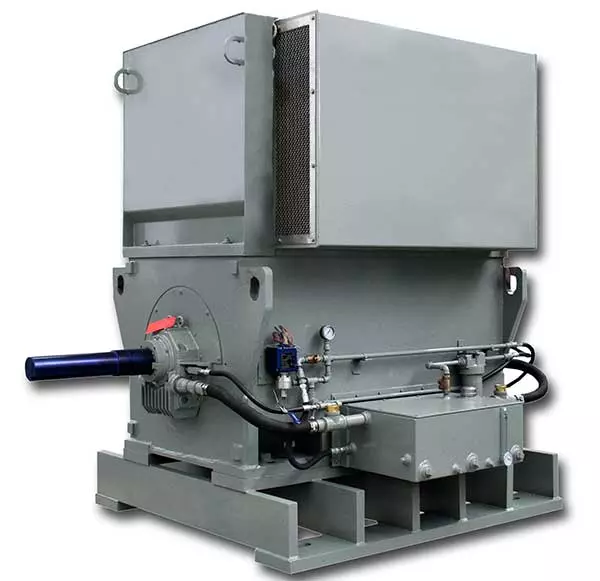
Custom Specialty AC Ball Mill Motors
Engineered from the ground up to match existing mounting footprints, shaft extensions, and terminal box locations while boosting torque performance and thermal capacity.
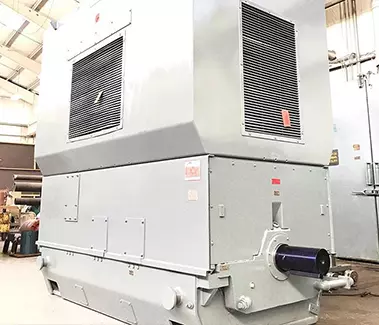
Factory Recertified Mill Motors
Fully re-engineered and dynamically tested motors delivered with full factory warranties, serving as rapid-response replacement units during critical plant outages.
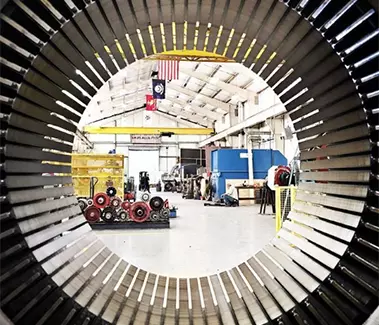
Mill Duty Components & Retrofit Kits
Genuine OEM-grade replacement rotors, forged shafts, sleeve bearings, slip ring assemblies, and high-dielectric VPI rewinds designed for extreme duty.
Critical Engineering Features of Louis Allis Ball Mill Drives
- Forged Alloy Steel Shafts: High-cycle fatigue resistance utilizing vacuum-degassed 4140 or 4340 forged alloy steel to absorb torsional shocks during mill start-up and emergency load dumps.
- Vacuum Pressure Impregnation (VPI) Winding Systems: Multi-stage 100% solventless epoxy resin encapsulation delivering Class H thermal rating operated at conservative Class B temperature rises, ensuring resistance to aggressive slurry dust and moisture.
- MIL-STD-2037 Navy Sealed Windings: Optional sealed winding protection capable of surviving complete submersion tests, providing unmatched reliability in tropical, high-humidity, or coastal mining environments.
- Robust Heavy-Plate Fabricated Steel Frames: Stress-relieved structural steel housings engineered with high natural frequency margins to prevent resonance with mill grinding tooth frequencies (pinion mesh frequencies).
- Insulated Bearing Housings: Prevention of stray shaft voltages and circulating micro-bearing fluting currents, utilizing ceramic coated bearings or hard-laminate end-bell insulation.
3. Enterprise Heritage & E-E-A-T Authority: Why Louis Allis Leads the Industry
When evaluating high-capital equipment like ball mill drive systems, procurement teams and plant engineering directors require verified operational reliability, rigorous quality standards, and deep technical authority. Founded in 1901, Louis Allis (a WorldWide Electric Company) has continuously advanced electrical motor engineering for nearly a century and a quarter.
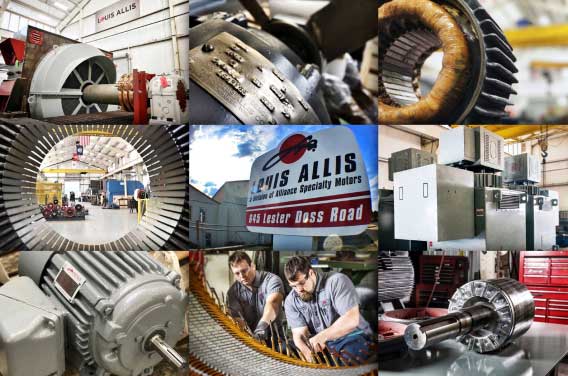
Manufacturing Dominance from Warrior, Alabama
Operating out of our modern, state-of-the-art facility in Warrior, Alabama, Louis Allis maintains complete control over custom design, precision machining, coil fabrication, vacuum pressure impregnation, dynamic balancing, and full-load power testing up to 20,000 HP.
Our facility operates under a certified ISO 9001:2015 Quality Management System and meets strict military specifications (MIL-SPEC), EASA-AR100 standards, IEEE 841 requirements, and NEMA MG design guidelines.
Contact UsProven Technical Differentiators
In-House Reverse Engineering
Ability to duplicate exact mechanical centerlines, shaft dimensions, bolt patterns, and electrical performance of obsolete mill motors built by legacy OEMs, eliminating expensive foundation modifications.
Military-Grade Sealed Insulation
Louis Allis is one of the few global manufacturers authorized to produce MIL-STD-2037 Navy Sealed Winding systems, giving industrial ball mill motors extreme defense-grade environmental resistance.
Rigorous Load Testing
Every ball mill motor undergoes comprehensive electrical routine and load testing, including surge testing, partial discharge analysis, vibration spectrum analysis, and thermal run-in verification prior to dispatch.
Emergency Outage Support
Dedicated 24/7 emergency repair, field engineering dispatch, and fast-track remanufacturing programs designed to minimize un-planned downtime losses for global mining operations.
Trusted by Global Industrial Leaders
From tier-one mining conglomerates and international cement producers to the U.S. Department of Defense, Boeing, 3M, and Schlumberger—Louis Allis electric motors power critical operations worldwide.
Contact Us4. Global Procurement Trends for Ball Mill Motors (2025–2035)
The global landscape for industrial motor procurement is undergoing a structural transformation. As mining companies target decarbonization, energy efficiency, and operational resilience, purchasing managers and EPC contractors are shifting away from lowest-initial-cost sourcing toward Total Cost of Ownership (TCO) and long-term risk mitigation strategies.
Trend 1: Accelerated Shift Toward Variable Frequency Drives (VFD) & Synchronous Reluctance Integration
Traditionally, large ball mills relied on across-the-line starting or liquid resistance starters connected to wound rotor induction motors. Over the next decade, over 65% of new medium-voltage ball mill installations will incorporate high-power VFD systems (Direct Torque Control or Vector Control) paired with custom squirrel cage or permanent magnet synchronous motors. This allows operators to vary mill rotational speed based on ore grindability variations, optimizing energy usage by up to 14% annually while eliminating electrical grid disturbance during start-up.
Trend 2: Mandated Smart Condition Monitoring & Edge AI Integration
Modern procurement specifications increasingly mandate integrated condition monitoring suites pre-installed from the factory. Ball mill motors supplied today are equipped with:
- Tri-Axial Wireless Vibration Sensors: Real-time monitoring of bearing frequencies, gear mesh harmonies, and unbalance detection.
- Embedded Stator RTDs & Bearing Temperature Transducers: Pt100 dual-element RTDs wired to smart junction boxes for early thermal warning detection.
- Magnetic Flux & Partial Discharge (PD) Sensors: Continuous online monitoring of stator winding insulation integrity to predict dielectric degradation before catastrophic insulation failure occurs.
Trend 3: Modular Retrofitting & Drops-in Replacements Over Full Foundation Rebuilds
With lead times for greenfield civil infrastructure stretching past 18 to 24 months, mining and industrial plants are prioritizing drop-in replacement motors. By partnering with engineers capable of custom-fabricating motor frames matching historical bolt holes, shaft heights, and coupling interfaces, plant operators save millions of dollars in civil foundation modifications and reduce scheduled shutdown windows from weeks to days.
Strategic Procurement Insight: IE4 & IE5 Efficiency Standards
Although Above NEMA motors (>500 HP) have historically been exempt from mandatory efficiency thresholds in certain jurisdictions, emerging global regulations (such as EU Ecodesign regulations and updated North American standards) are driving procurement teams to demand minimum IE3 or IE4 equivalent efficiency levels. Over a 20-year operational lifecycle, electrical energy accounts for more than 90% of a ball mill motor's total lifecycle cost; a 1.5% efficiency improvement often pays for the total capital cost of the motor within 3 to 4 years.
5. Industry & Technological Development Trends in Grinding Mill Drives
As ore grades decline globally, mineral processing plants must process significantly larger volumes of rock to yield equivalent tonnage of target metals (such as copper, gold, nickel, and lithium). This macroeconomic reality is driving grinding equipment toward larger physical scale, higher power density, and sophisticated cooling architectures.
Key Technological Breakthroughs Shaping Future Mill Motors
- Advanced Hybrid Insulation Systems: Integration of nano-composite mica tapes and ultra-low-viscosity 100% solid epoxy resins that elevate dielectric breakdown strength by up to 30% while improving thermal conductivity through stator slots.
- Gearless Mill Drives (GMD) vs. High-Power Geared Motor Advances: While Gearless Mill Drives (Ring Motors wrapped around the mill shell) dominate ultra-large SAG and ball mills (>15 MW), advances in high-capacity gearbox metallurgy paired with dual-synchronous motor drives have revived the economic competitiveness of geared ball mill solutions for power ranges between 3,000 HP and 15,000 HP.
- Advanced Closed-Loop Liquid-to-Air Cooling (TEWC / TEAAC): High-altitude mining environments (e.g., Atacama Desert, Andes region at >4,000 meters above sea level) present thin air and reduced convective cooling capacity. Advanced Totally Enclosed Water-to-Air Cooled (TEWC) heat exchanger designs ensure stable operating temperatures regardless of atmospheric pressure drops.
6. Frequently Asked Questions (FAQ) for Ball Mill Motor Procurement
Below are the most critical engineering and commercial questions asked by global procurement directors, project managers, and maintenance engineers when specifying Ball Mill Motors.
When specifying a ball mill motor, locked rotor torque (LRT) alone is insufficient. You must specify the complete torque-speed curve under maximum charge conditions. A ball mill requires a continuous breakaway torque of 160% to 200% FLT to overcome static friction and lift the grinding media up to the shoulder cascade angle. The pull-up torque must remain above 140% FLT throughout the acceleration phase until operating speed is reached. If using a VFD, the drive and motor combination must be engineered to supply 150% torque at zero speed for up to 60 seconds without thermal distress.
To ensure an exact drop-in replacement or optimized custom build, your RFQ package should include:
- Horsepower / KW rating and continuous service factor (typically 1.15).
- Synchronous speed (RPM), operating voltage, phase, and frequency (50 Hz or 60 Hz).
- Mill inertia (J = lb-ft² or kg-m²) reflected to the motor shaft.
- Enclosure type (TEFC, WPII, TEAAC, TEWC) and ambient environmental conditions (altitude, ambient temp range, ambient dust/humidity).
- Dimensional envelope: shaft extension diameter/keyway, foot bolt hole dimensions, centerlines, and main terminal box orientation.
- Existing OEM nameplate data or photographs of the installation area.
Select a Wound Rotor Induction Motor (WRIM) if your facility operates on a weak electrical power grid where starting current spikes must be strictly limited via an external Liquid Resistance Starter (LRS). WRIMs deliver maximum starting torque per amp of grid current. Select a Synchronous Motor if your plant requires power factor correction (operating at 0.8 leading power factor to offset surrounding inductive loads) and maximum electrical efficiency for higher horsepower ratings (>3,000 HP).
VPI is a multi-step process where the fully wound stator frame is placed into a vacuum pressure vessel. Moisture and air pockets are completely evacuated from the insulation structure, after which 100% solid epoxy resin is pressurized deep into the copper windings. Once heat-cured, VPI creates a void-free, monolithic insulation barrier that prevents conductive slurry dust, water, and chemicals from penetrating the coils while dramatically improving heat transfer out of the stator slots.
The three primary failure modes are:
- Stator Winding Insulation Breakdown: Caused by thermal overload, frequent starting cycles, or abrasive contamination. Prevention: Specify Class H VPI resin insulation with Class B temperature rise limits and install partial discharge monitoring.
- Shaft Fatigue Fracture: Driven by cyclic torsional shock loading during mill start-up or sudden mill jamming. Prevention: Utilize vacuum-degassed 4140/4340 forged alloy steel shafts with radius-polished keyways.
- Bearing Fluting & Electrical Discharge Machining (EDM): Caused by circulating shaft voltages (especially under VFD operation). Prevention: Install dual shaft grounding brushes and insulated sleeve or ceramic bearings.
Louis Allis Factory Recertified Motors undergo a complete re-engineering process: stators are completely stripped and rewound with new VPI insulation, shafts are non-destructively magnetic-particle tested, bearings are upgraded, and the entire assembly is dynamically load tested to OEM specifications. Recertified motors offer the exact same warranty coverage as brand-new units while delivering up to 70% faster delivery times and 30% to 50% cost savings—making them the premier choice during unexpected catastrophic motor failures.
Yes. Custom drop-in replacement is a core specialization of Louis Allis. Using advanced 3D laser scanning and precise reverse-engineering, our engineering team manufactures a new heavy-plate steel frame that matches your legacy motor's exact foot bolt pattern, shaft height, coupling interface, and terminal box locations—eliminating the need to re-pour concrete or reposition heavy reduction gearboxes.
You can contact our engineering team directly by clicking the Contact Us button on this page. Our application engineers will review your operating parameters, analyze existing nameplate data, and provide a detailed engineering proposal tailored to your plant's specific operational requirements.
Ready to Upgrade or Procure Your High-Torque Ball Mill Motor?
Speak directly with our senior electrical and mechanical application engineers in Warrior, Alabama. Get rapid engineering proposals, drop-in replacement evaluations, or emergency outage support today.