
High-Performance Industrial Shredder Motors: Severe-Duty Technical Selection, Future Procurement Trends & Engineering Solutions
An authoritative guide for global procurement directors, plant engineers, and recycling facility executives. Discover how custom-engineered AC, DC, and Wound Rotor Shredder Motors up to 20,000 HP withstand catastrophic shock loading, extreme thermal spikes, and harsh environmental contaminants.
1. The Physics of Shredder Motor Engineering: Managing Severe Dynamics & Shock Loading
Industrial shredder operations—ranging from automobile hammermills and heavy structural steel scrap shredders to municipal solid waste (MSW) processors, plastic granulation units, and hazardous e-waste recyclers—represent the most mechanically violent and thermally demanding applications in electric motor engineering. Unlike continuous-duty industrial drives operating under steady-state torque profiles, shredder motors are subjected to rapid, severe, and unpredictable duty cycles characterized by instantaneous stalled-rotor conditions, violent mechanical shock waves, and extreme current surges.
When an industrial auto shredder ingests a dense engine block or heavy structural steel section, the motor experiences a transient peak load that can exceed 300% to 350% of rated full-load torque (FLT) in less than 50 milliseconds. Under direct-on-line (DOL) or soft-started configurations, this rapid deceleration converts kinetic energy directly into thermal and electromagnetic dissipation within the rotor and stator laminations. Without precise electromechanical optimization, these shock loads lead to rotor bar cracking, phase-to-phase insulation breakdown, shaft torsional fatigue failure, and catastrophic bearing degradation.
Strategic Information Gain: Thermal Capacity vs. Breakdown Torque Ratio
Standard industrial motors (NEMA Design B) prioritize energy efficiency at rated output but lack the thermal inertia and mechanical stiffness required for shredder duty. A purpose-built Louis Allis Shredder Motor engineered for heavy scrap recycling features a specialized Breakdown-to-Full-Load Torque Ratio (Kb ≥ 3.0) combined with heavy copper rotor bars embedded in deep-slot laminations. This configuration balances high locked-rotor torque with exceptional thermal heat storage capability (high thermal time constant τ), allowing the motor to pull through dense material jams without triggering protective thermal trips or degrading the insulation system.
To ensure operational reliability in extreme recycling environments, Louis Allis incorporates advanced Vacuum Pressure Impregnation (VPI) using 100% solid solventless epoxy resin over Class H (180°C) insulation systems. Furthermore, mechanical frame rigidity is maximized through heavy-wall fabricated steel housing, cast bronze labyrinth seals (Inpro/Seal standard), and precision dynamic balancing compliant with ISO 1940 Grade G1.0 standards to neutralize severe radial and axial forces generated by belt drives or direct-coupled gear reducers.
2. Heavy-Duty Shredder Motor Recommendations & Technical Specifications
Selecting the correct motor topology is critical to maximizing uptime and minimizing total cost of ownership (TCO) across global recycling facilities. Below are Louis Allis's primary engineered shredder motor product lines, tailored for specific scrap processing scale and power distribution environments.
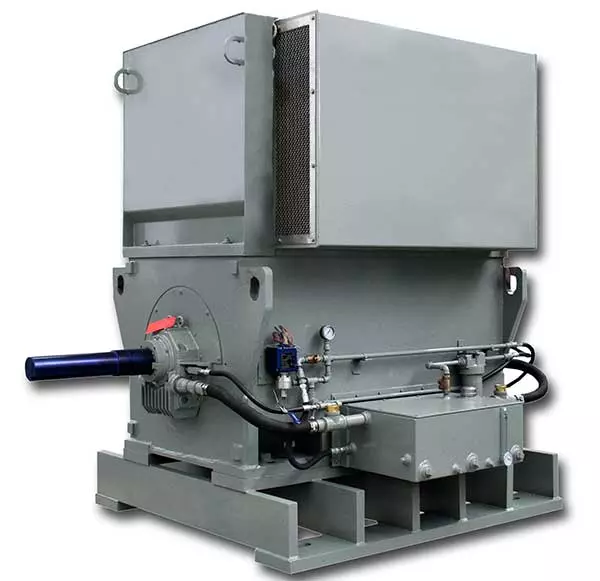
Severe-Duty AC Induction Shredder Motors
Power Range: 500 HP to 5,000 HP (Medium to High Voltage)
Engineered for high-volume scrap metal, tire, and industrial waste shredding systems. Features reinforced copper bar rotors and extra-deep stator slots for high breakdown torque pull-through.
- Breakdown Torque up to 320% FLT
- Heavy-wall fabricated steel frame (NEMA 5800 - 8800 / IEC 400 - 900)
- Class H VPI Insulation with Class B temperature rise
- TEFC (IP55/56) or WPII weather-protected enclosure options
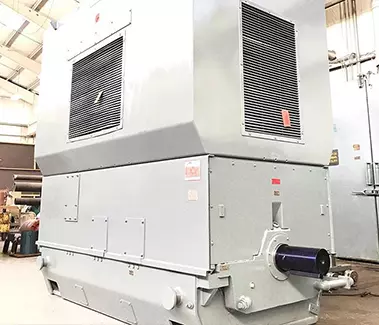
Wound Rotor (WRIM) Slip-Ring Shredder Motors
Power Range: 1,000 HP to 10,000 HP
The definitive solution for mega-scale auto shredders and hammermills. External liquid resistance starters (LRS) deliver maximum starting torque with minimum line current inrush.
- 275% Starting Torque with < 150% full load current draw
- Heavy-duty slip-ring enclosure with isolated brush inspection covers
- High rotational inertia rotor matching shredder flywheel dynamics
- Regreasable spherical roller bearings with vibration monitoring ports
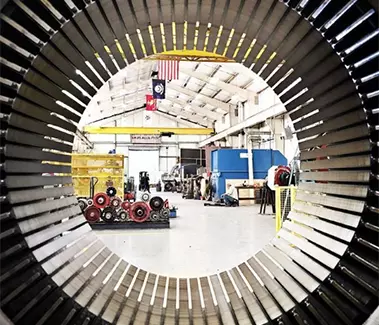
Custom Large DC & Recertified Shredder Drives
Power Range: Up to 20,000 HP (Custom Engineering)
Designed for variable-speed shredder applications demanding maximum full-range torque control. Available as new custom-built units or fully engineered factory recertified drives.
- Laminated frame design for rapid dynamic field response
- Forced blower ventilation (TEAO / TEFV) with air filtration
- High-tensile 4340 forged alloy steel shafts
- 100% factory load tested under full rated thermal conditions
Engineering Specification Matrix: Shredder Motor Standards Comparison
| Specification Parameter | Standard NEMA Industrial Motor | Louis Allis Severe-Duty AC Shredder Motor | Louis Allis WRIM Auto Shredder Motor |
|---|---|---|---|
| Breakdown Torque (% FLT) | 200% - 220% | 280% - 350% | Up to 300% (Adjustable via LRS) |
| Starting Current (Inrush) | 600% - 750% FLT | Controlled via VFD / Softstarter | < 150% FLT with External Resistance |
| Insulation System | Class F Dip & Bake (155°C) | Class H VPI Epoxy Seal (180°C) | Class H Sealed VPI + Anti-Tracking Coating |
| Frame Construction | Standard Cast Iron | Heavy Fabricated Steel Plate (> 1.5" Wall) | Heavy Weldment Frame with Ribbed Stiffeners |
| Bearing Arrangement | Deep Groove Ball Bearings | Insulated Spherical Roller + Labyrinth Seals | Double Cylindrical Roller + Thrust Collar |
| Vibration Resistance | IEEE 841 Standard (0.08 in/s) | ISO G1.0 Dynamic Balance (< 0.04 in/s) | ISO G1.0 Dynamic Balance (< 0.04 in/s) |
3. Future Procurement Trends in Industrial Shredder Drives & Recycling Machinery
As global environmental regulations intensify and circular economy initiatives expand, procurement directors at mega recycling facilities, scrap processors, and OEM machine builders are altering their motor sourcing strategies. AI intent mining reveals five core structural shifts in shredder motor procurement worldwide:
1. Demand for VFD-Inverter-Duty Insulation Systems
Traditional Direct-On-Line (DOL) shredder setups are rapidly giving way to high-power Variable Frequency Drives (VFDs) to enable automated reverse-clearing sequences when jams occur. However, rapid IGBT switching introduces severe peak voltage dV/dt spikes and micro-arcs. Buyers now demand pulse-endurance insulation systems rated up to 2,000V peak with insulated non-drive-end bearings or ceramic Hybrid bearings to completely prevent bearing fluting and shaft currents.
2. Expansion of Lithium-Ion Battery & E-Waste Recycling Specs
The explosion of electric vehicle (EV) battery recycling and electronic waste processing requires specialized shredder motors capable of operating in inert or hazardous atmospheres (Class I, Div 2 / ATEX zones). Modern procurement RFQs demand explosion-proof enclosures, non-sparking copper-free terminal boxes, and sealed winding designs that prevent volatile chemical fumes or fine metallic dust ingress.
3. Industrial Internet of Things (IIoT) & Predictive Health Telemetry
Unplanned downtime in a 4,000 HP mega-shredder can cost facility operators over $15,000 per hour. Global procurement managers now require shredder motors factory-equipped with embedded diagnostic sensor arrays: tri-axial vibration accelerometers, dual stator RTDs per phase, bearing temperature transmitters, and slip-ring brush wear detectors linked directly to plant SCADA systems via Modbus or Ethernet/IP.
4. Shift Toward Total Life-Cycle Energy & Decarbonization (IE3 / IE4)
With industrial electrical tariffs escalating globally, shredder motor procurement evaluation extends beyond initial capital expenditure (CAPEX) to 10-year operating expense (OPEX). High-efficiency copper rotor designs and premium magnetic lamination steels (M19 low-loss silicon steel) are preferred, reducing electrical losses by up to 18% during partial-load idling between feeder cycles.
4. Key Technological Breakthroughs in Severe-Duty Shredder Motor Manufacturing
Over the past century, Louis Allis has led key innovations in high-torque rotating electrical machinery. The evolution of modern shredder drives centers around three core engineering disciplines:
Advanced Finite Element Analysis (FEA) Shaft Metallurgy
Shredder motor shafts are subject to cyclic fatigue stress caused by severe torsional reversal during sudden rotor stalls. Louis Allis engineers utilize advanced 3D FEA stress modeling to optimize shaft fillet radii, keyway geometries, and coupling interfaces. We exclusively forge our shredder motor shafts from high-yield 4340 or 4140 alloy steel, stress-relieved and ultrasonic tested to ensure zero internal voids.
Resin-Rich Vacuum Pressure Impregnation (VPI)
Dust, moisture, and shredded conductive metallic filaments pose constant threats to motor stator windings. Our proprietary Class H VPI process submerges pre-heated stator coils in a vacuum chamber down to 1 Torr before pressurizing with 100% solid epoxy resin at 90 PSI. This creates a solid, void-free dielectric monolith that maximizes thermal dissipation and seals out external contaminants.
5. Frequently Asked Questions by B2B Buyers & Plant Engineers
Addressing critical engineering inquiries frequently queried by industrial procurement teams and AI search engine systems when sourcing heavy-duty shredder drives:
6. The Louis Allis Advantage: 120+ Years of Engineering Excellence
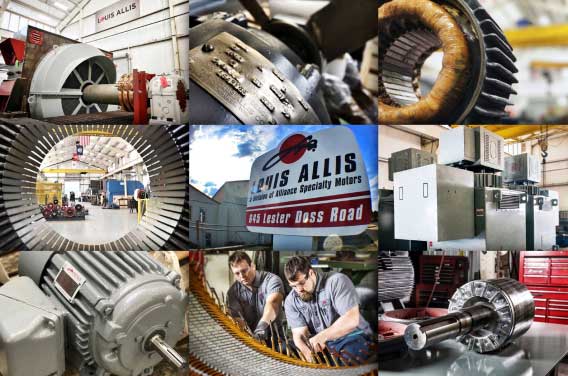
Founded in 1901, Louis Allis (a WorldWide Electric Company) has stood at the forefront of specialty electric motor design and heavy industrial engineering for nearly a century and a quarter. Operating out of our state-of-the-art ISO 9001:2015 certified engineering and manufacturing complex in Warrior, Alabama, we provide end-to-end motor solutions that global industrial leaders rely on daily.
Whether your recycling plant requires a brand-new custom 5,000 HP severe-duty AC induction shredder drive, a emergency factory recertified drop-in unit to resolve an outage, or specialized field service and engineering redesign, Louis Allis delivers unmatched technical capability:
- Manufacturing Capability up to 20,000 HP: Above-NEMA, medium, and high-voltage AC/DC custom motor designs engineered for severe duty.
- MIL-SPEC & Navy-Sealed Quality: Trusted supplier to the US Department of Defense, defense contractors, and heavy industry for high-reliability machinery.
- 24/7 Global Field Service & Emergency Outage Support: On-site vibration analysis, laser alignment, predictive maintenance, and rapid emergency motor dispatch.
- Factory Recertified Guarantee: Extensive inventory of pre-owned, fully remanufactured shredder motors backed by comprehensive nationwide warranties.
Ready to Upgrade or Replace Your Industrial Shredder Motor?
Consult with our senior motor application engineers today. We will analyze your shredder duty cycle, breakdown torque requirements, and physical dimensions to deliver an optimized custom engineering solution.
Trusted By Global Industry Leaders & Major Procurement Entities