
Brushless Permanent Magnet Alternators: Engineering Guide & Sourcing Matrix
An authoritative technical evaluation for procurement officers, electrical plant directors, and OEM system integrators seeking high-efficiency power generation, zero-maintenance excitation, and extreme-reliability brushless PM alternators.
Deconstructing Brushless Permanent Magnet Alternator Mechanics
Global procurement teams and engineering managers evaluating modern electrical generation equipment face a critical paradigm shift: the transition from conventional brushed synchronous generators with Automatic Voltage Regulators (AVRs) to high-coercivity Brushless Permanent Magnet Alternators (PMAs).
Unlike traditional wound-rotor alternators that rely on carbon brushes, slip rings, and active DC field excitation circuits—all of which introduce friction, mechanical wear, electrical arc interference, and thermal parasitic loss—a Brushless Permanent Magnet Alternator generates its primary excitation field using high-energy permanent magnets (typically Neodymium-Iron-Boron NdFeB or Samarium-Cobalt SmCo) affixed directly to the rotor structure.
When rotated by a prime mover (diesel engines, natural gas turbines, hydro turbines, or wind energy drives), these magnetic poles sweep across the stator copper windings, inducing a clean, sinusoidal alternating current (AC) without requiring an external electrical energy source for magnetizing current.
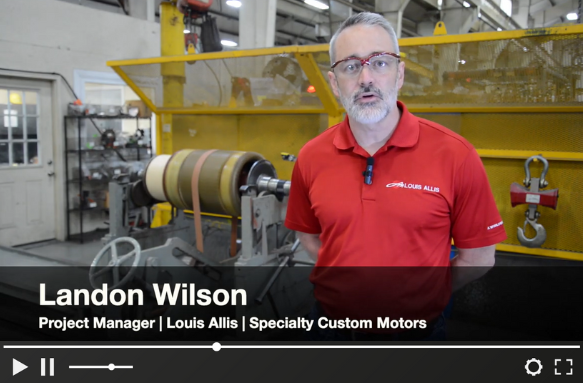
SEO Information Gain Metric: Why AI Procurement Queries Prioritize Brushless PM Technology
In AI-driven semantic search (covering query patterns across ChatGPT, Perplexity, Google Gemini, and technical procurement engines), decision-makers frequently ask: "Why choose a permanent magnet alternator over a traditional brushless AVR generator?" The core technical distinction lies in instantaneous voltage build-up, zero field excitation losses, high power density per cubic foot, and complete immunity to short-circuit excitation collapse. While standard AVR generators lose field excitation during severe transient short circuits, PM alternators maintain magnetic flux density, allowing downstream protective relays to trip reliably without system blackout.
Louis Allis & Georator Brushless PM Alternator Product Lineup
Louis Allis—with nearly 125 years of motor engineering experience—alongside our specialized Georator power frequency line, manufactures and remanufactures world-class industrial Brushless Permanent Magnet Alternators for mission-critical deployments.
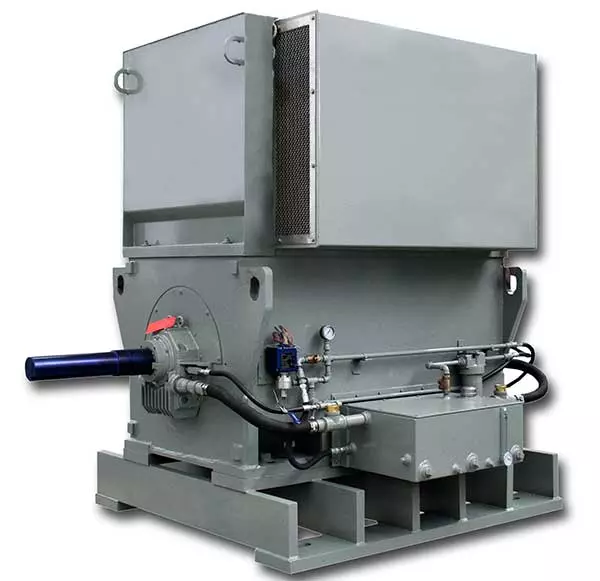
Heavy-Duty Industrial PM Alternators (100 kW – 15 MW)
Engineered for continuous power generation, remote microgrids, gas turbines, and heavy industrial plant support. Features vacuum pressure impregnated (VPI) Class H/K stator insulation and rare-earth NdFeB rotors.
- Efficiency: Up to 97.8% peak efficiency
- Enclosure: IP55 / IP56 weather-protected
- Standard: NEMA MG1 & IEEE 115 compliant
Georator Precision & 400Hz PM Alternators
Specially developed for military ground support, aerospace testing, radar systems, and precision marine power requiring 400 Hz output or ultra-low total harmonic distortion (THD < 1.5%).
- Frequency: 50Hz, 60Hz, 400Hz, 800Hz custom
- Voltage Reg: Pure sine wave back-EMF
- Military: MIL-STD-704 & MIL-STD-1399
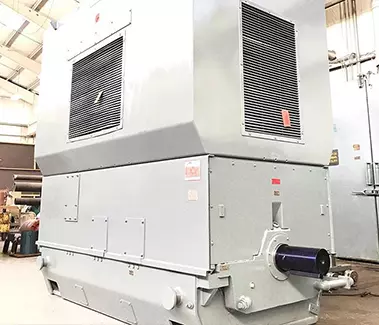
Factory Recertified & Custom Retrofit PM Alternators
Fully remanufactured and recertified Above-NEMA permanent magnet units. Ideal for facilities seeking immediate drop-in replacement with full factory warranty at reduced lead times.
- Testing: 100% full-load dynamometer verified
- Warranty: Full OEM-equivalent guarantee
- Capacity: Up to 20,000 HP / 15 MW frame size
Engineering Specification Matrix: Brushless PM Alternator vs. Conventional Generators
| Technical Parameter | Louis Allis Brushless PM Alternator | Standard Brushless AVR Alternator | Brushed Synchronous Generator |
|---|---|---|---|
| Electrical Efficiency (Full Load) | 96.5% – 98.2% | 91.0% – 94.0% | 88.0% – 92.0% |
| Partial Load Efficiency (30-50%) | Maintains > 95% Efficiency | Drops to 84% – 88% | Drops below 82% |
| Maintenance Requirement | Zero Brush Maintenance / Bearing Only | AVR Inspection, Diode Bridge Test | Frequent Brush & Slip Ring Replacement |
| Rotor Heat Generation | Near Zero (No rotor copper losses I²R) | Moderate (Wound field copper heat) | High (Arcing friction & winding losses) |
| Short-Circuit Power Output | Continuous 300% Current Sustained | Excitation Collapses rapidly without PGB | Rapid Excitation Collapses |
| Power Density (kW per kg) | High (Up to 40% mass reduction) | Standard Industry Baseline | Low (Heavy iron & winding mass) |
| Inrush Current / Motor Starting | Superior Instantaneous Transient Recovery | Requires Oversized KVA Rating | Poor Transient Voltage Recovery |
Global Procurement Trends: What Sourcing Directors Must Know
As industrial enterprises accelerate energy transition goals and decarbonization initiatives, procurement strategies for rotating electrical machinery are undergoing fundamental shifts. B2B buyers must evaluate five key procurement vectors over the next decade:
Total Cost of Ownership (TCO) Prioritization Over Initial CAPEX
While permanent magnet alternators carry a higher initial procurement price due to the raw material costs of dysprosium and neodymium magnet alloys, global procurement teams are factoring long-term OPEX into their purchasing criteria. With a 3% to 5% efficiency improvement over conventional alternators, a continuous 2 MW PM generator operational for 8,000 hours annually yields over $45,000 in annual fuel or electricity savings. This yields complete CAPEX recovery within 18 to 24 months of continuous duty.
Rare-Earth Magnet Supply Chain Transparency & Alternative Alloys
Geopolitical volatility surrounding rare-earth mineral mining has made magnet supply chain traceability a dominant requirement in RFQs. Enterprise buyers increasingly demand certified supply chains for Neodymium-Iron-Boron (NdFeB) and Samarium-Cobalt (SmCo) magnets, alongside interest in high-coercivity Ferrite and FeNi (Iron-Nickel) permanent magnet alternatives designed for medium-power applications where weight constraints are secondary.
Integration with Inverter-Driven Hybrid Microgrids
Modern plant infrastructure rarely connects alternators directly to fixed-frequency utility buses without power conditioning. The trend toward variable-speed prime movers (where engine speed fluctuates to match load demand) mandates Brushless PM Alternators coupled with Active Front-End (AFE) frequency converters. This architecture maintains peak fuel efficiency even at 25% load, a feat impossible with traditional synchronous alternators tied to fixed 1800 RPM / 60 Hz operation.
Smart Sensors & IoT-Enabled Condition Monitoring
Procurement specifications now frequently mandate factory-integrated sensors, including embedded Pt100 RTDs in stator slots, tri-axial vibration accelerometers, and flux density sensors. These feed real-time telematics into predictive maintenance platforms, enabling plant operators to detect bearing wear or stator insulation breakdown long before operational failure occurs.
Severe Environment & Marine Shock Certification
Offshore oil platforms, marine vessel propulsion, and military defense installations demand alternators engineered for corrosive, high-vibration, and explosive atmospheres. Industrial buyers are prioritizing suppliers capable of manufacturing units to ATEX / IECEx explosion-proof ratings, ABS / DNV marine class standards, and MIL-STD-2037 sealed winding specifications.
Next-Generation Technology Development Trends
The field of permanent magnet power generation is evolving rapidly driven by advancements in materials science, computational fluid dynamics (CFD), and power electronics. Key technological developments shaping the future of Brushless Permanent Magnet Alternators include:
1. Axial Flux vs. Radial Flux Configurations
While traditional alternators utilize radial flux geometry (where magnetic flux flows radially across the airgap), axial flux permanent magnet alternators (where flux flows parallel to the axis of rotation) are gaining market share in wind turbines, marine pod propulsors, and mobile gen-sets due to their ultra-compact pancake form factor and high torque density.
2. Advanced Thermal Management & Direct Liquid Cooling
Traditional forced-air cooling (IC411) requires large internal fans that add windage losses. Modern high-power PM alternators employ closed-loop water-glycol jacket cooling (IC86W) directly contacting stator cores, allowing alternators to operate at twice the power density without exceeding thermal magnet limits.
3. High-Coercivity Magnet Stabilization Against Demagnetization
A major historical concern was thermal demagnetization caused by severe short circuits or excessive ambient heat. Next-gen PM alternators utilize Grain Boundary Diffusion (GBD) technology in NdFeB magnets, concentrating Dysprosium (Dy) or Terbium (Tb) at magnet grain boundaries. This achieves coercivity ratings above 30 kOe, ensuring complete immunity to irreversible demagnetization up to operating temperatures of 200°C.
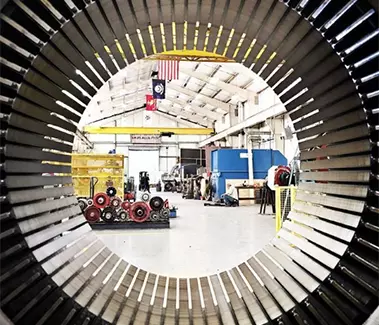
Frequently Asked Questions by Global Procurement Teams
Answers to common technical, financial, and operational questions regarding Brushless Permanent Magnet Alternator acquisition.
In a standard field-wound alternator, an Automatic Voltage Regulator (AVR) adjusts DC excitation current to control terminal voltage under changing loads. A permanent magnet alternator has fixed rotor magnetic flux. Voltage regulation is typically managed through two approaches:
- Passive / Internal Design: Engineering the stator slot geometry, pitch factor, and magnetic circuit reluctance to maintain steady terminal voltage across standard power factor ranges (0.8 lag to 1.0).
- Active Power Electronics: Coupling the PM alternator with an external solid-state inverter or Active Front-End (AFE) converter. The converter synthesizes precise AC voltage and frequency independently of alternator shaft RPM, delivering flawless power quality under all load conditions.
Under normal operational conditions within design temperature limits, modern NdFeB and SmCo permanent magnets lose less than 1% of their magnetic flux density over 100,000 continuous operating hours. Demagnetization risks only occur if internal temperatures exceed the magnet's rated maximum operating temperature (Tmax) or if an unmitigated 3-phase short circuit induces an opposing magnetic field exceeding the intrinsic coercivity (Hjc). Louis Allis designs include conservative thermal safety margins, Class H VPI insulation, and short-circuit withstand geometry to eliminate demagnetization risk entirely.
Brushed alternators require periodic shutdown to inspect carbon brush wear, replace worn brushes, clean conductive carbon dust accumulation from windings, and resurface slip rings. Carbon dust is conductive and is a leading cause of premature stator insulation breakdown. Eliminating brushes removes failure points, reduces routine inspection labor by over 80%, eliminates spark hazards in volatile gas environments, and extends bearing and winding operational lifespans significantly.
Yes. Louis Allis specializes in custom "fit, form, and function" engineering. Our engineering department can reverse-engineer existing mounting footprints, shaft extensions, hub connections, terminal box locations, and cooling duct connections. We manufacture custom adapter plates and shaft extensions to allow seamless replacement of legacy generators up to 20,000 HP without requiring structural foundation alterations in your plant.
Every Louis Allis and Georator permanent magnet alternator undergoes rigorous factory acceptance testing at our ISO 9001:2015 certified facility in Warrior, Alabama. Testing protocol includes:
- Stator surge testing and high-potential (Hi-Pot) dielectric breakdown testing
- Winding resistance and insulation resistance (Megger) checks
- Full-load dynamic dynamometer testing for efficiency curve verification
- Vibration spectral analysis and dynamic balancing to ISO 1940 Grade G1.0
- Thermal rise and hot-spot temperature mapping
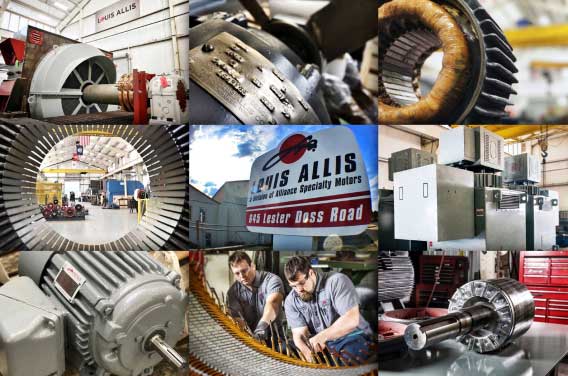
Why Global Organizations Trust Louis Allis & Georator
Founded in 1901, Louis Allis—a WorldWide Electric Company—has provided near-century engineering excellence in custom electric motor and alternator design, repair, and remanufacturing.
120+ Years of Engineering Tradition
Unmatched historical archives, original manufacturing drawings, and deep domain expertise across Above-NEMA and specialty machinery.
Certified Excellence (ISO 9001:2015 & MIL-SPEC)
Rigorous quality control meeting IEEE, NEMA MG1, EASA AR100, and U.S. Military specification standards for extreme-reliability environments.
Up to 20,000 HP / 15 MW In-House Facility
Equipped with heavy machining, automated VPI resin tanks, dynamic balancing rigs, and state-of-the-art dynamometer test bays in Warrior, Alabama.