
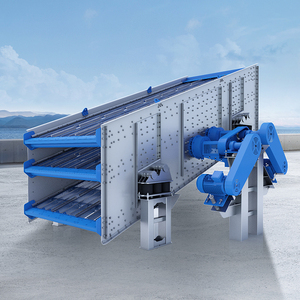
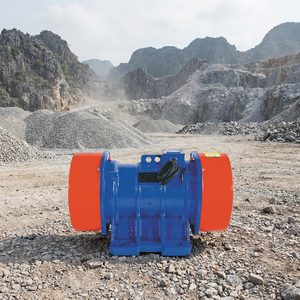
Aggregate Vibrating Screen Machine Motor (60-350t/h Ore Processing)
Power Output: 30 kW High Torque
Throughput: 60 - 350 Tons/Hour
Protection Rating: IP65 Heavy Duty
Engineered to meet stringent North American NEMA/IEEE standards and European CE certifications. Built for aggregate screening, heavy ore mining, continuous cement processing, and sanitary bulk material separation.
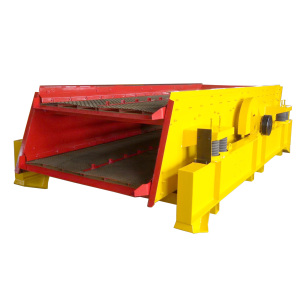
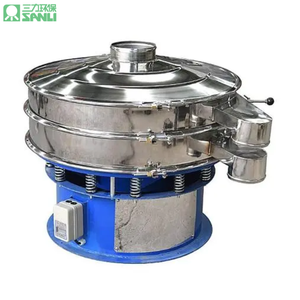
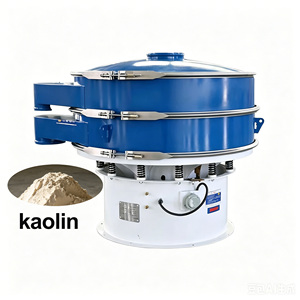
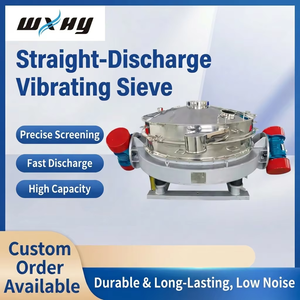
In modern North American heavy processing industries—spanning utility-scale power generation, hard-rock mining operations, aggregate screening plants, chemical processing facilities, and cement manufacturing—the demand for high-efficiency electro-mechanical drive systems has never been more vital. As industrial infrastructure modernizes under US federal grid expansion and carbon-reduction initiatives, plant operators face a double mandate: maximizing continuous equipment uptime while aggressively cutting kilovar reactive power charges.
High-Voltage Synchronous Motors (HVSMs) operating between 2.3 kV and 13.8 kV, alongside precision-engineered heavy-duty vibration motors, represent the technological foundation of efficient, heavy-torque industrial processing. Unlike standard low-voltage squirrel-cage induction units, high-voltage synchronous machinery offers the unique advantage of operating at unity (1.0) or leading power factors (0.8 to 0.9 leading). This capability provides direct power factor correction across whole industrial facilities, reducing total plant electrical losses and protecting capital equipment from voltage drop instability.
SEO & Industry Engineering Gain: When sourcing CE-certified high-voltage synchronous machinery and heavy vibration exciters manufactured internationally for import into the United States, engineering teams must evaluate compliance across both European CE directives (Low Voltage Directive 2014/35/EU, ATEX 2014/34/EU) and US-specific standards (NEMA MG-1, IEEE 841, NFPA 70 / National Electrical Code, and UL certification). Dual-certified equipment bridges global procurement efficiency with local US site safety compliance.
The table below provides a comprehensive engineering benchmark comparing the performance parameters of High-Voltage Synchronous Motors against Heavy-Duty Industrial Vibration Exciters deployed across US mining and aggregate processing facilities.
| Performance Parameter | High Voltage Synchronous Motor (HVSM) | Industrial Vibration Motor / Exciter |
|---|---|---|
| Operating Voltage Range | 2.3 kV, 4.16 kV, 6.6 kV, 10 kV, 13.8 kV (3-Phase 60Hz/50Hz) | 220V, 380V, 460V, 575V (Low-to-Medium Voltage 3-Phase) |
| Power Rating Output | 500 HP up to 20,000 HP (375 kW – 15,000 kW) | 0.25 kW up to 45 kW (0.33 HP – 60 HP exciter units) |
| Power Factor Capability | 1.0 Unity or 0.8 Leading (Active reactive power compensation) | 0.82 to 0.88 Lagging (Standard inductive loading) |
| Insulation System & Temp Rise | Class H VPI (Vacuum Pressure Impregnation) / Class B Rise | Class F or H VPI Enamel Copper / High-Temp Resin Sealed |
| Bearing Architecture | Hydrodynamic Sleeve Bearings / Forced-Oil Lube Systems | Heavy-Duty Spherical Roller Bearings (SKF/TIMKEN L10h >40k h) |
| Enclosure & Protection | WP-II (Weather Protected Type II), TEFC, TEAAC, IP55/IP56 | IP65, IP66 Dust-Tight & Submersible Waterproof Enclosures |
| Mechanical Vibration Specs | ISO 10816-3 Velocity < 1.8 mm/s (Precision Dynamic Balance) | Generates 1,000 to 250,000 N Centrifugal Force Output |
| Primary US Market Application | Ball Mills, Crusher Drives, High-Pressure Gas Compressors, Fans | Vibrating Screens, Hopper Feeders, Silo Unloaders, Sieve Shakers |
The operational environment across US manufacturing and extraction hubs places rigorous stress on electric drives. From the high-ambient dusty stone quarries of Texas and Georgia to the sub-zero iron ore mining facilities of Minnesota’s Mesabi Range, heavy machinery must operate non-stop under intense shock loads, cyclic thermal changes, and aggressive particulate contamination.
In high-capacity US stone crushing plants (processing 60 to 350+ tons/hour of basalt, granite, and limestone), 30kW to 45kW heavy vibration motors power multi-deck vibrating screens. High starting torque combined with reinforced cast-iron housings prevents structural flex and bearing cage failure under continuous 3G to 6G centrifugal acceleration.
Mining operations utilizing large SAG and ball mills require high-voltage synchronous motors rated up to 20,000 HP. Operating at 4.16 kV or 13.8 kV direct-utility supply, these motors deliver locked-rotor torque exceeding 200% while insulating local power grids from excessive voltage sags during heavy rock ingestion.
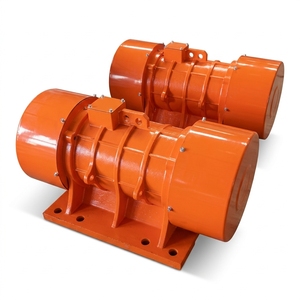
Continuous cement handling requires IP65 waterproof, dust-tight vibration motors with adjustable eccentric weights. Installed on hopper cones and bin activators, these units eliminate material rat-holing and bridging, allowing consistent gravity feeding of dry clinker and raw meal powders.
In fine chemical and kaolin clay processing (widely used in paper coatings and ceramics across the US Southeast), multi-layer rotary vibrating screen motors operating 1-to-5 deck separators allow precise 100 to 500 mesh classification without blinding or wire cloth mesh tearing.
For US food processing operations (dried fruit, wheat flour, grain milling), 304/316 stainless steel rotary vibration motors provide IP66 washdown protection. Featuring crevice-free polished surfaces, these units withstand aggressive caustics and high-pressure CIP (Clean-In-Place) sanitation cycles.
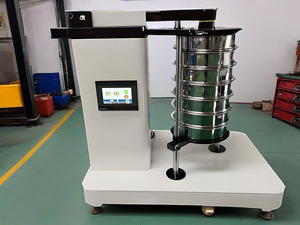
High-accuracy laboratory Rotap sieve shaker motors provide exact, repeatable rotary and tap actions for particle size distribution analysis, meeting ASTM E11 and ISO 3310-1 compliance in quality control laboratories nationwide.
Procuring industrial equipment for deployment in the United States requires navigating strict electrical regulatory frameworks. While European and Asian export markets frequently specify CE marking, the National Electrical Code (NEC / NFPA 70) and OSHA regulations in the US prioritize third-party certification by a Nationally Recognized Testing Laboratory (NRTL, such as UL, CSA, or ETL), along with adherence to NEMA MG-1 standards.
Standard European equipment operates on 380V/400V/6000V at 50 Hz, whereas the United States industrial grid standard operates primarily at 230V, 460V, 575V, 2300V, 4160V, or 13,800V at 60 Hz. When importing CE-certified motors into the US, factories must ensure that motor windings are custom-engineered for 60Hz frequency. Running a 50Hz motor directly on a 60Hz US supply without VFD speed correction results in a 20% increase in rotational speed, potential mechanical bearing overspeed, modified torque curves, and elevated winding thermal stress.
To endure the severe electrical stress of high-voltage operation and the high harmonic distortion associated with modern Variable Frequency Drives (VFDs), state-of-the-art motor factories implement Class H Vacuum Pressure Impregnation (VPI) insulation. Utilizing solventless epoxy resins and mica tape ribbon, VPI processing eliminates internal air voids in the stator slots, delivering partial-discharge immunity, superior dielectric strength (withstanding surge peaks >15 kV), and thermal dissipation ratings exceeding Class F margins.
Factory-built motors intended for US buyers should feature dual-certification compliance plates. This bridges European safety design with North American inspector approval:
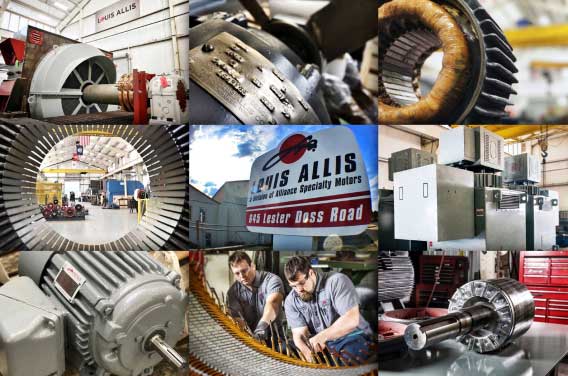
For over 120 years (established in 1901), Louis Allis—a WorldWide Electric Company—has engineered, manufactured, and recertified specialty AC and DC electric motors for the world’s most demanding industrial environments. Operating from an ISO 9001:2015 certified facility in Warrior, Alabama, our engineering teams build custom high-voltage synchronous machinery and heavy-duty motors up to 20,000 HP.
Our capabilities encompass complete custom electro-mechanical design, MIL-STD-2037 Navy sealed winding systems, EASA-AR100 precision remanufacturing, and dynamic load testing. Whether providing exact fit-and-function replacements for legacy US installations or supplying CE-certified motor packages for global export, Louis Allis delivers proven performance.










Below are expert answers to common engineering, procurement, and regulatory questions raised by US plant managers, EPC contractors, and equipment OEMs when selecting CE-certified high-voltage synchronous motors and heavy-duty vibration drives.
Answer: Yes, provided it complies with US electrical grid parameters (primarily 60Hz frequency and standard US voltages such as 2.3kV, 4.16kV, or 13.8kV) and satisfies local building/safety codes (NEC / NFPA 70). While CE marking covers European Directives, US municipal inspectors and safety officers often require third-party NRTL listing (UL, CSA, or ETL) or a field evaluation certificate. Sourcing motors built to dual CE/UL standards ensures smooth approval.
Answer: Induction motors always absorb reactive power from the grid, operating at lagging power factors (typically 0.80 to 0.88). In contrast, a High-Voltage Synchronous Motor can be over-excited to operate at 1.0 (unity) or 0.8 leading power factor. This supplies reactive kVAR back into your facility’s electrical system, offsetting the inductive loads of surrounding equipment, eliminating utility kVAR penalty charges, and improving line voltage stability.
Answer: Vibration motors utilize adjustable eccentric weights mounted on both ends of the rotor shaft. By loosening the locking bolts and rotating the outer adjustable weight relative to the fixed weight, operators can infinitely tune the centrifugal force output from 0% up to 100%. This allows precise tuning of stroke amplitude (stroke length) to optimize screen stratification for heavy ore versus fine sand.
Answer: High-frequency switching from modern VFDs induces common-mode shaft voltages. Without protection, current discharges through the bearing oil film, causing EDM (Electrical Discharge Machining) fluting, micro-pitting, and premature bearing failure. To prevent this, our high-voltage motors feature an insulated non-drive-end bearing housing, shaft grounding brushes (SGB), and ceramic-coated hybrid bearings for VFD applications.
Answer: Standard low-voltage vibration motors are available in stock or built within 2 to 4 weeks. Custom Above-NEMA high-voltage synchronous motors (1,000 HP to 20,000 HP) tailored to specific footless mounts, shaft extensions, and VPI insulation specs typically require 12 to 20 weeks. Emergency rapid-build and recertified stock units are available for immediate drop-in replacement during unexpected plant outages.
Answer: Industrial processing plants subject motors to extreme dust, quartz particles, and wet washdown conditions. An IP65 rating guarantees absolute protection against dust ingress and low-pressure water jets. An IP66 rating withstands heavy sea-water washdown and high-pressure hose streams. Complete sealing prevents conductive mineral dust from penetrating the stator windings or contaminating bearing grease cavity grease channels.
Answer: Vibration motors operate under continuous G-force acceleration. Maintenance schedules should include checking mounting bolt torque specs with a torque wrench every 500 operating hours (to prevent foot fatigue cracking), regreasing high-speed spherical bearings with high-temperature synthetic lithium complex grease every 1,000 hours, and inspecting terminal box rubber seals to maintain IP65 integrity.
Answer: Yes. Our engineering team specializes in custom drop-in replacement designs. We manufacture transition sub-bases or engineer custom stator frame dimensions, shaft heights, keyway configurations, and terminal box locations to match legacy induction motor footprints, eliminating the need for expensive civil foundation modifications.