
Heavy-Duty Vibrating & Rod Mill Motor Solutions
Explore our industrial-grade electric motors engineered for ore processing, aggregate screening, and heavy mill drives. Designed to endure severe vibration, dust, and continuous 24/7 duty cycles.
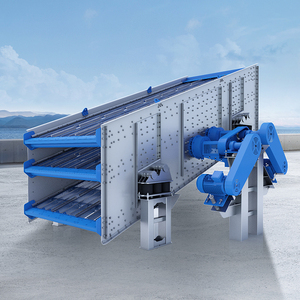
Aggregate Vibrating Screen Machine for Stone Crusher Plant 60-350t/h Ore Processing 30kW Motor High Output Finished Sand
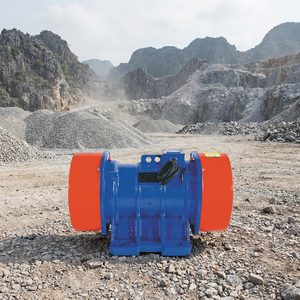
Vibrating Screen Vibrating Feeder & Hopper Vibration Motor for Ore Processing Heavy Load Capacity Durable Engine
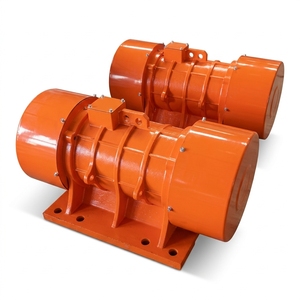
Three Phase Vibration Motor IP65 Waterproof Adjustable Exciting Force for Vibrating Screen Silo Hopper Mining Cement Machinery
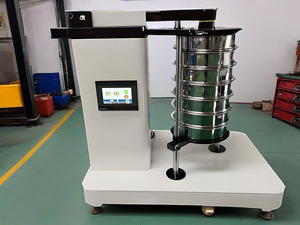
High-Accuracy Stainless Steel Laboratory Rotap Sieve Shaker Vibrating Motor Circular Vibrating Screen for Particle Size
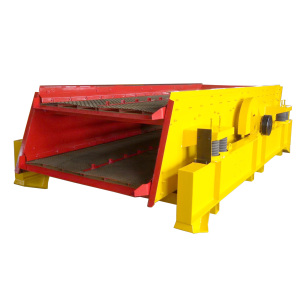
DUOLING Circular Vibrating Screen AC Motor 1-200 Tons Capacity Long Working Life for Ore Core Component Bearing Mining Screening
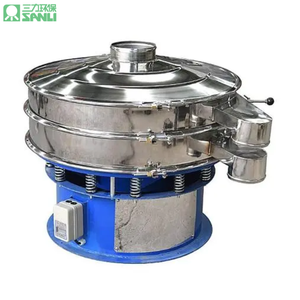
Durable Stainless Steel Rotary Vibrating Screen Motor-Easy-Clean for Food Processing (Dried Fruit Wheat Flour Sieving)-380V/220V
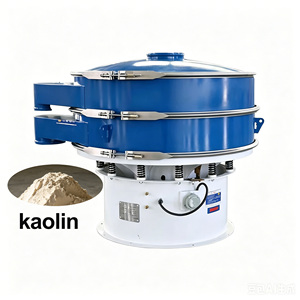
Multi-Layer Rotary Vibrating Screen Vibration Motor | Kaolin Clay Processing | 1-5 Decks Customizable | 100-500 Mesh Industrial
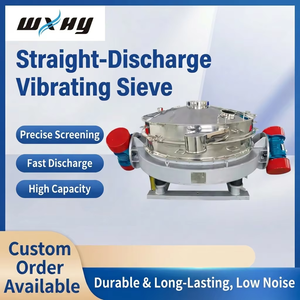
HY-1200-1s Direct Discharge Motor Vibrating Screen 380V CN Heavy Industry High Speed Separation
⚙
1. Rod Mill Drives & High-Torque Mechanical Engineering Fundamentals
Rod mills are fundamental grinding units in mineral processing, silica sand production, metallurgical ore preparation, and construction aggregate plants. Unlike ball mills that utilize spherical steel grinding media, rod mills employ long steel rods acting in line-contact mode to reduce raw feed sizes from 50mm down to 4mm–35 mesh. This grinding mechanic imposes severe, continuous dynamic stress on the drive motor, demanding dynamic torque capabilities far exceeding standard industrial motor profiles.
Selecting the correct motor supplier for rod mill drives requires deep consideration of locked-rotor torque (LRT), breakdown torque (BD Tq), thermal inertia, vibration isolation, and structural frame rigidity. During start-up, a rod mill charged with hundreds of tons of iron/steel grinding rods and slurry exhibits immense breakaway friction. Electric drive motors must deliver high initial starting torque without causing catastrophic voltage sags across the plant grid or sustaining thermal damage to rotor bars and stator windings.
Technical Insight (Information Gain): Modern heavy-duty rod mill motors must be rated for severe NEMA Design Class D or Custom Wound Rotor Induction (WRIM) dynamics. They require vacuum pressure impregnated (VPI) Class H/F insulation capable of enduring 250% transient overload shocks caused by tumbling charge cascades and mill inching cycles.
Furthermore, ambient operating environments in mining and mineral processing facilities are plagued by abrasive mineral dust (silica, magnetite, quartzite), ambient humidity variations, and ambient temperature extremes. Motors must feature robust Enclosures such as TEFC (Totally Enclosed Fan Cooled - IC411), TEAAC (Totally Enclosed Air-to-Air Cooled - IC611), or TEWAC (Totally Enclosed Water-to-Air Cooled - IC86W) equipped with heavy-duty IP65 or IP66 ingress protection to safeguard active copper windings and core laminations.
| Motor Drive Technology | Starting Torque (% FLT) | Efficiency Class | VFD Compatibility | Maintenance Overhead | Primary Industrial Application |
|---|---|---|---|---|---|
| Wound Rotor Induction (WRIM) | 250% – 300% | IE2 – IE3 | Medium (Liquid Resistance Starter) | Moderate (Slip Rings & Brushes) | Legacy Ultra-Heavy Rod & Ball Mills (>2,000 HP) |
| Squirrel Cage Induction (SCIM) | 160% – 220% | IE3 – IE4 Premium | High (Inverter Duty Rated) | Low (Minimal Moving Components) | Standard Rod Mills, Crushers, & Heavy Feeders |
| Permanent Magnet Synchronous (PMSM) | 200% – 250% | IE5 Ultra-Premium | Mandatory (Vector Control VFD) | Very Low (Gearless Direct Drive Options) | Modern High-Efficiency Eco-Mining Plants |
| Vibrating Duty AC Induction Motor | 220% – 280% | IE3 High Output | High (Frequency Speed Control) | Moderate (Bearing Lubrication Cycles) | Vibrating Screens, Discharge Hoppers, Sieve Shakers |
🏢
2. Enterprise Manufacturing Authority & Original Engineering Heritage
When procuring high-capacity rod mill motors and heavy industrial vibratory equipment, factory track record and manufacturing pedigree are paramount. Rooted in over 120 years of continuous electrical engineering excellence since 1901, our partner capabilities (including the legendary Louis Allis lineage operating out of ISO 9001:2015 certified facilities in Warrior, Alabama) represent the pinnacle of heavy industrial drive manufacturing, repair, and engineering.
120+ Years Heritage
Established in 1901, building custom electric motors up to 20,000 HP for global mining, power, defense, and heavy processing operations.
ISO 9001 & MIL-SPEC
Fully certified quality management systems complying with NEMA MG1, IEEE 841, EASA-AR100, UL, and rigorous U.S. Navy MIL-STD-2037 specs.
Up to 20,000 HP Capacity
Engineering capabilities spanning low-voltage (380V/460V) up to medium-voltage (3.3kV, 6.6kV, 13.8kV) custom synchronous & induction motors.
Navy Sealed Windings
Proprietary Vacuum Pressure Impregnation (VPI) utilizing 100% solid epoxy resins for total protection against abrasive slurries and moisture.
Global Field Engineering
On-site predictive maintenance, laser alignment, vibration analysis, emergency outage response, and turnkey installation support worldwide.
Trusted by Fortune 500
Long-term power supplier to leaders like Boeing, 3M, U.S. Dept of Defense, Rolls-Royce, Schlumberger, and tier-1 mining conglomerates.
Whether your application requires a standard 30kW vibrating motor for aggregate screen separation or a custom 5,000 HP medium-voltage rod mill drive with drop-in shaft dimensions, our engineering facilities utilize advanced CNC machining, dynamic balancing to ISO 1940 G1.0 standards, surge testing, and full-load test bays to guarantee flawless operation prior to shipment.
📈
3. Global Procurement Trends in Heavy Milling & Rod Mill Motors
As global mining operations shift toward decarbonization, higher energy efficiency, and predictive maintenance automation, B2B procurement directors are updating their procurement criteria. Purchasing decisions are no longer governed solely by initial capital expenditure (CAPEX); total cost of ownership (TCO), energy consumption (OPEX), and digital connectivity now dictate supplier rankings.
Trend 1 Transition to IE4/IE5 Super-Premium Efficiency
With electric drives consuming over 65% of electrical energy in mining plants, operators are mandating IE4 (Super Premium) and IE5 (Ultra Premium) efficiency standards. Upgrading a continuously running 1,000kW rod mill motor from IE2 to IE4 yields annual energy savings exceeding $45,000 USD, amortizing motor cost in under 18 months.
Trend 2 Embedded IoT & Condition Monitoring Suites
Modern rod mill motors and vibrating screen engines are increasingly ordered with pre-installed Smart Sensors. These monitor tri-axial vibration, bearing temperature (PT100 RTDs), flux leakage, and winding temperature in real-time, feeding predictive AI algorithms to eliminate catastrophic unscheduled downtime.
Trend 3 Custom Drop-In Mechanical Retrofits
Mining facilities operating legacy infrastructure constructed 30–50 years ago face significant challenges when legacy motors fail. Leading OEM suppliers now specialize in reverse-engineering drop-in replacements—matching exact footprint bolt patterns, shaft center heights, and coupling interfaces without requiring concrete foundation rebuilds.
Trend 4 Inverter-Duty Insulation & VFD Integration
Variable Frequency Drives (VFDs) are now standard across milling plants to allow dynamic speed adjustment based on ore hardness and feed rate. Procurement specs mandate NEMA MG1 Part 31 compliance, requiring spike-resistant magnet wire and insulated non-drive end (NDE) bearings to prevent electrical bearing fluting.
🚀
4. Next-Generation Technological Developments in Grinding Drives
The grinding drive industry is experiencing rapid technological evolution aimed at increasing throughput while reducing structural wear and electrical power consumption. Key development vectors include:
A. Direct-Drive Gearless Mill Motors (GMM): For high-capacity SAG and rod mill systems, traditional drive trains (motor, fluid coupling, gearbox, pinion, perimeter ring gear) are being replaced by high-torque low-speed direct-drive synchronous motors. By mounting the motor rotor directly onto the mill shell extension, mechanical transmission losses are completely eliminated, boosting drive system efficiency beyond 97.5%.
B. Advanced VPI Resin Formulation with Nano-Composite Fillers: Insulation technology is advancing with the addition of inorganic nano-particles (silica and alumina) into epoxy VPI resins. This increases thermal conductivity, allowing heat generated within inner stator coils to dissipate to the frame up to 30% faster while quadrupling dielectric breakdown voltage strength under humid, wet conditions.
C. Active Harmonic Suppression in Heavy Mining Networks: High-power VFD drives driving large rod mill motors can introduce unwanted voltage and current harmonics into the mine's power grid. Modern motor-drive packages incorporate Active Front End (AFE) regenerative technology, lowering Total Harmonic Distortion (THD) below 3% while restoring reactive power factor to near unity (0.99).
❓
5. Rod Mill & Industrial Vibration Motor Procurement FAQ
Addressing critical technical, engineering, and commercial questions for plant managers, procurement officers, and system integrators.
What electrical parameters are critical when specifying a rod mill motor?
Key parameters include operating voltage (380V up to 13.8kV), rated power (kW/HP), starting torque percentage (minimum 200%-250% FLT), thermal capacity under repeated starts, Enclosure rating (TEFC/TEAAC/TEWAC), duty cycle (S1 continuous), and VFD drive compatibility (NEMA MG1 Part 31 standard).
How do vibration screen motors differ from standard industrial induction motors?
Vibration motors are engineered specifically to generate mechanical eccentric forces. They feature extra-heavy ductile iron end shields, oversized spherical roller bearings with C3/C4 internal clearance, high-tensile shafts, and epoxy-encapsulated windings to withstand continuous accelerations up to 10G-20G without structural failure.
Why is VPI (Vacuum Pressure Impregnation) essential for mining motors?
VPI eliminates air voids in winding slot insulation by driving 100% solid epoxy resin into stator coils under vacuum and high pressure. This provides complete resistance against moisture ingress, abrasive conductive mineral dust, chemical slurries, and severe thermal cycling expanded over years of continuous operation.
What cooling system (IC code) is recommended for large rod mill drives?
For motors under 500kW, standard TEFC (IC411) is economical. For large medium-voltage motors (500kW – 15,000kW), TEAAC (Totally Enclosed Air-to-Air Cooled - IC611) or TEWAC (Totally Enclosed Water-to-Air Cooled - IC86W) are preferred because they isolate dirty ambient mine air from internal motor components.
How can bearing fluting caused by VFD operation be prevented?
VFDs induce common-mode voltages that create destructive electrical currents flowing through motor bearings. Prevention requires installing insulated bearings on the non-drive end (NDE), hybrid ceramic ball bearings, and grounding rings (or carbon brushes) on the drive end shaft to harmlessly bleed currents to ground.
Can custom suppliers engineer drop-in replacement motors for legacy machinery?
Yes. Reputable OEM custom manufacturers like Louis Allis specialize in reverse-engineering legacy motor dimensions. Custom steel adapter bases, tailored shaft extension lengths, and exact terminal box locations can be engineered to guarantee a 100% drop-in fit without modifying site civil foundations.
What is the difference between rod mill torque requirements vs. ball mill requirements?
Rod mills generally operate at lower speeds (around 65%-75% of critical speed) compared to ball mills and experience higher impact peak shocks due to long steel rod cascades. Rod mill motors require slightly higher breakdown torque reserves and heavier bearing housings to absorb torsional shockwaves.
What certifications should buyers request from rod mill motor factories?
Buyers should demand ISO 9001:2015 Quality Management certification, ISO 14001, CE mark, UL/CSA listing, IEEE 841 compliance for severe duty, ATEX/IECEx certifications (if operating in explosive dust zones), and factory routine test reports (vibration, insulation resistance, surge test, and high-pot test).
Need Custom Engineering Specifications or Urgent Quotes?
Our senior application engineering team is ready to analyze your mill duty cycle, custom frame requirements, and operational parameters to deliver high-reliability motor solutions.