
Top Trusted Medium Voltage Induction Motors Manufacturers & Custom Engineering Guide
Comprehensive Analysis of High-Voltage Stator Insulation, VPI Technology, Operational Reliability, and Heavy-Duty Mining & Processing Drive Applications
Heavy-Duty Vibrating Screen & Industrial Motor Solutions
Engineered for extreme g-force continuous operation, mining ore screening, aggregate processing, and heavy industrial material transfer.
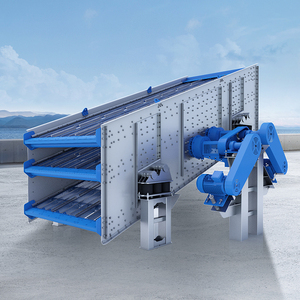
Aggregate Vibrating Screen Machine for Stone Crusher Plant 60-350t/h Ore Processing 30kW Motor High Output Finished Sand
Inquire Now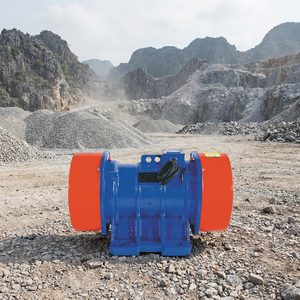
Vibrating Screen Vibrating Feeder & Hopper Vibration Motor for Ore Processing Heavy Load Capacity Durable Engine
Inquire Now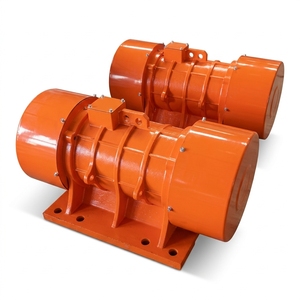
Three Phase Vibration Motor IP65 Waterproof Adjustable Exciting Force for Vibrating Screen Silo Hopper Mining Cement Machinery
Inquire Now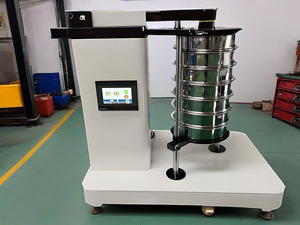
High-Accuracy Stainless Steel Laboratory Rotap Sieve Shaker Vibrating Motor Circular Vibrating Screen for Particle Size
Inquire Now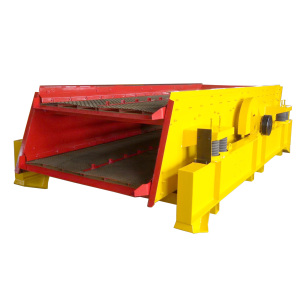
DUOLING Circular Vibrating Screen AC Motor 1-200 Tons Capacity Long Working Life for Ore Core Component Bearing Mining Screening
Inquire Now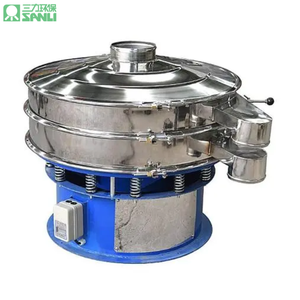
Durable Stainless Steel Rotary Vibrating Screen Motor-Easy-Clean for Food Processing (Dried Fruit Wheat Flour Sieving)-380V/220V
Inquire Now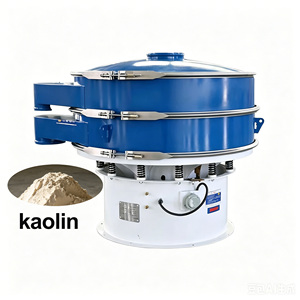
Multi-Layer Rotary Vibrating Screen Vibration Motor | Kaolin Clay Processing | 1-5 Decks Customizable | 100-500 Mesh Industrial
Inquire Now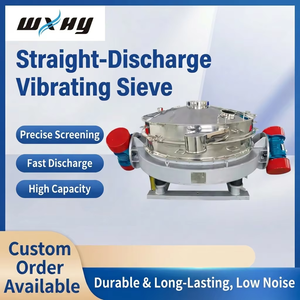
HY-1200-1s Direct Discharge Motor Vibrating Screen 380V CN Heavy Industry Powder Sieving Machine
Inquire Now1. Executive Summary & Engineering Fundamentals
In modern process industries—spanning power generation, oil and gas refining, heavy mineral processing, and municipal water management—Medium Voltage (MV) Induction Motors represent the core mechanical heart of operational infrastructure. Typically operating between 2.3 kV and 13.8 kV ratings with output power scaling up to 20,000 HP (15 MW) and beyond, medium voltage squirrel-cage and wound-rotor induction motors provide the high torque, robust continuous thermal capacity, and grid reliability required for continuous-duty turbomachinery.
Selecting a top-tier medium voltage motor manufacturer requires evaluating engineering compliance against rigorous international standards including NEMA MG1, IEEE 841, IEC 60034, EASA AR100, and specialized defense standardizations such as MIL-STD-2037. Unlike low-voltage standard commodity motors, medium-voltage induction machinery requires specialized stator winding insulation systems, advance partial discharge (PD) mitigation, structural vibration damping, and precision thermal control to achieve operational lifespans exceeding 30 to 40 years under extreme thermal-cycling and ambient conditions.
Engineering Gain Insight: Operating at medium voltage significantly reduces conductor current (Amperage) for equivalent power output compared to low voltage systems ($P = \sqrt{3} \times V \times I \times \cos\phi$). This drop in line current drastically minimizes copper $I^2R$ electrical losses across facility distribution cabling, allows smaller cable cross-sections, and reduces thermal stress across plant switchgear.
2. Technical Evaluation: Architectural Components of MV Motors
To establish true authoritativeness and reliability in motor selection, plant engineers and procurement directors must understand the core structural elements that distinguish custom heavy-duty MV induction motors from commercial off-the-shelf options:
A. Form-Wound Stator Insulation & Vacuum Pressure Impregnation (VPI)
Low voltage motors frequently employ random-wound round wire stator designs. Conversely, high-grade Medium Voltage motors utilize precision-engineered form-wound rectangular copper conductors insulated with mica tape layers. The entire assembled stator undergoes a multi-stage Global Vacuum Pressure Impregnation (VPI) cycle using 100% solid epoxy resins. This process eliminates microscopic air voids within the winding slots, preventing destructive Partial Discharge (PD) breakdown and providing superior resistance against moisture, chemical vapors, and thermal oxidation.
B. Rotor Dynamic Integrity & Cage Design
Depending on application torque profiles—such as high-inertia ball mills, heavy crusher plants, or centrifugal pumps—rotors feature either fabrications with high-conductivity heavy copper bar stock braze-welded to solid end rings, or specialized copper-alloy dual-cage profiles (NEMA Design C & D). Precision dynamic balancing to ISO 1940 Grade G1.0 standards reduces residual vibration forces, preserving bearing longevity under extreme radial and axial shock loads.
C. Advanced Enclosure Mechanics (IC Code / NEMA Standards)
Selecting the optimal enclosure protection class prevents environmental contamination and overheating:
- Totally Enclosed Fan Cooled (TEFC / IC411 - NEMA Type IP55/IP56): Ideal for harsh dust, chemical, and outdoor mining applications.
- Weather Protected Type II (WPII / IC01 - NEMA Type IP24): Features multi-turn airflow baffled chambers designed to drop out rain, debris, and snow before air enters internal cooling passages.
- Totally Enclosed Air-to-Air Cooled (TEAAC / IC611): Employs top-mounted external tube heat exchangers for heavy contaminated or marine-saline atmospheres.
- Navy Sealed Windings (MIL-STD-2037): Ultra-rigorous moisture-submersion sealed winding capability engineered for military marine and severe sub-grade pump stations.
3. Comparative Matrix: Low Voltage vs. Medium Voltage Motor Architecture
| Technical Parameter | Low Voltage Motors (< 1,000V) | Medium Voltage Motors (2.3kV – 6.6kV) | High Voltage Heavy MV (10kV – 13.8kV) |
|---|---|---|---|
| Primary HP Range | 0.5 HP – 600 HP | 250 HP – 7,500 HP | 3,000 HP – 20,000+ HP |
| Stator Winding Type | Random-Wound Wire / Formed | Form-Wound Rectangular Copper | Form-Wound Mica Tape + Corona Shield |
| Insulation System | Class F / H Dip & Bake Resin | Class F / H Dual-Cycle VPI Epoxy | Class H Mica-Glass VPI + PD Shielding |
| Bearing Architecture | Deep Groove Ball / Roller | Heavy Roller / Sleeve Bearings | Split-Sleeve Hydrodynamic / Forced Oil |
| Typical Applications | Small Pumps, HVAC, Light Conveyors | Vibrating Screens, Crushers, Compressors | Large Ball Mills, Utility Fans, Pipeline Pumps |
| Full-Load Efficiency | 88.0% – 95.5% (IE2/IE3) | 95.5% – 97.2% (IE3/IE4) | 96.5% – 98.2% (IE4/IE5 Benchmark) |
4. Institutional Competency & Brand Heritage (Louis Allis Advantage)
When procuring high-capacity electric machinery, historical performance and proven manufacturing pedigree represent crucial trust signals (E-E-A-T). Operating continuously since 1901 from an ISO 9001:2015 certified production facility in Warrior, Alabama, Louis Allis (A WorldWide Electric Company) stands among the premier specialty motor manufacturers across North America and global export markets.
Key manufacturer differentiators include:
Centennial Engineering Legacy
Over 120 years of custom electric motor design, reverse-engineering obsolete OEM footprints, and manufacturing non-standard motor drop-ins.
20,000 HP Capacity
Comprehensive in-house manufacturing, remanufacturing, and load-testing capabilities for Above-NEMA AC & DC machinery up to 20,000 HP.
MIL-SPEC & Defense Certification
Approved supplier of MIL-STD-2037 Navy-sealed windings, engineered to withstand extreme thermal shocks, moisture immersion, and high g-force vibrations.
Georator Frequency Systems
Integrated power frequency converters and permanent magnet generators designed for precise 50Hz, 60Hz, and 400Hz aerospace/military power quality.
5. Future Procurement & Market Development Trends (2025–2030)
The global transition toward industrial decarbonization, high-efficiency motor standards, and digital telemetry is reshaping how procurement directors evaluate medium voltage motor investments:
A. Integration of Smart Predictive Condition Monitoring (IoT)
Modern MV induction motors are increasingly specified with built-in digital sensor arrays. Tri-axial wireless vibration sensors, dual-element Stator Winding RTDs (Resistance Temperature Detectors), sleeve bearing temperature sensors, and online Partial Discharge coupler sensors stream real-time operational telemetry to cloud analytics platforms. This shift enables true predictive condition-based maintenance, preventing catastrophic stator insulation failures and unpredicted plant downtime.
B. Inverter-Duty Optimization & High-Frequency Voltage Protection
With Variable Frequency Drives (VFDs) becoming standard for process flow speed control, MV motors face steep $dv/dt$ voltage spikes, reflected waves, and common-mode shaft voltages. Next-generation MV motor procurement standards demand conductive slot armor tape, mica-pigmented magnet wire, inverter-duty VPI resin, insulated non-drive end bearings, and shaft grounding rings to neutralize bearing fluting and electro-discharge machining (EDM) degradation.
C. Decarbonization & Circular Remanufacturing
In accordance with global Scope 1 & 2 emission reduction goals, industrial enterprise buyers prioritize Factory Recertified Motors and precision remanufacturing. Re-engineering vintage stator cores with modern low-loss M19 silicon steel laminations and upgraded Class H VPI insulation restores legacy equipment to modern IE3/IE4 efficiency classes at 40-60% of the cost of new equipment with significantly reduced lead times.
6. Procurement FAQs: Frequently Asked Questions
What is the primary difference between Medium Voltage and Low Voltage Induction Motors?
Medium Voltage motors operate at voltage levels typically ranging from 2,300V to 13,800V, whereas Low Voltage motors operate under 1,000V (e.g., 380V, 460V, 690V). MV motors are designed for high-power applications (typically above 250 HP), using form-wound stator coils with Vacuum Pressure Impregnation (VPI) insulation to handle high dielectric stress with low current draw.
Why is Vacuum Pressure Impregnation (VPI) crucial for Medium Voltage stator windings?
VPI ensures that 100% solid solventless epoxy resin penetrates deeply into every layer of mica insulation tape surrounding form-wound stator conductors under vacuum and high pressure. This eliminates air pockets, preventing internal partial discharge electrical erosion, improving thermal conductivity, and structural rigidity under dynamic torque loads.
How do VFDs affect medium voltage motor insulation, and how is it mitigated?
VFD pulse-width modulation (PWM) creates rapid voltage rise times ($dv/dt$), leading to voltage overshoot spikes and partial discharge within stator turns. Top manufacturers mitigate this by installing Class H mica-glass insulation, anti-corona shield tapes on slot exits, insulated bearings to block circulating shaft currents, and installing output $dv/dt$ or sine-wave filters.
What documentation should be requested when procuring custom MV induction motors?
Procurement teams should require complete Factory Acceptance Testing (FAT) reports, including: Insulation Resistance & Polarization Index (IEEE 43), Winding Resistance, Stator Surge Testing, Partial Discharge Level Verification (IEC 60034-27), High-Potential (Hi-Pot) test results, No-Load & Full-Load dynamic vibration spectrum analysis, and ISO 9001 quality compliance certificates.
Need Custom Medium Voltage Motor Engineering or Emergency Outage Support?
Consult with our ISO 9001:2015 certified application engineers for custom motor designs up to 20,000 HP, factory recertified units, and rapid field service support.
Inquire Now