
Featured Heavy-Duty Heavy Industry Motor Solutions
Precision-Engineered Heavy Duty Slip Ring Motors, Vibration Induction Actuators, and High-Torque Processing Drives
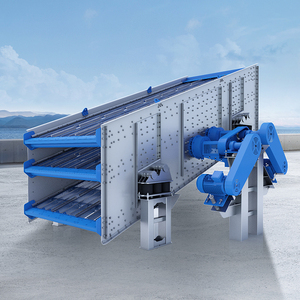
Aggregate Vibrating Screen Machine Heavy Duty Motor (60-350t/h)
- Power Output: 30kW Heavy-Duty Continuous
- Processing Yield: 60-350 Tons/Hour Ore Capacity
- Enclosure: Dust-Proof IP65 Mining Grade
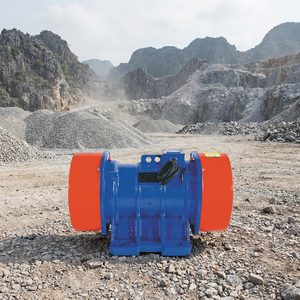
Vibrating Screen Vibrating Feeder & Hopper Vibration Motor
- Duty Cycle: Continuous Heavy Load Operation
- Core Structure: Reinforced Bearing Housing
- Application: Ore Processing & Heavy Feeders
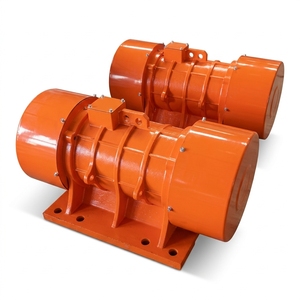
Three Phase Adjustable Exciting Force Waterproof Vibration Motor
- Ingress Protection: IP65 Submersible Seals
- Force Adjustment: Stepless Mechanical Eccentricity
- Sectors: Cement, Silo Hopper & Mining
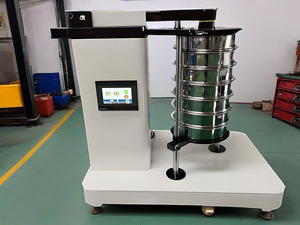
High-Accuracy Stainless Steel Laboratory Rotap Sieve Shaker Motor
- Material: Premium 304 Stainless Steel Frame
- Vibration Profile: Harmonic Sieve Analysis
- Calibration: Fine Particle Size Separation
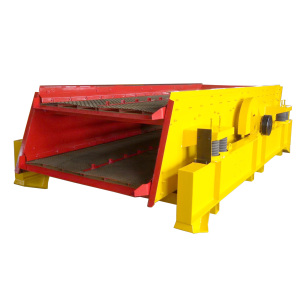
DUOLING Circular Vibrating Screen AC Motor (1-200 Tons Capacity)
- Throughput Rate: Up to 200 Tons/Hour
- Bearing Tech: Premium Heavy-Duty Roller Bearings
- Thermal Rating: Class H Vacuum Impregnated
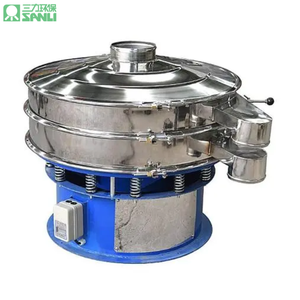
Durable Stainless Steel Rotary Vibrating Screen Motor for Food Processing
- Sanitary Standard: Easy-Clean Stainless Steel
- Voltage Configurations: 380V / 220V Dual-Wound
- Target Media: Flour, Granules & Dried Fruit
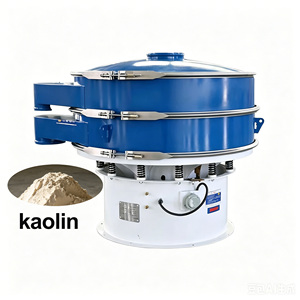
Multi-Layer Rotary Vibrating Screen Motor (Kaolin Clay Processing)
- Deck Customization: 1-5 Screen Decks
- Particle Separation: 100-500 Mesh Industrial
- Duty Type: Ultra-Fine Mineral Sieving
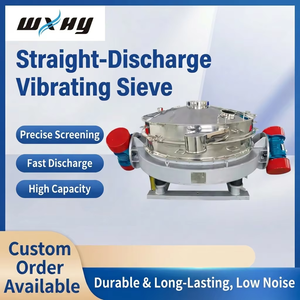
HY-1200-1s Direct Discharge High-Speed Motor Vibrating Screen 380V
- Drive Motion: High-Frequency Direct Discharge
- Input Voltage: 380V 3-Phase Industrial
- Efficiency Rating: Continuous Inline Yield
1. Comprehensive Technical Architecture of Heavy-Duty Slip Ring Motors
In modern heavy industrial applications—ranging from mega-scale aggregate crushers, ball mills, kilns, and high-inertia mining conveyors to heavy-duty vibrating screens—the electromechanical demands placed on electric drives exceed standard industrial parameters. Standard squirrel-cage induction motors frequently encounter severe thermal overload and high mechanical stress during full-load start-up cycles due to high inrush currents (typically 600% to 800% of full-load current). To overcome these thermodynamic and mechanical torque constraints, global engineering procurement teams turn to Heavy Duty Slip Ring Motors (also known as Wound Rotor Induction Motors).
Unlike fixed-rotor induction designs, a slip ring motor features a three-phase wound rotor connected via electrographite or metallic carbon brushes riding on heavy-duty phosphor bronze or stainless steel collector rings. This architecture enables the introduction of external variable resistance into the rotor circuit during starting phases. By modulating external impedance, engineers can precisely tune the motor's starting characteristics: achieving maximum locked-rotor torque (breakdown torque) while maintaining starting current at exceptionally low thresholds (typically under 150% to 200% of nominal rating).
By controlling rotor resistance ($R_2$), the slip ($s$) at which maximum torque occurs shifts according to $s_{max} = R_2 / X_2$. Increasing external resistance allows peak electromagnetic torque to occur at $s=1$ (zero speed), transforming heavy-load startup dynamics without inducing line voltage sags or thermal stress across the stator windings.
1.1 Electromechanical Component Breakdown & Insulation Integrity
Export-grade heavy duty slip ring motors designed for harsh ambient environments (such as quarry mining, cement manufacturing, and chemical refining) must incorporate advanced insulation systems. Our engineered units utilize Class H and Class F Vacuum Pressure Impregnation (VPI) epoxy resin systems. VPI eliminates internal microscopic air voids within both stator and rotor coils, preventing partial discharge degradation and optimizing thermal conductivity to the frame.
| Performance Specification | Heavy-Duty Slip Ring Motor (Wound Rotor) | Standard Squirrel Cage Induction Motor | VFD-Driven Standard Induction Motor |
|---|---|---|---|
| Starting Torque Capability | Extreme (Up to 250-300% Full Load) | Moderate (120-160% Full Load) | High (Controlled V/Hz Curve) |
| Inrush Current Impact | Low (Controlled via Rotor Resistance) | Very High (600-800% FLA) | Low (Inverter Controlled) |
| High-Inertia Thermal Tolerance | Superior (Heat Dissipated Out-of-Motor) | Poor (Internal Rotor Heating) | Moderate (Harmonic Heating Risk) |
| Harsh Operating Environment Resilience | Exceptional (Heavy Duty Mechanical Frame) | Standard Grade | Requires Sensitive Electronics Shelter |
| Maintenance & Serviceability | Brushgear & Slip Ring Inspection | Minimal Bearing Maintenance | VFD Electronics Refurbishment |
2. Application Engineering: Vibrating Screens, Crushers & Heavy Feeders
In aggregate processing and mineral extraction plants, heavy-duty slip ring motors often operate in tandem with high-output vibration motors and vibratory exciters. Equipment like aggregate vibrating screens (handling 60 to 350+ tons per hour) and heavy hopper feeders demand continuous mechanical excitation combined with extreme structural endurance.
2.1 Dynamics of Unbalanced Vibratory Force Generation
Industrial vibration motors generate centrifugal force via adjustable eccentric weights installed on both ends of the double-extended rotor shaft. The generated exciting force ($F_c$) is governed by the rotational velocity ($\omega$) and static moment ($m \cdot r$):
F_c = m \cdot r \cdot \omega^2
Where m represents mass of the eccentric weights, r is the distance from the center of gravity to the rotational axis, and ω is angular velocity. Precision phase tuning between dual-motor configurations allows self-synchronizing linear or circular motion paths across multi-deck screening platforms.
When sieving abrasive media (kaolin clay, crushed granite, iron ore, or cement clinker), vibration motors must endure continuous multi-directional g-force loads (often exceeding 5g to 10g acceleration). This requires specialized spherical roller bearings with enlarged radial clearances (C3 or C4 clearance standards), cast-iron frame construction, and IP65/IP66 enclosure integrity to prevent dust infiltration.
3. Strategic Industry Trends & Future Procurement Dynamics (2025–2030)
As global industrial operators commit to operational decarbonization, predictive asset maintenance, and lowered total cost of ownership (TCO), the procurement landscape for heavy-duty electric motors is experiencing pivotal technological shifts. Senior plant engineers and global procurement directors must evaluate key trends when selecting export partners:
1. Industrial IoT Integration
Real-time telemetry embedded inside slip ring brush enclosures. Wireless tri-axial vibration sensors, brush wear monitoring optics, and winding RTD temperature probes stream data directly to central SCADA/Edge AI systems for predictive maintenance.
2. Liquid Rotor Starters (LRS)
Transitioning from traditional metallic resistor banks to automatic Liquid Rotor Resistance Starters. LRS systems provide smooth, stepless resistance variation via electrolyte concentration control, completely removing torque spikes during startup.
3. Premium Energy Efficiency Standards
Compliance with international IE3 and IE4 efficiency standards under IEC 60034-30-1. Enhanced lamination steel grades (low watt-loss silicon copper core) drastically reduce stray load losses during high-duty continuous cycles.
4. Hybrid Brush-Lifting Mechanisms
Automated pneumatic or motorized brush-lifting mechanisms that short-circuit slip rings once nominal operating speed is reached. This eliminates brush wear and friction losses during long continuous running periods.
5. Anti-Corrosive Marine/Mining Protection
Multi-coat epoxy polyurethane surface protection (ISO 12944 C5-M certified) designed to resist saltwater mist, chemical fumes, and abrasive dust bombardment in seaside ports and open-pit mining environments.
6. Drop-In Retrofitting Solutions
Engineering replacement slip ring motors that match legacy footprints (Louis Allis, GE, Westinghouse, Siemens legacy frames). Custom shaft extensions and foot mounting dimensions enable rapid installation without foundation modifications.
4. World-Class Manufacturing & Global Engineering Capabilities
Building upon nearly a century of electric motor design and manufacturing heritage, our partner engineering infrastructure represents the absolute pinnacle of heavy industrial rotating machinery production. Operating out of ISO 9001:2015 certified facilities, our engineering group delivers specialized custom AC and DC motors rated up to 20,000 Horsepower (HP) for global deployment.
4.1 Engineering & Manufacturing Rigor
Every heavy-duty slip ring motor and heavy vibration motor undergoes stringent quality verification before export packaging:
- Full Load & Temperature Rise Testing: Verified in accordance with IEEE 112 Method B and NEMA MG-1 standards to ensure thermal compliance under extreme load profiles.
- Military-Spec & Navy-Sealed Windings: Optional sealed winding systems complying with MIL-STD-2037 for total moisture immersion and severe ambient isolation.
- Dynamic Rotor Balancing: Two-plane dynamic rotor balancing per ISO 1940 Grade G1.0 standards, eliminating destructive vibration resonances across operational speed bands.
- EASA-AR100 Quality Verification: Adherence to the Electrical Apparatus Service Association's stringent remanufacturing and testing protocols.
4.2 Turnkey Export & Engineering Field Services
Beyond factory manufacturing, our global engineering division provides complete technical support, emergency outage assistance, predictive field diagnostic testing (surge testing, partial discharge analysis, thermal imaging), and custom shaft/frame engineering for complex industrial retrofits.