
Featured Hydroelectric Generators & Complete Turbine Sets
Discover our precision-engineered hydropower generation equipment. Built under ISO 9001:2015 quality frameworks, engineered for high hydraulic efficiency, low operating maintenance, and seamless grid synchronization.
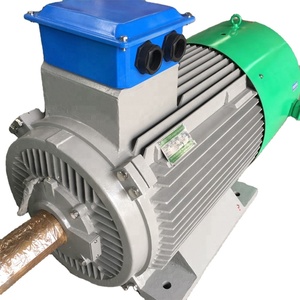
60kw 60rpm 400V Low Speed Generator for Hydro & Wind Turbines
Rating: 60 kW | 400V Three-Phase
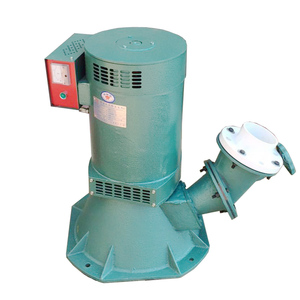
Mini Water Generator Hydro Turbo Set 3kw 5kw 8kw 10kw Micro Portable
Rating: 3 kW - 10 kW Modular Output
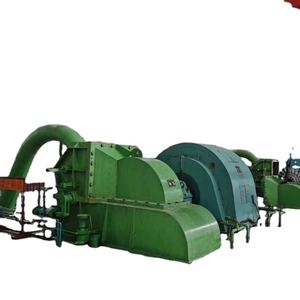
Stainless Steel Hydro Generator Mini Hydropower Generator Set
Application: Hydropower Plants & Rivers
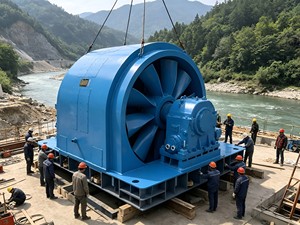
660Kw Heavy-Duty Water Turbine Hydro Electric Generator Set
Rating: 660 kW Continuous Utility Output
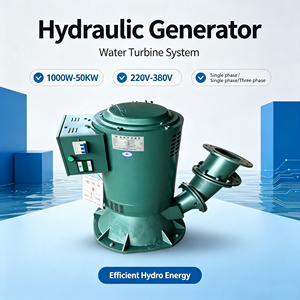
Irrigation Canal Hydro Generator Water Turbine 1000W-50000W 220V/380V
Rating: 1 kW - 50 kW Single/3-Phase
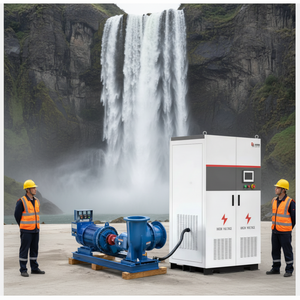
30KW 50KW 100KW Small Hydro Generator 380V Water Turbine
Rating: 30 kW / 50 kW / 100 kW
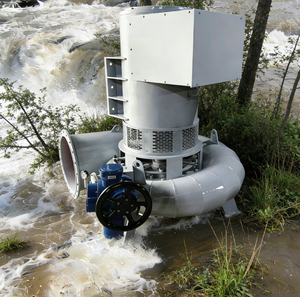
150kw Hydro Electric Turbine Generator Vertical Heavy Duty Hydro Motor
Rating: 150 kW Industrial Grade
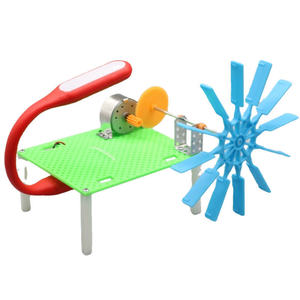
OKYN-Y0229 Durable Industrial Hydro Turbine Generator for Plants
Application: Heavy Industrial Grid Supply
Navigating the Global Hydro Turbine Supply Chain in China
As global decarbonization mandates accelerate, small, medium, and utility-scale hydroelectric power assets are experiencing a major technological renaissance. Sourcing hydro turbine generators directly from leading Chinese OEMs offers unprecedented cost efficiencies—provided procurement teams evaluate technical standards accurately.
Technical Matrix: Matching Head & Flow Parameters to Turbine Selection
Selecting the optimal hydro turbine generator architecture is vital to maximizing Levelized Cost of Energy (LCOE). The table below outlines standard operational thresholds across major equipment configurations produced by top Chinese manufacturers.
| Turbine Architecture | Net Head Range (m) | Flow Rate Range (m³/s) | Generator Efficiency | Best Fit Application |
|---|---|---|---|---|
| Pelton Impulse Wheel | 50m – 1,000m+ | 0.05 – 5.0 m³/s | 91% – 95% | High Head / Low Flow Mountainous Run-of-River |
| Francis Reaction Turbine | 20m – 500m | 0.8 – 50.0+ m³/s | 93% – 96.5% | Medium Head / Wide Flow Small-to-Large Utility Plants |
| Kaplan / Axial Flow | 2m – 40m | 3.0 – 100.0+ m³/s | 89% – 94% | Low Head / High Flow Rivers, Reservoirs, & Weirs |
| Tubular / Canal Turbine | 1m – 15m | 0.2 – 15.0 m³/s | 87% – 92.5% | Ultra-Low Head Agricultural Canals & Micro-Hydro |
Why Global EPCs Partner with Our Manufacturing Network
Combining decades of electromechanical engineering legacy with advanced ISO 9001:2015 certified manufacturing facilities, we bridge the gap between heavy industrial reliability and competitive OEM pricing.
Advanced Hydro-Dynamic CFD Design
Our engineering teams utilize 3D Computational Fluid Dynamics (CFD) and Finite Element Analysis (FEA) to custom-engineer turbine runners, optimizing fluid flow and reducing cavitation damage over decades of continuous operation.
VPI Insulation & Class H Standards
Generators are manufactured using Vacuum Pressure Impregnation (VPI) with Class F and Class H epoxy resin insulation systems, protecting windings against moisture ingress, thermal stress, and high-voltage breakdown under load transients.
Rigorous Full-Load Test Bench Testing
Every hydro alternator undergoes comprehensive factory acceptance testing (FAT), including runaway speed survival testing, vibration spectral analysis, phase insulation integrity, and thermal rise measurement prior to international shipment.
Global Field Service & Commissioning
Our experienced field engineers deploy worldwide to provide supervisory installation, alignment balancing, excitation system tuning, grid interconnection compliance checkup, and scheduled overhaul support.
Complete "Water-to-Wire" Packages
Beyond individual turbines, we engineer integrated electro-mechanical systems including hydraulic governors, digital static excitation panels, main inlet valves (MIV), step-up transformers, and SCADA automation control interfaces.
Direct Factory OEM Sourcing Advantages
By eliminating intermediary trading markups, buyers gain direct transparent communication with lead design engineers, accelerated lead times, custom shaft dimensioning, and cost savings up to 35% compared to Western suppliers.
Future Procurement & Technological Trends in Hydro Generation
Understanding where the hydroelectric generation market is heading empowers procurement officers and plant developers to future-proof their capital investments against regulatory shifts and operational challenges.
1. Variable-Speed Permanent Magnet Generators (PMG)
Traditional hydro generators rely heavily on constant rotational speeds to maintain fixed grid frequencies. However, modern run-of-river installations experience fluctuating water heads throughout changing seasons. Chinese manufacturers are pioneering direct-drive Permanent Magnet Generators coupled with full-power electronic converters (VFDs). This approach allows the turbine runner to operate at its hydraulic optimum speed, elevating annual energy yield (AEY) by 12% to 22% during low-flow periods.
2. Ecological & Fish-Friendly Runner Architectures
Environmental compliance standards in North America and Europe now strictly regulate fish mortality rates through hydro installations. Top China hydro factories are rapidly adopting eco-runner geometry featuring reduced blade counts, rounded leading edges, and oil-free hub mechanisms. By replacing internal hydraulic hub oil with water-lubricated polymer bearings, manufacturers eliminate the risk of lubricant leakage into river ecosystems.
3. IoT Smart Sensors & Digital Twin Predictive Maintenance
Unplanned downtime in utility hydropower plants can cost tens of thousands of dollars per day. Procurement trends show a massive surge in demand for smart turbine generators pre-fitted with integrated sensor arrays. These measure partial discharge (PD) in stator windings, tri-axial bearing vibration, temperature gradients, and cavitation acoustic signatures. The resulting telemetry feeds into cloud-based Digital Twin software for predictive maintenance scheduling.
4. Micro-Hydro Modularization for Irrigation Canals & Off-Grid Networks
Beyond megawatt-scale dam projects, micro-hydro generators (ranging from 1kW to 100kW) represent the fastest-growing market segment. Sourcing trends highlight pre-assembled "plug-and-play" inline canal turbines that require minimal civil engineering works. Irrigation districts and remote industrial mining camps are leveraging these compact units to generate low-cost clean power from existing water conveyances.
B2B Procurement & Engineering FAQ
Direct answers to critical technical and logistical questions faced by engineering procurement specialists when evaluating Chinese hydro turbine generator suppliers.
What essential data is required to request an accurate hydro turbine proposal?
To calculate exact runner diameter, rotational speed, and generator output rating, suppliers require: 1) Net hydraulic head (meters), 2) Rated design water discharge flow rate (m³/s), 3) Water quality/silt concentration levels, 4) Desired grid output voltage/frequency (e.g., 400V/6.6kV at 50Hz or 60Hz), and 5) Distance from powerhouse to grid connection point.
How do Chinese hydro generator factories handle anti-cavitation and wear resistance?
Leading Chinese OEMs manufacture turbine runners using high-nickel-chromium stainless steel alloys (such as ZG06Cr13Ni4Mo or 0Cr13Ni5Mo). For rivers with high sediment load, runners undergo HVOF (High-Velocity Oxygen-Fuel) thermal spray coating of tungsten carbide, extending component lifespan up to 300% under severe erosion conditions.
What is the typical operational lifespan and maintenance cycle for these hydro sets?
Industrial-grade hydro turbine generators are designed for a 30- to 50-year structural service life. Major overhaul inspections are generally scheduled every 8 to 10 years (or ~60,000 operational hours), focusing on bearing replacement, runner polishing, stator re-varnishing, and seal replacements.
Can Chinese hydro generators be synchronized with Western power grid codes?
Yes. Modern generator sets are equipped with digital automatic voltage regulators (AVR) and digital governors that conform strictly to IEEE, IEC, and NEMA grid connection standards. They support grid-following or grid-forming modes, reactive power control (VAR support), and automatic synchronization.
What quality control documentation is provided prior to export dispatch?
Standard factory dispatch documentation packages include: Factory Acceptance Test (FAT) Certificates, Rotor Dynamic Balancing Reports, Stator High-Potential (Hi-Pot) Insulation Test Logs, Hydrostatic Pressure Test Certificates for spiral casings, Material Mill Test Reports (MTR), and ISO 9001 compliance logs.
How are heavy hydro turbine components packaged and transported internationally?
Generators and turbine components are disassembled into transportable modules. Shafts and runners are treated with anti-rust oil, wrapped in VCI protective films, and secured inside heavy-duty, fumigated IPPC-certified wooden cases or steel framework skids suitable for ocean freight containerization or break-bulk shipping.
Ready to Engineer Your Next Hydropower Project?
Connect directly with our senior application engineers to receive custom hydraulic calculations, complete equipment specifications, budget estimates, and factory audit documentation tailored to your site's exact head and flow parameters.