
Featured Industrial Synchronous Equipment & Control Systems
Explore our flagship lineup of high-voltage synchronous alternators, automated parallel grid-tie panels, hydro turbine power units, and static reactive power generators designed for critical power infrastructure.
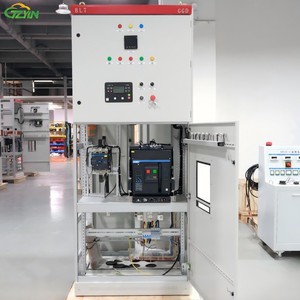
Complete Set Parallel Cabinet 400kW Generator Grid Synchronization Control Panel for Industrial Backup Power System
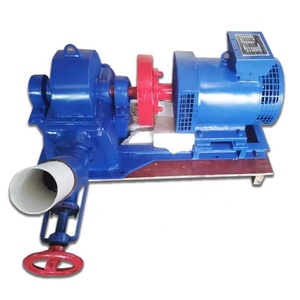
High Water Head 325m Design Head 15kW 20kW 30kW 380V/400V Small Pelton Wheel Hydro Turbine Generator Micro Renewable Energy
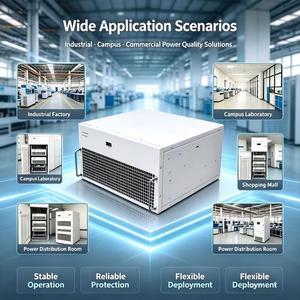
High-quality Static Reactive Power Generator Made In China
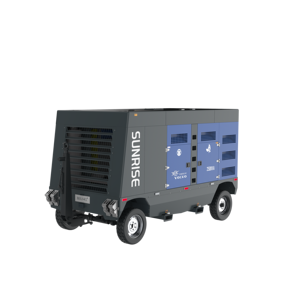
Volvo 200kW 250KVA Silent Mobile Diesel Generator Synchronous Parallel Max 16 Units 4G Remote Control Industrial Power Generator
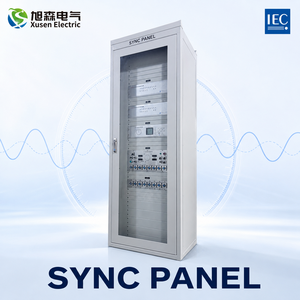
Generator Sync Panel For Automatic Synchronization And Safe Grid Connection In Hydropower Plants
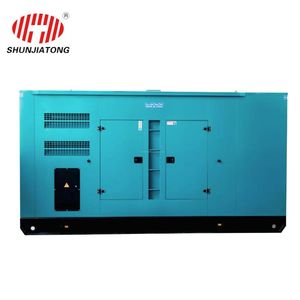
Volvo Penta 600kW 650kW 750kVA Auto Start ATS Synchronous Intelligent Smart Diesel Generator
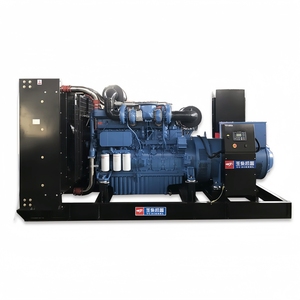
Yuchai 750kW Silent Diesel Generator 900kVA AC Synchronous Generator Set Engine for Hotel and Office Building Emergency Standby
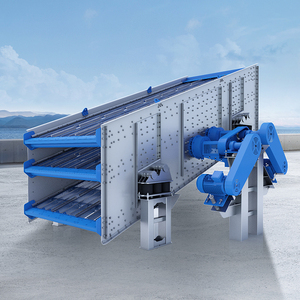
Aggregate Vibrating Screen Machine for Stone Crusher Plant 60-350t/h Ore Processing 30kW Motor High Output Finished Sand
The Evolution of Synchronous Power Generation in the Modern Energy Era
As power grids globally shift toward decentralization, microgrids, and green fuel integration, synchronous generators remain the indispensable foundation of high-inertia power generation and dynamic voltage stability.
Strategic Information Gain: Why Synchronous Machines Dominate High-Load Utility Networks
Unlike asynchronous (induction) generators or inverter-based renewable resources, AC synchronous generators supply inherent mechanical inertia to electric grids. This mechanical inertia directly prevents sudden frequency collapse during transient fault conditions. In high-demand industrial sectors—such as mining, petrochemical processing, data center continuous power, and hydro-electric plants—synchronous machines provide essential lagging and leading reactive power control through controlled DC rotor excitation systems.
Furthermore, modern synchronous machines are no longer standalone mechanical units; they are integrated digital power ecosystems featuring digital Automatic Voltage Regulators (AVR), brushless excitation topologies, and remote 4G telemetry modules capable of synchronizing up to 16 parallel units within milliseconds.
Top 10 Synchronous Generator Manufacturers & Global Exporters Evaluation
An authoritative engineering assessment of the leading original equipment manufacturers (OEMs) and exporting giants driving technical innovation, grid compliance, and industrial-grade quality worldwide.
1. Louis Allis (A WorldWide Electric Company)
Headquarters: Warrior, Alabama, USA | Established: 1901
Core Specialization: Custom-engineered specialty AC/DC synchronous generators and motors up to 20,000 HP (15,000 kW), high-voltage rewind services, and MIL-STD certified equipment.
Key Competitive Advantage: Recognized for century-long engineering excellence, Louis Allis delivers custom-tailored, heavy-duty synchronous machines certified to ISO 9001:2015, IEEE, and MIL-SPEC standards. Their units excel in harsh industrial environments including oil rigs, mining mills, and defense infrastructure, offering custom-fit replacements and severe-duty VPI insulation.
2. Stamford & AvK (Cummins Generator Technologies)
Headquarters: Peterborough, United Kingdom
Core Specialization: Brushless AC synchronous alternators ranging from 7.5 to 11,200 kVA, low, medium, and high voltage machines.
Key Competitive Advantage: Industry standard for marine, oil & gas, and standby generator integration. Stamford's S-Range alternators utilize CoreSense technology to deliver real-time diode monitoring and digital AVR protection against grid imbalances.
3. Caterpillar Electric Power (CAT)
Headquarters: Deerfield, Illinois, USA
Core Specialization: Heavy industrial diesel and natural gas synchronous gensets, utility power plants, and emergency backup installations.
Key Competitive Advantage: CAT synchronous sets feature market-leading block load acceptance (ISO 8528-5 G3 compliant) with fully integrated digital switchgear, offering turn-key grid stabilization and islanding capabilities.
4. Siemens Energy
Headquarters: Munich, Germany
Core Specialization: Utility-scale synchronous generators (SGen Series) up to 300 MVA, hydro generators, and synchronous condensers.
Key Competitive Advantage: Siemens leads the renewable integration market by repurposing traditional synchronous alternators into dynamic synchronous condensers, delivering reactive power and physical inertia to decarbonized grids.
5. ABB Power Conversion
Headquarters: Zurich, Switzerland
Core Specialization: High-efficiency AMG series synchronous generators for marine propulsion, hydro turbines, and industrial co-generation.
Key Competitive Advantage: ABB’s synchronous units are engineered for extreme energy efficiency (>97.5%) with modular cooling systems (open air, water-jacket, or air-to-water heat exchangers) meeting DNV-GL marine standard specs.
6. WEG Electric Equipment
Headquarters: Jaraguá do Sul, Brazil
Core Specialization: AG10 and S-Line brushless synchronous alternators up to 50,000 kVA for biomass, small hydro, and industrial power plants.
Key Competitive Advantage: Extensive global manufacturing footprint across South America, Europe, and Asia, offering robust tropicalized insulation systems and cost-efficient custom engineering for power exporters.
7. Leroy-Somer (Nidec Industrial Automation)
Headquarters: Angoulême, France
Core Specialization: LSA and TAL series commercial/industrial synchronous alternators (10 kVA to 3,600 kVA) with AREP and PMG excitation options.
Key Competitive Advantage: Exceptional short-circuit current maintenance (300% for 10 seconds), making them ideal for heavy industrial motor starting and complex harmonic load environments.
8. Mecc Alte
Headquarters: Creazzo, Italy
Core Specialization: 100% focused independent manufacturer of synchronous alternators from 1 to 5,000 kVA.
Key Competitive Advantage: Highly versatile digital regulation platforms (DER1 and MAUX systems) with ultra-compact designs favored by mobile containerized generator set exporters worldwide.
9. Volvo Penta Power Systems (OEM Integrators)
Headquarters: Gothenburg, Sweden
Core Specialization: Heavy-duty industrial diesel synchronous gensets with integrated 4G remote management and ATS auto-start capabilities.
Key Competitive Advantage: Industry-leading fuel economy, low emissions compliance (Stage V / Tier 4 Final), and rapid step-load capability for critical backup in telecom and medical facilities.
10. Yuchai Machinery & Power Equipment
Headquarters: Yulin, Guangxi, China
Core Specialization: High-power output AC synchronous generator sets (up to 3,000 kVA) for commercial, mining, and civil infrastructure emergency standby.
Key Competitive Advantage: Exceptional cost-to-performance ratio, extensive spare parts availability, high export volume to Southeast Asia, Africa, South America, and the Middle East.
Comparative Matrix: Top Synchronous Generator Exporters
Side-by-side engineering metrics evaluating power rating ranges, voltage classes, subtransient reactance (Xd"), dynamic efficiency, and compliance standards.
| Manufacturer | Power Output Range | Voltage Classes | Excitation Type | Xd" Subtransient Reactance | Peak Efficiency | Primary Target Applications |
|---|---|---|---|---|---|---|
| Louis Allis | 100 kW - 15,000 kW | 400V to 13.8 kV | Brushless / PMG / Digital AVR | 9% - 14% (Custom) | 97.8% | Mining, Heavy Industry, Defense, Hydro |
| Stamford & AvK | 7.5 kVA - 11,200 kVA | 380V to 13.8 kV | AREP / PMG / Brushless | 10% - 15% | 97.2% | Marine, Telecom, Standby Power |
| Caterpillar (CAT) | 50 kW - 4,000 kW | 400V to 13.8 kV | Permanent Magnet (PMG) | 11% - 16% | 96.8% | Data Centers, Mining, Construction |
| Siemens Energy | 10 MVA - 300 MVA | 6.3 kV to 24 kV | Static / Brushless High Response | 12% - 18% | 98.5% | Utility Grid, Hydro, Synchronous Condensers |
| ABB | 100 kVA - 50,000 kVA | 400V to 15 kV | Digital AVR Brushless | 10% - 14% | 97.6% | Propulsion, Co-generation, Marine |
| Leroy-Somer | 10 kVA - 3,600 kVA | 220V to 13.8 kV | AREP / Auxiliary Winding | 8.5% - 13% | 96.5% | Commercial Gensets, Mobile Rentals |
| WEG | 50 kVA - 50,000 kVA | 380V to 13.8 kV | Brushless / PMG System | 10% - 16% | 97.1% | Biomass, Sugar Mills, Hydro Exporters |
Global Procurement & Technological Trends (2025–2030)
Key technological shifts that procurement managers, EPC contractors, and plant engineers must evaluate prior to issuing tenders for synchronous power units.
1. Grid-Forming Synchronous Microgrids & Parallel Cabinets
As solar PV and wind farms proliferate, electrical grids suffer from diminished rotational inertia. Modern procurement mandates automated grid synchronization control panels capable of parallel load sharing across multiple generator sets (such as parallel 400kW or 600kW units). Intelligent sync panels match voltage amplitude, frequency, and phase angle within millisecond windows to prevent destructive circulating currents.
2. Static Reactive Power Generators (SVG) & Power Factor Correction
Heavy industrial loads (vibrating screens, ball mills, electric arc furnaces) introduce significant inductive power factor drops and severe voltage flicker. Modern power plant blueprints combine conventional synchronous alternators with Static Reactive Power Generators (SVG). SVGs provide stepless, dynamic reactive power compensation (leading and lagging) in under 5 milliseconds, drastically optimizing fuel efficiency and prolonging alternator winding insulation life.
3. IoT-Enabled Telemetry & Predictive Maintenance
Exporters are increasingly standardizing 4G/5G remote control telemetry on mobile and stationary synchronous gensets. Parameters such as stator winding temperature (RTD sensors), bearing vibration spectrums, excitation field voltage, and oil pressure are streamed to cloud dashboards, permitting predictive component replacement prior to catastrophic catastrophic outages.
4. Hydrogen-Blend & Multi-Fuel Dual Synchronous Gensets
Environmental standards (EU Stage V, US EPA Tier 4 Final) drive demand for synchronous generator sets compatible with 20%-100% hydrogen-blend fuels, HVO (Hydrotreated Vegetable Oil), and compressed natural gas (CNG). Brushless alternator designs with Class H insulation and VPI (Vacuum Pressure Impregnation) prevent degradation under high combustion temperature profiles.
Why Partner With Us: Industrial Engineering Capabilities
Leveraging over a century of manufacturing heritage, custom motor/generator engineering, and certified international quality standards.
ISO 9001:2015 & MIL-SPEC Certified
Every synchronous alternator, parallel sync panel, and hydro generator undergoes rigorous quality assurance, thermal rise testing, and MIL-STD-2037 Navy Sealed Winding validation.
Custom Fit & Function Engineering
We design drop-in replacements for obsolete, legacy, or hard-to-source synchronous units up to 20,000 HP, eliminating costly physical foundation modifications for industrial plants.
Full-Load High Voltage Testing
Our facility is equipped with state-of-the-art dynamometer test beds and high-voltage load banks, verifying Xd" subtransient reactance, power factor compliance, and load acceptance prior to dispatch.
Global Export & On-Site Support
Our specialized global logistics team ensures secure export packaging, while our field engineers deliver emergency outage repair, predictive maintenance, and commissioning services worldwide.
Need a custom synchronous generator quote, automatic grid tie panel design, or emergency technical support?
Frequently Asked Questions by Industrial Buyers & Engineers
Detailed technical answers addressing core electrical engineering, installation parameters, and equipment specification criteria.
1. What are the fundamental operational differences between synchronous generators and asynchronous (induction) generators?
A synchronous generator operates at an exact synchronous speed directly locked to the electrical grid frequency (N_s = 120f / p), utilizing an external DC excitation system (brushless or slip-ring) to energize the rotor field. In contrast, an induction generator operates with a slight slip above synchronous speed and relies on reactive power absorbed from the grid to establish its magnetic field. Synchronous machines can independently supply both active power (kW) and reactive power (kVAR), making them essential for grid stabilization, islanded operation, and heavy industrial load management.
2. How does an Automatic Generator Grid Synchronization Control Panel manage safe parallel operation?
An automatic synchronization control panel continuously monitors four critical electrical conditions between the incoming synchronous generator and the live busbar: 1) Voltage Amplitude Matching (ΔV < 1%), 2) Frequency Matching (Δf < 0.1 Hz), 3) Phase Angle Synchronization (Δφ < 5°), and 4) Phase Sequence Verification. Once all parameters align within preset safety windows, the automatic synchronizer closes the motor-operated circuit breaker. Modern panels incorporate droop control or Isochronous load sharing modules to balance active kW and reactive kVAR proportional to each generator's rating.
3. Why is Subtransient Reactance (Xd") critical when specifying synchronous alternators for heavy motor starting applications?
Subtransient Reactance (Xd") measures the initial internal opposition of the generator stator windings to sudden current changes during the first 1 to 3 cycles of a fault or across-the-line electric motor start (such as starting a 30kW motor on a vibrating screen or crusher plant). A lower Xd" value (e.g., 9% to 12%) reduces initial voltage dip when high inrush current (LRA) is drawn, preserving voltage stability across connected sensitive control equipment and preventing false system tripping.
4. How do Static Reactive Power Generators (SVG) compare to traditional Synchronous Condensers for power factor correction?
Static Reactive Power Generators (SVG) are power electronics-based (IGBT inverter) active reactive power compensators that generate dynamically matching lagging or leading kVAR in real-time (<5ms response). While SVGs offer superior high-speed voltage regulation and zero mechanical maintenance, traditional rotating Synchronous Condensers provide true physical rotational inertia (ΔH) essential for weak grid frequency stability. Modern industrial microgrids often combine both technologies to achieve ultimate power quality.
5. What routine preventive maintenance protocols are essential for extending synchronous alternator operational life?
Essential maintenance includes: 1) Insulation Resistance & Polarization Index (PI) Testing (Megger testing annually to detect moisture and dielectric contamination), 2) Rotating Rectifier Diode Inspection (checking rotating diodes and surge suppressors in brushless alternators), 3) Thermal Imaging & Bearing Vibration Spectrum Analysis (monitoring for mechanical misalignment or bearing fatigue), and 4) AVR Calibration (verifying dynamic response curves and over-excitation protection features).
6. What international compliance standards should be verified before purchasing imported synchronous generator sets?
International procurement specifications should mandate compliance with ISO 8528-5 (governing generator set performance and load acceptance classes G1 to G4), IEC 60034-1 / NEMA MG1-32 (governing rotating electrical machine insulation, temperature rise, and mechanical ratings), IEEE 115 (standard test procedures for synchronous machines), and CE / UL 2200 certification for enclosure and electrical panel safety compliance.