
High-Performance Industrial & Marine Vibration Motor Solutions
Engineered for extreme operating environments, continuous duty cycles, and precise mechanical excitation across heavy marine, mining, and bulk handling systems.
Industrial-Grade Marine Propulsion Engineering: Built on Century-Old Expertise
As maritime electrification, commercial shipping decarbonization, and naval engineering standards rapidly evolve, selecting an authoritative OEM/ODM manufacturing partner is paramount. Louis Allis, backed by over 120 years of electric motor engineering excellence, stands at the forefront of specialized AC/DC marine propulsion motor design, bow thruster drives, custom vibration units, and heavy industrial power systems.
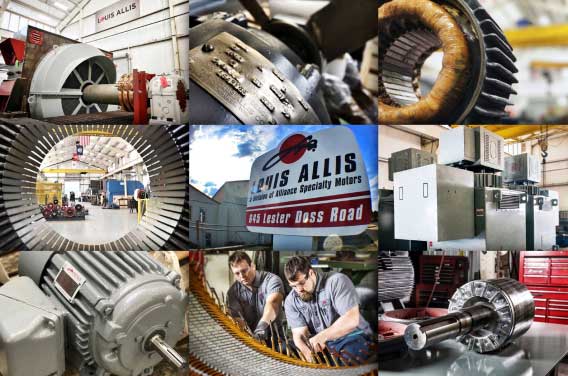
Operating from our state-of-the-art, ISO 9001:2015 certified production facility, our engineering capabilities span custom one-off prototypes up to massive 20,000 HP continuous-duty marine drive assemblies. We adhere strictly to IEEE 45, NEMA MG1, EASA AR100, UL, and MIL-STD-2037 Navy Sealed Winding specifications, ensuring absolute operational reliability under extreme hydrodynamic load, high-salinity corrosion, and severe torsional vibration.
Custom OEM/ODM Engineering & Propulsion Capabilities
Providing custom electrical, mechanical, and thermal design tailoring for naval architects, shipyards, and commercial equipment integrators worldwide.
Custom Mechanical Co-Design
Full custom frame fabrication, custom flange/shaft dimensions, and direct drop-in replacement engineering for legacy or non-standard vessel mounting configurations.
MIL-SPEC Marine Insulation
Vacuum Pressure Impregnation (VPI) utilizing Class H/H+ synthetic resins, engineered specifically to resist salt fog, high humidity condensation, and thermal shock cycles.
Variable Frequency Integration
Inverter-duty windings featuring insulated bearings and Faraday shielding to eliminate high-frequency shaft currents and micro-arcing during VFD operation.
Submerged & IP68 Sealed Enclosures
Hermetically sealed housings engineered for submerged azimuth thrusters, bow thrusters, and direct-drive underwater propulsion pods built to withstand deep-water hydrostatic pressure.
Advanced Hydrodynamic Load Testing
Full load dynamometer testing, full-spectrum vibration diagnostic mapping, thermal imaging analysis, and insulation resistance verification prior to dispatch.
Georator Power Frequency Converters
Integrated permanent magnet alternators and frequency conversion equipment delivering ultra-clean 50Hz, 60Hz, or 400Hz power for naval auxiliary systems and research vessels.
Future Procurement Trends in Marine Propulsion Motors (2025–2035)
The global marine propulsion sector is undergoing a monumental paradigm shift driven by stringent International Maritime Organization (IMO) carbon intensity regulations, energy efficiency existing ship indexes (EEXI), and total cost of ownership (TCO) optimization. For procurement managers, naval architects, and OEM ship builders, navigating this evolution requires strategic foresight into next-generation drive technologies.
1. The Rapid Shift Toward Hybrid & Full-Electric Architectures
Traditional direct-drive internal combustion diesel propulsion systems are rapidly giving way to hybrid electric and zero-emission full-electric powertrains. Electric propulsion motors allow for decoupling engine speed from propeller speed, facilitating optimal hydrodynamic efficiency across varying sea states. Sourcing trends highlight an accelerated demand for high-torque-density Permanent Magnet Synchronous Motors (PMSM) and robust AC Induction Motors capable of instant torque delivery during maneuvering and dynamic positioning.
2. Rim-Driven Thrusters & Podded Propulsion Integration
Modern naval vessel designs are increasingly incorporating rim-driven motors (RDM) and podded azimuth thrusters. By placing the electric motor directly inside an underwater pod or within the perimeter duct ring, shipbuilders eliminate traditional shaft lines, gearboxes, and hull penetrations. Sourcing procurement now prioritizes OEM factories capable of custom IP68 submerged housings, water-lubricated ceramic bearings, and specialized canned-rotor stator construction to prevent seawater ingress.
3. Demand for Integrated Digital Twins & Predictive Condition Monitoring
Procurement contracts are moving beyond raw physical machinery specs to encompass continuous telemetry and digital twin integration. Modern marine electric propulsion motors are built with embedded multi-sensor arrays—monitoring real-time winding temperature (RTDs), tri-axial vibration, moisture ingress, and bearing acoustic emission. OEM suppliers who provide pre-integrated Modbus/CANbus telemetry hubs allow vessel operators to transition from reactive maintenance to AI-driven predictive maintenance, preventing catastrophic off-shore downtime.
- Modular Power Scaling: Procurement teams increasingly request standardized modular motor frames that allow HP output upgrades without altering engine room structural bedplates.
- Decarbonization Compliance: Alignment with IMO 2030 and 2050 zero-GHG targets by combining solar-assisted battery banks with high-efficiency motor controllers.
- Supply Chain Transparency & Raw Material Traceability: Sourcing managers require full auditability for magnetic materials (e.g., Neodymium Dy/Tb content) and certified copper purity grades to ensure long-term thermal compliance.
Key Industry Development Trends in Electric Motor Manufacturing
Electric propulsion and heavy industrial vibration motors represent the critical muscle of modern maritime and bulk processing industries. To maintain competitive advantage, OEM/ODM manufacturers are pioneering breakthrough advancements in materials science, thermal dynamics, and noise-vibration-harshness (NVH) mitigation.
Thermal Management Optimization: Liquid & Direct-Winding Cooling
As power density demands increase, air-cooled motor designs often exceed physical space limits within compact ship hulls or machinery skids. Advanced industry developments utilize closed-loop jacket cooling (water/glycol mixtures) directly cast within the stator frame. Furthermore, high-end ODM designs implement direct-oil-cooled end coils, allowing motors to operate at up to 30% higher continuous current density without exceeding Class H thermal limits.
Noise and Acoustic Stealth (NVH Engineering)
For research vessels, passenger cruise ships, and naval defense craft, structure-borne vibration and underwater radiated noise (URN) are strictly regulated to protect marine ecosystems and prevent sonar detection. Advanced dynamic balancing (conforming to ISO 1940 G0.4 standards), skewed rotor slot geometries, and precision electromagnetic air-gap sizing significantly reduce harmonic torque ripple, producing near-silent propulsion performance.
High-Torque Density & Material Innovation
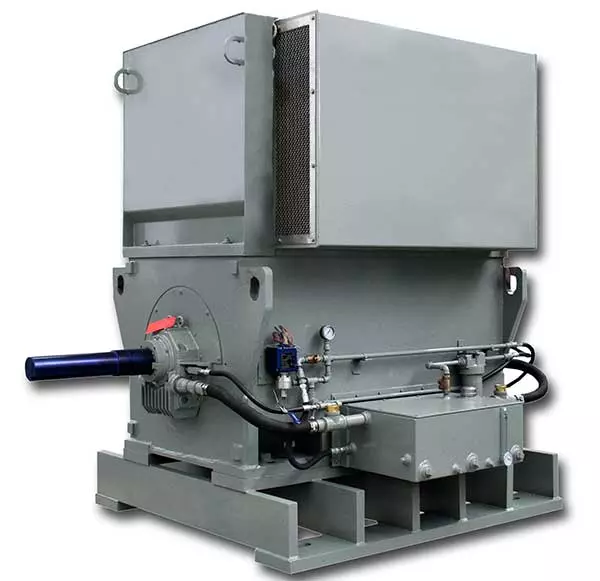
By leveraging grain-oriented silicon electrical steel laminations and ultra-high magnetic flux densities, modern marine motors achieve exceptional power-to-weight ratios. This reduction in overall motor mass lowers vessel displacement, improving fuel consumption or extending battery range per nautical mile.
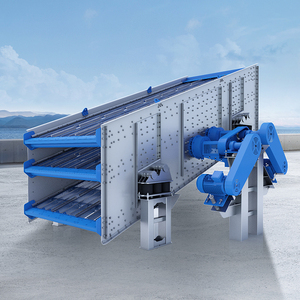
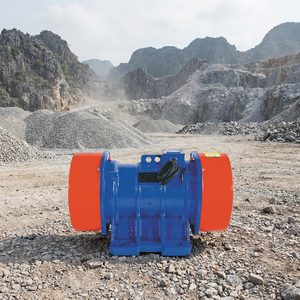
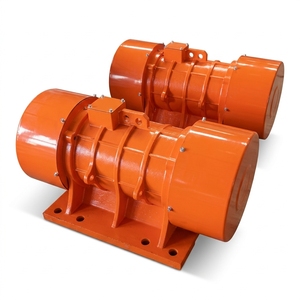
In heavy bulk screening and processing applications, robust unbalance mass systems combined with heavy-duty spherical roller bearings ensure our vibration motors endure continuous gravitational accelerations exceeding 10G without fatigue failure.
Frequently Asked Questions (FAQ) for Marine Propulsion Procurement
Technical, logistical, and customization guidance for procurement professionals, naval engineers, and global buyers.
Why Partner with Our Propulsion Manufacturing Facility?
Combining legacy engineering expertise with global field support and flexible manufacturing models.
In-House Tooling & Machining
Complete control over frame fabrication, lamination stamping, dynamic balancing, and precise machining under one roof.
Global Field Service Network
On-site predictive maintenance, commissioning support, optical alignment, and emergency outage repair teams available 24/7/365.
Factory Recertified Inventory
Access hundreds of recertified heavy-duty AC/DC frames at reduced lead times, backed by full OEM factory warranties.
Flexible OEM/ODM Business Models
Tailored contract manufacturing for marine equipment OEMs, including private labeling, custom paint colors, and dedicated spare parts stocking.