
Specialized Crusher & Vibrating Screen Motors
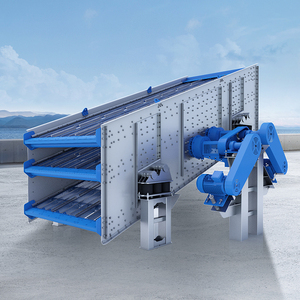
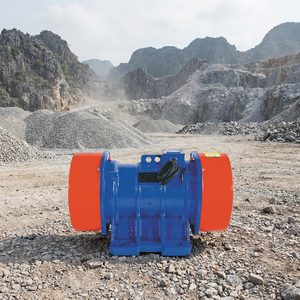
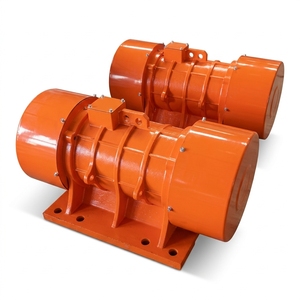
High-torque heavy-equipment electric drives designed specifically for aggregate crushing plants, ore processing, and heavy screening operations.
Executive Technical Report: Custom OEM Cone Crusher Electric Motor Engineering
Cone crushers represent the mechanical heart of modern aggregate processing plants, hard-rock mining facilities, and mineral processing infrastructure. Operating under relentless cyclical shock loads, heavy belt tension, high-vibration conditions, and abrasive airborne particulate matter, cone crusher electric motors demand mechanical engineering standards far surpassing commodity NEMA or IEC general-purpose motors. As a premier custom OEM cone crusher motor factory and global supplier, our engineering methodology fuses over 120 years of heavy-duty electromechanical heritage with cutting-edge materials science, finite element analysis (FEA), and advanced thermal management.
1. Electromechanical Demands of Cone Crusher Machinery
Unlike fluid pumps or continuous-flow ventilation fans, cone crushers operate under non-linear torque profiles. When tramp metal or uncrushable fines enter the crushing chamber, instantaneous mechanical resistance spikes by as much as 300% of nominal rating within milliseconds. To prevent motor stalling, thermal tripping, or shaft shearing under these violent load spikes, specialized OEM crusher motors must incorporate high breakdown torque rotor configurations alongside high pull-out torque envelopes.
Furthermore, V-belt drives typical of cone crusher power transmission exert massive constant overhung radial forces on the motor drive-end (DE) shaft extension. General-purpose deep-groove ball bearings quickly succumb to fatigue flaking and brinelling under these conditions. Our custom OEM engineering replaces conventional bearings with heavy-series cylindrical or spherical roller bearings held within heavy cast-iron or fabricated ductile-iron end brackets reinforced with external radial ribbing.
| Engineering Specification | Standard Industrial Motor | Custom OEM Crusher Duty Motor | Operational Impact |
|---|---|---|---|
| Locked Rotor Torque (LRT) | 150% – 200% Nominal | 270% – 320%+ Nominal | Prevents stalling during hard-rock feed overload |
| Shaft Material & Forging | 1045 Carbon Steel | 4140/4340 High-Tensile Alloy Steel | Eliminates fatigue fracture from cyclic shock stress |
| Insulation & VPI System | Class F Dip & Bake | Class H Vacuum Pressure Impregnation (VPI) | Resists moisture, airborne dust & thermal shock spikes |
| Bearing Configuration | Standard Deep Groove Ball | Heavy-Duty Spherical Roller / NU-Series Roller | Absorbs massive overhung radial V-belt tension loads |
| Enclosure & Sealing | IP55 Standard Cast Iron | IP66 / Severe Duty Dual-Lip Labyrinth Seals | Completely blocks abrasive quartz & ore dust ingress |
Future Procurement Trends in Crusher & Mining Motor Systems (2025–2035)
The global mining and aggregate procurement landscape is undergoing a structural transition driven by operational decarbonization, total cost of ownership (TCO) optimization, and digital predictive analytics. Equipment specifiers, EPC contractors, and quarry plant managers are increasingly replacing generic off-the-shelf electric drives with purpose-engineered custom OEM motors aligned with four key procurement megatrends:
1. IIoT & Smart Predictive Diagnostics
Modern procurement guidelines mandate embedded tri-axial vibration sensors, RTD bearing temperature probes, and stator winding thermal sensors integrated directly into the OEM junction box for real-time cloud monitoring and zero unplanned downtime.
2. IE4/IE5 Efficiency Under Partial Load
Crushers frequently operate under fluctuating load percentages. Modern OEM motor lamination designs utilize premium low-loss electrical steel to maintain IE4 Super Premium efficiency across 50% to 110% load ranges, dramatically cutting annual kWh consumption.
3. Drop-in Replacement Engineering
Global procurement teams prioritize OEM factories capable of reverse-engineering legacy motor footings, shaft heights, and flange mounting angles to allow 100% bolt-on replacement without expensive plant structural modifications.
In addition to electrical efficiency, environmental resilience is a cornerstone of future procurement criteria. Mining environments in high-altitude, tropical, or sub-zero arctic conditions require custom winding thermal reserves (Class H insulation operated at Class B temperature rise). This thermal margin ensures that even during ambient temperature spikes or prolonged overload events, the motor's insulation life is not degraded.
Technological & Manufacturing Development Trends
The technological evolution of heavy-duty industrial electric motors is defined by material innovations and precision manufacturing automation. Our factory continuously integrates cutting-edge engineering methodologies into every stage of motor production:
Advanced Vacuum Pressure Impregnation (VPI) Epoxy Insulation
Traditional dip-and-bake insulation methods leave micro-voids within the stator coil slots. Under severe vibration from cone crushers or vibrating screens, these internal air pockets create partial discharge (corona effect), leading to premature turn-to-turn short circuits. Our custom OEM facility utilizes a multi-stage Vacuum Pressure Impregnation (VPI) process with 100% solid epoxy resin. This process forces resin into every micro-cavity, solidifying the stator winding pack into a rigid, monolithic mass with superior dielectric strength and thermal conductivity.
Rotor Bar Brazing & Dynamic Balancing Standards
High-torque starting cycles generate immense thermal expansion stresses on squirrel-cage rotor bars. Our factory employs heavy-section copper rotor bars silver-brazed into solid copper end rings, eliminating the thermal cracking risks inherent in cast aluminum rotors under heavy shock loads. Every fully assembled rotor undergoes dual-plane dynamic balancing to ISO 1940 Grade G1.0 standards—significantly stricter than the industry standard G2.5—minimizing mechanical vibration transferred to the crusher frame and extending bearing operational lifespans.
Enterprise OEM Advantages & E-E-A-T Authority
Selecting an OEM electric motor manufacturer requires verifying rigorous quality assurance standards, engineering heritage, and comprehensive testing infrastructure. Our facility operates at the nexus of heritage craftsmanship and modern manufacturing precision:
ISO 9001:2015 & EASA Certified
Rigorous quality control protocols compliant with EASA AR100, IEEE 841, NEMA MG1, and MIL-SPEC standards for mission-critical industrial applications.
Up to 20,000 HP Capability
Full manufacturing and high-voltage load testing capabilities for medium and high-voltage AC/DC motors ranging from 50 HP up to 20,000 HP.
In-House FEA & CAD Design
Complete mechanical and electromagnetic engineering team capable of designing customized mounting frames, special voltages, and custom shaft profiles.
Global Field Service & Parts
Rapid-response replacement parts supply, technical field inspection, and outage support for aggregate plants and mining operations worldwide.
Frequently Asked Questions (FAQ) for Crusher Motor Procurement
Q: What makes a custom OEM cone crusher motor different from a standard NEMA electric motor?
A: Standard NEMA motors are designed for continuous, predictable loads like pumps and fans. OEM cone crusher motors feature high breakdown torque (up to 300%+), forged alloy steel shafts (4140/4340 grade) to withstand extreme radial belt tension and severe shock loads, heavy-duty roller bearings, Class H VPI insulation, and cast-iron frames designed to absorb intense operational vibration without cracking.
Q: Can you manufacture drop-in custom motors for existing crushers (e.g., Metso, Sandvik, Terex)?
A: Yes. Our engineering team specializes in custom bolt-on replacements. We can match precise shaft dimensions, mounting hole centerlines, terminal box positioning, and electrical characteristics of any legacy or imported crusher motor, eliminating the need for frame modification or foundation rebuilds.
Q: What insulation class and protective coatings are applied for quarry environment durability?
A: All our crusher-duty motors feature Class H VPI (Vacuum Pressure Impregnation) synthetic resin insulation, rated for high thermal margins. Enclosures are sealed to IP66/IP67 standards with dual labyrinth oil/dust seals, coated with anti-corrosive polyurethane epoxy paint system resistant to abrasive silica dust, moisture, and chemical exposure.
Q: How do your motors handle Variable Frequency Drive (VFD) voltage spikes?
A: When operated on VFDs, electric motors suffer from micro-shaft currents and high peak-voltage spikes (dV/dt). Our VFD-ready crusher motors incorporate inverter-grade magnet wire, insulated non-drive-end (NDE) bearings, and grounding brushes to divert harmful shaft currents away from the bearing raceways, completely preventing fluting damage.
Q: What bearing arrangement is recommended for heavy V-belt driven cone crushers?
A: We recommend heavy-duty NU-series cylindrical roller bearings or spherical roller bearings on the drive end (DE) combined with insulated deep-groove or angular contact ball bearings on the non-drive end (NDE). This arrangement supports massive overhung radial loads while allowing axial thermal expansion of the rotor assembly.
Q: What quality testing protocols are conducted prior to factory dispatch?
A: Every custom OEM motor undergoes full factory acceptance testing (FAT), including winding resistance measurement, surge testing, high-potential dielectric test, no-load current balance, full-load thermal run-in test, dynamic vibration spectrum analysis, and axial alignment verification. Full test reports are provided with all documentation.
Need a Custom OEM Cone Crusher Motor Solution?
Speak directly with our senior application engineers to request a custom design quote, detailed technical drawings, or emergency factory fast-track delivery options.
Inquire Now