
Heavy-Duty Industrial & Refinery Vibrating Motors
Engineered for extreme continuous duty cycle, high ambient refinery temperatures, explosive dust atmospheres, and severe mining screening environments.
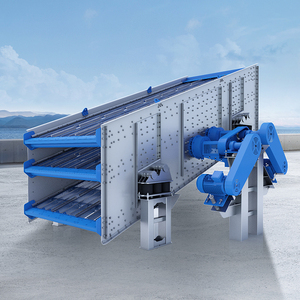
Aggregate Vibrating Screen Machine Motor 60-350t/h 30kW
- 30kW High-Torque Power Output
- Processing Capacity: 60-350 t/h
- IP65 Heavy Dust & Moisture Protection
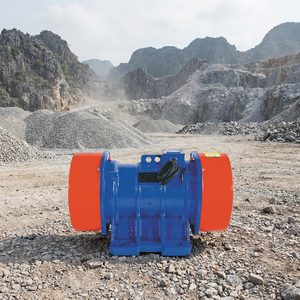
Vibrating Screen Vibrating Feeder & Hopper Vibration Motor
- Heavy Load Carrying Capacity
- Reinforced Alloy Steel Eccentric Block
- 24/7 Continuous Heavy Duty Rating
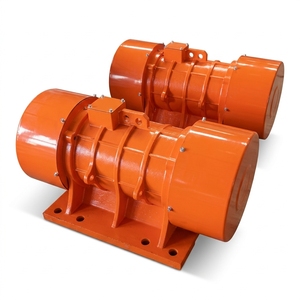
Three Phase Vibration Motor IP65 Waterproof Adjustable Force
- Stepless Adjustable Exciting Force
- IP65 Waterproof & Dustproof Shell
- 380V/415V/440V 3-Phase Compatibility
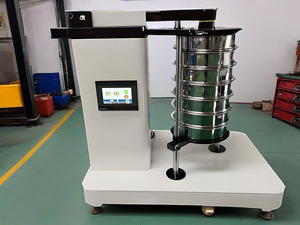
High-Accuracy Stainless Steel Lab Rotap Sieve Shaker Motor
- Ultra-Precision Particle Separation
- Sanitary Stainless Steel Shell (304/316)
- Low Noise & Zero Vibration Leakage
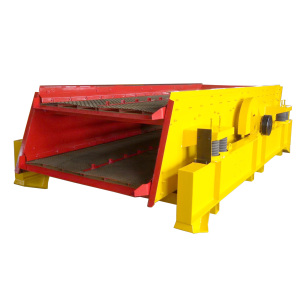
DUOLING Circular Vibrating Screen AC Motor 1-200T Capacity
- High-Frequency Circular Amplitude
- Extended Life Heavy-Duty Bearings
- 1 to 200 Tons Hourly Output
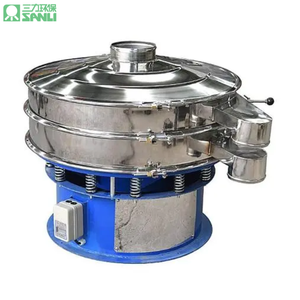
Durable Stainless Steel Rotary Vibrating Screen Motor
- Food & Chemical Grade Easy-Clean
- 380V/220V Dual Voltage Configurations
- High Mesh Fine Powder Screening
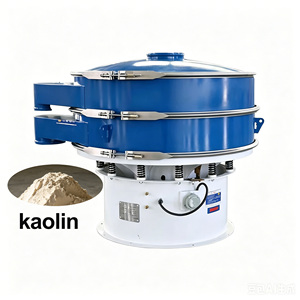
Multi-Layer Rotary Vibrating Screen Motor (Kaolin Clay)
- Supports 1-5 Decks Custom Layout
- 100-500 Mesh Ultra-Fine Sieving
- Class H High Temp Insulation Wire
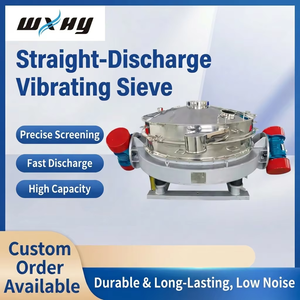
HY-1200-1s Direct Discharge Motor Vibrating Screen 380V
- Direct Discharge High-Speed Pass-Through
- Compact Low-Headroom Design
- Fast Assembly & Low Maintenance
Executive Summary: China's Wholesale Electric Motor Manufacturing Landscape
The global petroleum refining, chemical processing, and heavy industrial mining sectors are currently undergoing an unprecedented technological evolution. Central to this transformation is the reliability, electrical efficiency, and explosion-proof safety of industrial rotating machinery. As one of the world's leading epicenters for electrical equipment manufacturing and export, China’s industrial motor manufacturing standard has shifted from high-volume production to precision engineering, strict compliance with international standards (NEMA MG1, IEEE 841, IEC 60034, ATEX, and IECEx), and advanced thermal management.
Refinery electric motors operate under some of the most aggressive environmental stressors on the planet: continuous exposures to volatile hydrocarbon vapors, hydrogen sulfide gas (H2S), extreme ambient temperature swings, heavy vibration loads from vibrating screen separators, and electrical stress induced by variable frequency drives (VFDs). Selecting a qualified manufacturer and wholesale exporter in China requires deep technical insight into stator insulation systems, explosion-proof flame paths, bearing vibration isolation, rotor dynamic balance, and rigorous Quality Assurance frameworks.
Information Gain Key Insight: Modern refinery and vibrating screen applications require motors built with Class H vacuum pressure impregnated (VPI) insulation, derated thermally to Class B limits (80°C rise), preventing premature dielectric breakdown caused by high-frequency VFD voltage spikes (dV/dt) and ambient heat stress.
Why Partner With Our Wholesale Export Infrastructure
Integrating nearly a century of specialty motor engineering heritage with China's cost-efficient, high-precision wholesale supply chains.
Custom Engineering up to 20,000 HP
From standard 30kW vibrating screen drive units to massive Above NEMA custom AC/DC synchronous and induction motors up to 20,000 HP, our facilities engineering design covers the complete industrial spectrum.
Explosion-Proof & ATEX Compliance
Manufactured specifically for Class I, Division 1 / Division 2 and Zone 1 / Zone 2 hazardous refinery atmospheres, incorporating flameproof Ex d, Ex e, and Ex tD dust-ignition proof enclosures.
Georator Frequency Conversion Synergy
Equipped with specialized Georator power frequency converter testing equipment, ensuring seamless 50Hz to 60Hz and 400Hz operational stability for military, aerospace, and global international export projects.
MIL-STD-2037 Navy Sealed Windings
Utilizing high-grade epoxy VPI systems with non-hygroscopic resins capable of passing 100% moisture immersion tests, guaranteeing survival in saline, highly humid, and chemical-heavy refinery washdowns.
Technical Deep-Dive: Mechanical & Electrical Architecture of Refinery Motors
Refinery electric motors and heavy-duty vibration motors are distinct from general-purpose industrial motors in both structural integrity and electrical tolerances. In oil refineries, hydrocarbon cracking units, coking facilities, and chemical separation lines, motor failure results in thousands of dollars per minute of unplanned downtime. Below is a granular analysis of the critical engineering pillars required for long-life industrial operation:
1. Flameproof & Explosion-Proof Flame Path Engineering
In refining environments containing flammable gases such as methane, propane, or ethylene, an internal electrical arc or spark must be contained within the motor housing. Flameproof (Ex d) construction ensures that if an internal ignition occurs, the flame path (the ground fit between the frame, end brackets, and junction box cover) cools the exiting hot gas below the auto-ignition threshold of the surrounding ambient atmosphere. Chinese wholesale manufacturers utilize CNC precision grinding to maintain flame path gaps under 0.1mm with surface roughness better than Ra 1.6μm.
2. Vibrating Screen & Exciting Force Dynamics
Vibration motors used in aggregate screening, kaolin clay processing, and rotary sizing machines (as highlighted in our product line above) experience continuous centrifugal forces up to 20G. Unlike standard motors where vibration is minimized, vibration motors are designed to generate controlled centrifugal force via adjustable eccentric blocks attached to both shaft extensions. Key structural requirements include:
- Ductile Iron Enclosures (QT500-7): High tensile strength frames that absorb severe cyclic shock without cracking.
- C4 Vibration-Duty Bearings: Heavy-duty spherical roller bearings with enlarged internal radial clearance to accommodate shaft deflection and thermal expansion.
- Synthetic High-Temp Grease: Polyurea or fluorinated lubricants rated for -40°C to +180°C operation.
3. Technical Comparison Matrix: Motor Enclosure & Protection Standards
To assist procurement managers and plant engineers in specifying the correct motor class, the following comparative framework details standard performance metrics across different operational zones:
| Motor Type / Protection | Hazardous Zone Rating | Insulation Class | IP Sealing Rating | Typical Refinery Application |
|---|---|---|---|---|
| Flameproof Ex d IIB T4 | Zone 1 / Class I, Div 1 | Class H (VPI) | IP66 Cast Iron | Crude Distillation Pumps, Compressors |
| Increased Safety Ex e IIC | Zone 2 / Class I, Div 2 | Class F (Temp Rise B) | IP65 Gasketed | Cooling Tower Fans, Auxiliary Drives |
| Dust-Ignition Ex tD A21 | Zone 21 / 22 (Combustible Dust) | Class H | IP65 / IP66 Stainless | Petcoke Screening, Mining Vibrating Feeders |
| Vibration Duty (Three-Phase) | Non-Hazardous / Dust IP65 | Class F / H | IP65 / IP67 | Rotary Sieves, Aggregate & Ore Separators |
Future Procurement Trends: Global Refinery Motor Market (2025–2030)
As international energy companies and heavy industrial conglomerates push toward net-zero operational targets and predictive digital maintenance, the wholesale procurement of electric motors from China is undergoing four major technological shifts:
1. Mandatory IE4 & IE5 Efficiency
Global regulations are rendering IE2 and standard IE3 motors obsolete. Exporters in China are rapidly transitioning to Permanent Magnet Synchronous Motors (PMSM) and Synchronous Reluctance Motors (SynRM) achieving IE5 ultra-premium efficiency ratings, reducing facility energy losses by up to 15%.
2. Wireless IoT & AI Vibration Monitoring
Next-generation refinery motors feature built-in smart sensor ports (MEMS accelerometers and wireless RTD telemetry). Procurement contracts increasingly mandate factory-integrated predictive maintenance modules that transmit real-time bearing vibration spectra to cloud AI systems.
3. VFD Insulation Immunity (NEMA MG1 Part 31)
With speed-controlled pumps dominating refinery fluid mechanics, motor winders employ specialized corona-resistant magnet wire (Inverter Grade) and insulated non-drive end bearings to eliminate capacitive shaft currents and electrical bearing fluting.
4. Modular Drop-in Replacement Engineering
EPC contractors demand custom mechanical adaptability. Modern Chinese manufacturing hubs utilize 3D laser scanning and reverse engineering capabilities to produce exact "drop-in" mechanical duplicates for legacy motors built in the mid-20th century, matching shaft height, bolt footprint, and conduit box locations.
Strategic Buyer Evaluation Checklist: Auditing Chinese Wholesale Exporters
When sourcing heavy industrial electric motors and vibrating screen equipment from China, procurement teams must conduct rigorous technical due diligence beyond simple price-per-kilowatt comparisons. Below is an insider operational checklist recommended by senior engineering directors:
- Stator Core Lamination Grade: Ensure the manufacturer utilizes high-permeability, low-loss cold-rolled silicon steel (e.g., 50WW470 or 35WW300) rather than cheap hot-rolled steel plates, minimizing hysteresis losses.
- VPI Impregnation Cycle Verification: Demand documentation confirming a 2-cycle Vacuum Pressure Impregnation process with 100% solventless epoxy resin, eliminating air voids in the slot cell that lead to partial discharge.
- Rotor Dynamic Balancing: Verify dynamic balancing to ISO 1940 Grade G1.0 or G2.5 precision levels, preventing premature bearing fatigue under high RPM operations.
- Third-Party Certification Authenticity: Validate explosion-proof certificates directly through CNEx, ATEX Notified Bodies (such as TÜV, DEKRA, or SGS), or IECEx online databases.
- Factory Full Load & Temperature Rise Testing: Require full-load back-to-back testing and partial discharge testing reports prior to shipment container loading.
Refinery & Vibrating Electric Motor Sourcing FAQ
Expert technical responses to common engineering, compliance, procurement, and logistical queries.
Q1: What makes a refinery electric motor different from a standard industrial AC motor?
Refinery electric motors are engineered specifically for extreme reliability in hazardous and corrosive atmospheres. They incorporate cast-iron or ductile iron frames, flameproof (Ex d) or increased safety (Ex e) junction boxes, chemical-resistant epoxy coatings, IP65/IP66 sealing against moisture and corrosive gases (H2S), and Class H insulation systems. Furthermore, they strictly comply with standards like IEEE 841, guaranteeing lower vibration limits and extended bearing L10h life (>100,000 hours).
Q2: How do I select the right vibration motor for an aggregate or rotary sieve screen?
Selection depends on three primary variables: the total vibrating weight (screen box + material load), the required working frequency (RPM), and the necessary centrifugal force (kN). For fine powder separation (e.g., kaolin clay or flour), high-frequency 4-pole or 6-pole motors (1500 to 1000 RPM) are used. For heavy aggregate rock screening, 6-pole or 8-pole high-torque motors are chosen. Exciting force is adjustable by rotating the outer eccentric weights on both ends of the motor shaft.
Q3: Can Chinese motor manufacturers produce customized motors that match exact legacy NEMA or IEC dimensions?
Yes. Leading wholesale manufacturers utilize advanced 3D CAD modeling, CNC machining, and flexible casting patterns to manufacture exact "drop-in" duplicate motors. Whether replacing vintage Louis Allis, Westinghouse, GE, or European frame sizes, Chinese engineering teams can match shaft diameter, keyway dimensions, mounting foot holes, shaft height (C-dimension), and terminal box orientation without requiring civil baseplate modifications.
Q4: What insulation class should be specified for high-ambient refinery installations?
We strongly recommend specifying Class H insulation (rated for 180°C maximum operating temperature) with a Class B temperature rise limit (80°C under full load). This 50°C thermal margin acts as a safety buffer against high ambient summer heat, temporary overloads, voltage fluctuations, and harmonic heating caused by variable frequency drives (VFDs).
Q5: How do variable frequency drives (VFDs) affect motor insulation, and how is it mitigated?
VFDs control motor speed using pulse-width modulation (PWM), which generates steep voltage wavefronts (dV/dt) and high peak voltage spikes. This can cause partial discharge, corona erosion, and premature insulation breakdown. To mitigate this, our refinery motors feature inverter-duty corona-resistant magnet wire, triple-layer phase insulation, vacuum pressure impregnation (VPI), and insulated non-drive end bearings to eliminate shaft grounding currents.
Q6: What international explosion-proof certifications do Chinese refinery motor exporters provide?
Top-tier exporters provide international ATEX (Europe), IECEx (Global), CCC Ex (China), UL/CSA (North America), and EAC Ex (Eurasian Customs Union) certifications. These certificates cover various protection concepts including Flameproof (Ex d), Increased Safety (Ex e), Non-Sparking (Ex nA), and Dust Ignition Proof (Ex tD/Extb).
Q7: What are the maintenance protocols for heavy-duty vibration motors in continuous screening plants?
Vibration motors operate under continuous shock loads. Maintenance protocols require: 1) Re-torquing motor mounting bolts after the first 8 hours of operation and every 500 hours thereafter using specified torque wrench settings; 2) Regreasing bearings every 1,000 to 2,000 operating hours with high-temperature vibration-grade grease; 3) Inspecting eccentric weight locking bolts to ensure amplitude stability; 4) Checking IP65 oil seals to prevent particulate ingress.
Q8: How are large electric motors packaged for ocean freight export to prevent corrosion?
Motors undergo multi-stage export packaging: 1) Machined bright metal surfaces (shafts, flanges) are coated with heavy-duty rust-preventative wax; 2) Internal stators and rotors are sealed with desiccant bags inside heavy-gauge vapor-corrosion inhibitor (VCI) plastic film; 3) Units are enclosed in IPPC-certified heat-treated seaworthy wooden crates with internal shock-absorbing blocking and tie-down straps.
Q9: What is the lead time for wholesale custom electric motor orders from China?
Standard low-voltage stock motors ship within 7 to 15 days. Custom-engineered medium/high-voltage refinery motors (up to 20,000 HP) or specialized explosion-proof vibration motors typically require 35 to 60 days, including engineering CAD approval, pattern casting, VPI winding, assembly, and factory load testing cycles.
Q10: How can I request a customized quotation and engineering drawing for my refinery plant project?
Simply click our interactive inquiry button on this page to connect directly with our engineering sales team. Provide your required power rating (kW/HP), voltage, frequency, speed (RPM), explosion-proof zone rating, and mounting configuration (B3, B5, V1). Our application engineers will deliver full technical datasheets and competitive wholesale pricing within 24 hours.
Ready to Upgrade Your Industrial Motor Infrastructure?
Partner with China's premier refinery and vibration electric motor manufacturer. Our engineering desk is ready to review your project specifications, CAD drawings, and operational requirements.