
Featured Industrial Frequency Converters & Heavy-Duty Vibration Drives
Explore our wholesale portfolio of robust industrial frequency conversion systems, high-torque vibration motors, and heavy screening drive units engineered for continuous 24/7 duty cycles under harsh global grid conditions.

Industrial Power Frequency Conversion in Global Manufacturing & Ore Processing
In modern industrial operations, electrical power quality, voltage compatibility, and precise frequency stability directly govern plant operational throughput and machinery longevity. As cross-border industrial equipment procurement accelerates, multinational enterprises face a ubiquitous engineering challenge: bridging the operational disconnect between regional power grids (such as 50Hz electrical infrastructure across Europe, Asia, and Africa versus 60Hz systems standardized across North America and parts of South America).
A specialized Industrial Power Frequency Converter serves as the definitive clean power isolation bridge. Unlike standard commercial AC drives designed solely for simple motor speed regulation, heavy-duty industrial frequency converters recalculate, rectify, and synthesize sinusoidal AC waveforms to convert power from 50Hz to 60Hz (or 60Hz to 50Hz, as well as specialized 400Hz aerospace/military baselines) with negligible total harmonic distortion (THD). When powering heavy industrial machinery—including high-output ore processing vibration screens, ball mill drives, marine bow thrusters, and continuous-duty stone crushers—frequency stability must be maintained within ±0.01 Hz under dynamic step-load transients exceeding 200% overcapacity.
Rotary Motor-Generator vs. Static Solid-State Frequency Converters: Technical Evaluation Matrix
Choosing between Solid-State (IGBT Pulse-Width Modulation) and Rotary (Synchronous Motor-Generator) frequency converters depends on environmental harshness, inductive surge thresholds, and galvanic isolation mandates. The comparative matrix below outlines core engineering tradeoffs for B2B procurement decision-makers:
| Performance Parameter | Static Solid-State Converter (IGBT PWM) | Rotary Converter (Motor-Generator Set) | B2B Sourcing Intent & Industrial Application |
|---|---|---|---|
| Conversion Efficiency | 92% – 96% at nominal full load | 85% – 88% due to mechanical losses | Static preferred for continuous automated plants aiming to minimize power utility overhead. |
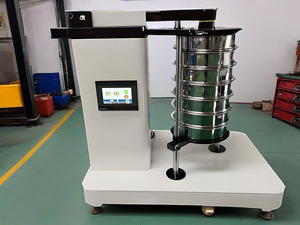
| Total Harmonic Distortion (THD) | < 3% (with Active Front End filter) | < 1.5% (Pure sine wave output) | Rotary ideal for high-precision laboratory sieve shakers, military radars, and test benches. |
| Overload Surge Endurance | 150% for 60 seconds; electronic trip | 300% – 500% for 10 seconds (high inertia) | Rotary/Heavy Static required for heavy aggregate vibrators, crushers, and ball mill startup. |
| Galvanic Isolation | Optional via output isolation transformer | Inherent complete mechanical isolation | Protects sensitive electronic controllers from utility grid spikes, lightning surges, and neutral drift. |
| Maintenance & Service Life | Low maintenance; capacitor replacement @ 8-10 yrs | Periodic bearing lubrication & brush inspection | Static minimizes downtime in automated food, pharmaceutical, and chemical cleanroom environments. |
| IP Enclosure & Ruggedness | IP21 up to IP65 with NEMA 4X options | IP23 to IP55 rugged steel frame housings | High IP rating essential for quarrying, kaolin clay processing, and outdoor mining hoppers. |
The Engineering Synergies Between Frequency Conversion and Heavy Vibrating Equipment
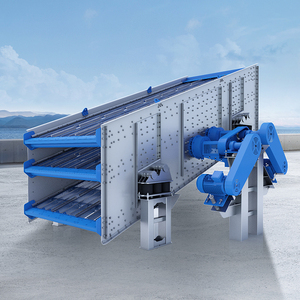
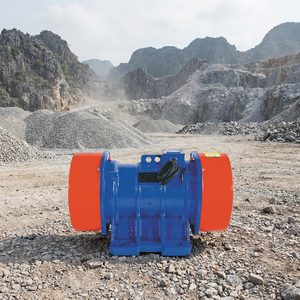
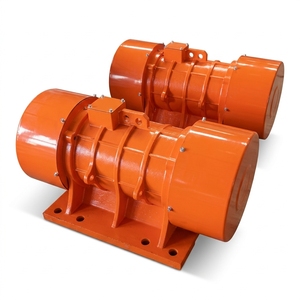
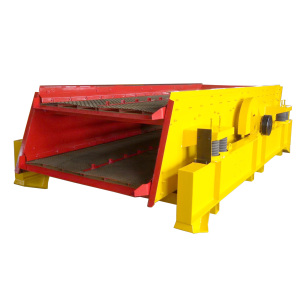
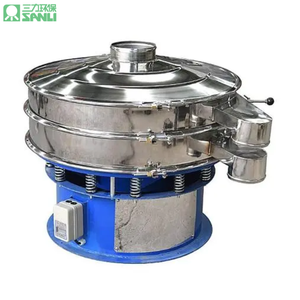
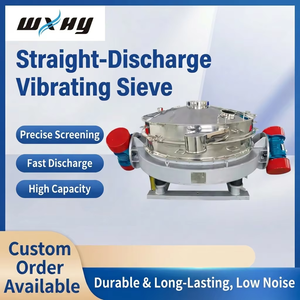
In heavy aggregate processing, mining, and bulk material handling, vibrating screen machines, rotary sieves, and silo hoppers demand immense mechanical excitation force generated by specialized three-phase asynchronous vibration motors. As shown in our product showcase, systems like the Aggregate Vibrating Screen Machine (60-350t/h Capacity) or DUOLING Circular Vibrating Screens rely on precision-tuned mechanical resonance.
If an aggregate vibrating screen designed for a 60Hz power source is directly connected to a 50Hz utility grid without a dedicated frequency converter, two catastrophic engineering failures occur:
- Rotational Velocity & G-Force Degradation: Motor RPM drops by exactly 16.6% (from 1800 RPM to 1500 RPM). Because centrifugal exciting force scales exponentially with the square of angular velocity ($F = m \cdot \omega^2 \cdot r$), a 16.6% frequency reduction yields a massive 30.5% drop in vibrational G-force. This leads to severe screen blinding, material accumulation, and immediate throughput bottlenecks in 100-500 mesh kaolin clay or ore screening operations.
- Thermal Breakdown & Over-Current Stress: Operating a 60Hz inductive motor winding on a 50Hz supply at identical voltage shifts the Volts-per-Hertz ($V/f$) ratio upward. The magnetic core saturates rapidly, drawing excessive magnetizing current, spiking winding temperature past Class H limits, and causing premature insulation breakdown.
Deploying a custom OEM China Wholesale Power Frequency Converter remedies this issue completely by outputting a precise, regulated voltage and frequency profile. This preserves full mechanical stroke amplitude, ensures IP65 moisture/dust isolation, and extends motor bearing lifespan across mining, cement, and food-grade stainless steel screening operations.
Enterprise Manufacturing Strength & Engineering Heritage
Combining over a century of specialty electric motor and Georator frequency converter expertise with modern ISO 9001:2015 manufacturing facilities.
Custom Above-NEMA Engineering
Extensive in-house design team capable of engineering one-off custom solutions and large-scale industrial runs up to 20,000 HP for heavy industry, power generation, and mining.
MIL-SPEC & Navy-Sealed Windings
Adhering to strict MIL-STD-2037 guidelines, offering Navy-sealed vacuum pressure impregnation (VPI) moisture resistance for extreme marine, defense, and offshore oil platforms.
Georator Legacy Power Quality
Inheriting decades of permanent magnet generator and rotary frequency converter engineering to deliver ultra-low harmonic distortion (< 2.5% THD) clean sinusoidal power.
Global Field Support & Rapid Service
Worldwide technical assistance, on-site commissioning, predictive vibration analysis, and emergency outage support to guarantee continuous operational uptime.
ISO 9001:2015 Certified QA
Rigorous full-load testing, dynamic balance verification, thermal imaging, and high-potential dielectric testing performed on 100% of units prior to export shipment.
Factory Recertification Program
Comprehensive remanufacturing and recertification services for large-scale industrial motors and converters, delivering OEM-grade warranties at reduced lead times.
Future Sourcing & Procurement Trends in Industrial Power Converters
As global industrial infrastructure transitions toward decarbonization, microgrid integration, and Industry 4.0 automation, the global market for industrial frequency converters is experiencing a structural evolution. Enterprise procurement directors and plant chief engineers must realign their sourcing strategies to account for several major technological trajectories:
1. Adoption of Silicon Carbide (SiC) & GaN Wide-Bandgap Semiconductors
Legacy static converters heavily relied on traditional Silicon Insulated-Gate Bipolar Transistors (IGBTs), which suffer from thermal switching losses at higher frequencies. Modern industrial frequency converters built by leading Chinese manufacturers are rapidly integrating Silicon Carbide (SiC) power MOSFET modules. SiC technology enables switching frequencies 5-10 times faster than conventional IGBTs while cutting internal thermal losses by up to 60%. For B2B buyers, this translates directly to smaller cabinet footprints, reduced cooling HVAC overhead, and overall operational efficiency exceeding 97.5%.
2. Active Front End (AFE) Topology & Zero-Harmonic Grid Compliance
Utility providers worldwide (such as IEEE 519 standards in North America and IEC 61000 standards in Europe) are enforcing stringent harmonic current distortion limits on industrial facilities. Standard diode-bridge rectifiers reflect severe low-order harmonics back into the utility grid, causing transformer overheating and capacitor bank failures. Future-proof procurement mandates Active Front End (AFE) active rectification. AFE converters utilize intelligent PWM rectifiers that maintain a unity power factor ($\cos \phi \approx 0.99$) and limit total current harmonic distortion ($THDi$) to under 3%, eliminating the need for expensive external passive harmonic filter banks.
3. IoT-Enabled Predictive Maintenance & Digital Twin Monitoring
Unplanned operational downtime in heavy mining or aggregate screening plants can cost tens of thousands of dollars per hour. Sourcing trends show an accelerated demand for frequency converters outfitted with native RS485 Modbus, Ethernet/IP, and cloud-connected IoT telematics. Embedded microprocessors continuously log internal DC bus ripple voltages, IGBT junction temperatures, vibration spectrum metrics, and cooling fan degradation. By broadcasting real-time diagnostics to plant SCADA systems or vendor-managed digital twin platforms, maintenance teams can schedule predictive servicing weeks before a physical component breach occurs.
4. Modular Parallel Redundancy ($N+1$) Design Architecture
High-reliability sectors—including chemical processing plants, municipal water treatment facilities, and pharmaceutical centrifuges—are abandoning single large monolithic converters in favor of modular parallel architectures. In an $N+1$ modular power converter chassis, multiple hot-swappable 50kW or 100kW power modules share the load. If a single module encounters an over-temperature or gate-driver fault, it automatically isolates itself from the DC bus within microseconds while remaining modules seamlessly ramp output to maintain 100% operational continuity.
Industrial Power Frequency Converters: Sourcing FAQ
In-depth answers to technical, operational, and commercial compliance questions commonly raised by B2B procurement officers and engineering teams.
❓ Q1: What is the primary difference between a Variable Frequency Drive (VFD) and an Industrial Power Frequency Converter?
While both devices utilize electronic power conversion, their operational objectives differ fundamentally. A Variable Frequency Drive (VFD) is designed specifically to control the rotational speed and dynamic torque of an individual electric motor by continuously adjusting frequency and voltage. The output power of a VFD is often rich in harmonic PWM spikes and is not intended to supply standard utility line-power. Conversely, an Industrial Power Frequency Converter acts as a synthetic utility grid generator. It converts fixed AC grid power (e.g., 50Hz 380V) into a clean, stable, fixed sinusoidal output (e.g., 60Hz 460V/480V) with precise voltage regulation (±1%) and low THD (<3%). It can power complex plant networks, multi-motor systems, control cabinets, and entire industrial machinery setups without distorting sensitive electronics.
❓ Q2: Why is frequency conversion critical when exporting aggregate vibrating screens or crusher motors internationally?
Industrial vibrating screens, rotary sieves, and mineral processing hoppers rely on precise mechanical centrifugal force generated by high-torque vibration motors. Connecting a 60Hz-rated vibration screen motor directly to a 50Hz grid causes motor speed to drop by 16.6%, which slashes vibrational amplitude and screening G-force by over 30%. This drastic performance drop leads to screen blinding, material clogging, and severe electrical thermal overloading. An industrial frequency converter restores nominal operating frequency and voltage, guaranteeing that heavy mining and stone crushing plants achieve their rated output tonnage (e.g., 60-350t/h) anywhere in the world.
❓ Q3: How do wholesale converters mitigate Total Harmonic Distortion (THD) in sensitive grid environments?
Our industrial solid-state converters employ multi-level Pulse Width Modulation (PWM) driven by advanced digital signal processors (DSPs) paired with multi-stage LC sine-wave output filters. For stringent utility grid compliance, we integrate Active Front End (AFE) active rectifiers. This combined topology suppresses output THD to under 2.5% across all linear and non-linear load conditions, fully conforming to IEEE 519 and IEC 61000-2-4 standards. This prevents inductive voltage distortion, radio frequency interference (RFI), and nuisance tripping of upstream protective circuit breakers.
❓ Q4: What technical parameters are required when submitting an RFQ for a custom frequency converter?
To receive an accurate engineering quotation and sizing evaluation, procurement teams should provide: (1) Input Parameters: Voltage level, phase count (3-phase 3-wire or 4-wire), and utility grid frequency (50Hz or 60Hz); (2) Output Parameters: Required output voltage, required frequency (e.g., 60Hz, 50Hz, or 400Hz), and total kVA/kW capacity; (3) Load Profile: Details on whether the load is purely resistive, inductive (motors/transformers), or dynamic step loads; (4) Operating Environment: IP protection level (IP21 indoor vs IP65 outdoor dust/waterproof), ambient operating temperature, altitude, and presence of corrosive substances (e.g., kaolin clay, mining dust, marine salt spray).
❓ Q5: Can static solid-state frequency converters handle high-torque motor startup currents?
Yes. Direct-on-line (DOL) induction motor startup typically draws inrush currents between 500% to 800% of nominal full-load current. Our industrial static frequency converters are engineered with soft-start algorithms and high overload capacity modules (typically 150% overload for 60 seconds, 200% for 2 seconds). For extremely heavy aggregate equipment, ball mills, or crusher applications, we custom-size the inverter power stage or recommend integrated dynamic voltage boosting to ensure smooth startup without voltage sagging.
❓ Q6: What IP enclosure ratings are available for outdoor mining or food processing installations?
We manufacture enclosures ranging from standard IP21/IP31 indoor ventilated cabinets up to IP54, IP55, and heavy-duty IP65 waterproof/dustproof rugged enclosures. For sanitary food processing environments (such as our Stainless Steel Rotary Vibrating Screen Motors), we provide 304 or 316L stainless steel cabinets with washdown-rated heat exchangers and smooth anti-corrosion surfaces.
❓ Q7: What quality control standards and certifications govern your manufacturing facility?
Our manufacturing plant operates strictly under ISO 9001:2015 Quality Management Systems. Products comply with CE mark safety directives (Low Voltage Directive 2014/35/EU, EMC Directive 2014/30/EU), UL standards, EASA AR100 standards, and IEEE electrical guidelines. For defense, aviation, and marine projects, we provide MIL-SPEC certified insulation systems and Navy-sealed winding configurations.
❓ Q8: What is the typical production lead time and global warranty structure for B2B orders?
Standard industrial frequency converters (10 kVA to 200 kVA) maintain a manufacturing lead time of 2 to 3 weeks. Custom high-capacity Above-NEMA units or specialized rotary converter systems (up to 20,000 HP dynamic range) typically require 6 to 8 weeks including full factory acceptance testing (FAT). All units include a comprehensive 12 to 24-month manufacturer warranty, backed by global engineering support, spare part dispatching, and optional on-site commissioning assistance.
Trusted by Industry Leaders Worldwide
Our frequency converters and heavy motor drives empower mission-critical applications across global defense, aerospace, research, and manufacturing enterprises.










Request a Custom Technical Quote & Sizing Matrix
Whether you require standard 50Hz to 60Hz wholesale power converters, specialized 400Hz rotary units, or heavy-duty IP65 vibration screen drives, our senior electrical engineering team is ready to analyze your load requirements, deliver OEM pricing, and supply comprehensive CAD electrical schematics.