
Executive Technical Overview: The Engineering Evolution of Brushless Synchronous Generators
In contemporary industrial power generation, the Brushless Synchronous Generator (BSG) stands as the bedrock of reliable continuous, peak-shaving, and emergency standby electrical power. As global energy demands intensify alongside requirements for cleaner, stable voltage wave profiles, international buyers—ranging from Engineering, Procurement, and Construction (EPC) contractors to OEM diesel generator set assemblers—are recalibrating their supply chain standards. Chinese manufacturing hubs have evolved from cost-driven assembly lines into sophisticated research, testing, and production centers capable of designing brushless alternators compliant with ISO 8528, IEC 60034-1, NEMA MG1-32, and IEEE 115 specifications.
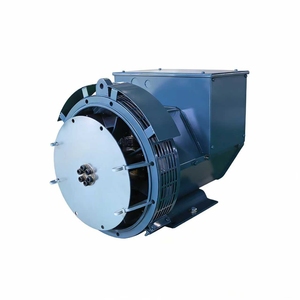
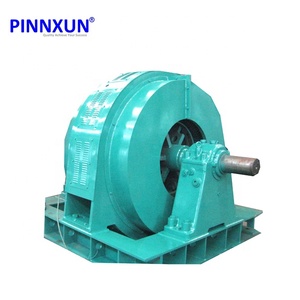
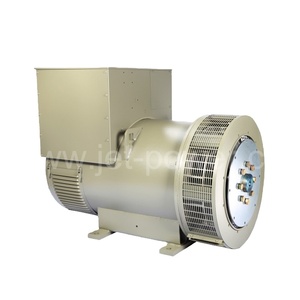
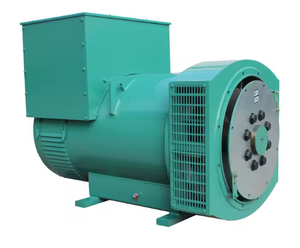
The elimination of carbon brushes and commutator rings represents a foundational shift in synchronous machine design. Traditional brushed generators suffer from continuous mechanical friction, carbon dust contamination, sparking risks in hazardous zones, and frequent maintenance intervals. In contrast, modern brushless excitation architectures utilize an integral main stator, main rotor, exciter rotor, exciter stator, and a shaft-mounted rotating rectifier assembly. By feeding direct current (DC) into the stationary field of the exciter, a three-phase alternating current (AC) is induced in the rotating exciter armature. This AC output is instantly converted to DC by the rotating diode bridge and directed into the main rotor field coils, generating a robust electromagnetic field that induces stable AC power across the main stator windings.
Technical Gain Insight: The absence of physical contact components in brushless excitation systems directly correlates with a 65% reduction in total lifecycle maintenance costs and extends Mean Time Between Failures (MTBF) beyond 45,000 operational hours in harsh continuous-duty applications.
100% Electrolytic Copper Windings
Utilizing high-purity oxygen-free copper wire with Class H VPI (Vacuum Pressure Impregnation) insulation to withstand thermal spikes up to 180°C.
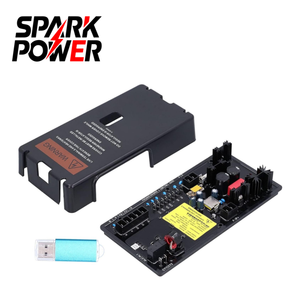
Digital AVR Voltage Stability
Advanced Automatic Voltage Regulation maintains steady-state voltage fluctuation within ±0.5% to ±1.0% under fluctuating inductive load profiles.
2/3 Pitch Winding Geometry
Eliminates triple harmonics (3rd, 9th, 15th) on voltage waveforms, protecting connected non-linear loads and UPS systems against overheating.
Deep Sourcing Analysis: Key Excitation System Architectures
When selecting a Chinese manufacturer or exporter for industrial alternators, understanding the engineering trade-offs between different excitation technologies is critical for procurement precision. B2B buyers must match the excitation type to the operational load characteristics of the target application.
1. Self-Excited Shunt Architecture
In a standard shunt-excited brushless generator, the Automatic Voltage Regulator (AVR) derives its control circuit operating voltage and power input directly from the main stator output terminals. While highly economical and fully sufficient for standard resistive lighting and commercial building loads, the shunt system exhibits a key limitation: under short-circuit conditions or heavy motor starting inrush currents, the terminal voltage collapses, depriving the AVR of power and causing excitation collapse.
2. Auxiliary Winding (AUX / EBS) Systems
To overcome voltage collapse without the full cost of a separate magnet generator, leading Chinese factories integrate auxiliary dedicated windings into the main stator slots. These independent windings feed power to the AVR regardless of main stator terminal voltage dips. This design enables the generator to sustain up to 300% overload current for 10 seconds, allowing heavy inductive induction motors to start smoothly.
3. Permanent Magnet Generator (PMG) Excitation
The gold standard for critical infrastructure, marine propulsion, mining operations, and telecommunications data centers is the PMG-excited synchronous alternator. A permanent magnet pilot alternator is mounted on the non-drive end shaft. It provides a completely isolated, clean power supply to the digital AVR. PMG excitation guarantees superior short-circuit current maintenance (300% for 10s), immunity to non-linear VFD harmonic feedback, and fast transient recovery times under sudden step-load applications.
Comparative Matrix: Alternator Excitation & Electrical Performance Spectrum
The comparative evaluation table below presents standardized engineering metrics for industrial buyers reviewing China-manufactured synchronous brushless alternator lines:
| Excitation System | Short-Circuit Sustained Capacity | Voltage Regulation Accuracy | Motor Starting Capability | THD (Non-Linear Load) | Recommended Application Target |
|---|---|---|---|---|---|
| Standard Shunt (Self-Excited) | N/A (Excitation Collapse) | ± 1.0% | Moderate (150% kVA) | < 4.0% | General Standby, Agricultural, Construction Light Towers |
| Auxiliary Winding (AUX/EBS) | 300% for 10 Seconds | ± 0.8% | High (220% kVA) | < 3.0% | Industrial Plants, Commercial Buildings, Heavy Pumps |
| PMG (Permanent Magnet Generator) | 300% for 10 Seconds (Isolated) | ± 0.5% (Digital AVR) | Premium (>300% kVA) | < 1.5% | Data Centers, Hospitals, Marine Power, Oil & Gas Rigs |
| High-Voltage Synchronous (3.3kV-11kV) | Custom Protected (PMG Standard) | ± 0.5% | Heavy Industrial Scale | < 1.5% | Utility Microgrids, Mining Complexes, Heavy Ship Power |
Global Sourcing & Future Procurement Trends (2025–2030)
The global marketplace for synchronous AC generators is undergoing structural transformations. Procurement executives who analyze macroeconomic, technological, and environmental factors will establish significant competitive advantages. Five macro trends dominate the future sourcing landscape for Chinese brushless alternators:
1. Digitalization & Smart AVR Integration (IoT-Enabled Alternators)
Next-generation synchronous generators exported from top-tier Chinese facilities are increasingly equipped with digital AVRs featuring RS485 Modbus, CANbus, and Ethernet communication protocols. These smart regulators collect real-time data on winding thermal distribution, bearing vibration vectors, field current draw, dynamic power factor ($\cos \phi$), and total voltage THD. Purchasing managers now prioritize suppliers whose alternators integrate seamlessly into remote SCADA systems and predictive cloud maintenance platforms.
2. Thermal Density Optimization & Class H+ Insulation Systems
As space constraints inside silent acoustic generator canopies become tighter, alternator factories are pushing for higher power-to-weight ratios. Achieving higher kVA output within smaller frame dimensions requires superior electromagnetic lamination steel (low core loss silicon steel sheets) combined with double-dip Vacuum Pressure Impregnation (VPI). Class H insulation systems rated for 180°C with Class F temperature rise allowances ($105^\circ\text{C}$ rise over $40^\circ\text{C}$ ambient) ensure extended operational longevity under harsh tropical or high-altitude ambient conditions.
3. Transition to Renewable Hybrid & Fuel-Flexible Genset Coupling
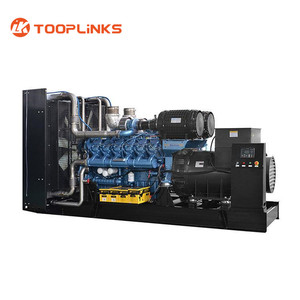
With the global shift toward decarbonization, synchronous alternators are no longer coupled exclusively to standard diesel engines. Procurement pipelines are seeing huge demand growth for alternators optimized for natural gas, biogas, hydrogen blend engines, and solar-diesel hybrid microgrids. These applications demand specialized damping windings (amortisseur windings) to suppress torsional oscillations and dynamic load variations caused by multi-fuel combustion characteristics.
4. Strict Compliance with Global Harmonic Standards
Modern industrial facilities operate high concentrations of non-linear loads, such as Variable Frequency Drives (VFDs), server power supplies, and LED arrays. These loads reflect harmonic currents back into the generator main stator. Future-proof procurement requires alternators designed with precise 2/3 pitch stator skewing and optimized air-gap flux profiles to prevent core saturation, neutral conductor overheating, and harmonic voltage distortion.
Comprehensive B2B Sourcing & Technical Procurement FAQ
To assist technical directors, OEM buyers, and import distributors, our engineering team has compiled authoritative answers to the most frequently encountered procurement questions:
Enterprise Advantage & Manufacturing Excellence
Combining over a century of heritage in specialty rotating electrical equipment with modern high-capacity manufacturing facilities in China, our production lines deliver custom OEM generator and alternator solutions up to 20,000 HP / 15,000 kVA. Every unit produced adheres to rigorous quality control frameworks including ISO 9001:2015 certification, MIL-SPEC compliance for naval and defense contracts, and NEMA MG / IEEE standard compliance.
Whether your operational framework requires custom SAE flange adaptations, marine-certified tropicalized windings, customized anti-condensation heaters, embedded PT100 RTD thermal sensors, or pre-configured Automatic Transfer Switch (ATS) interfaces, our engineering team provides end-to-end design, prototyping, testing, and worldwide logistical support.