
Precision-Engineered Electric Motors for Hazardous Operations
Explore our premier portfolio of high-torque, explosion-protected, and continuous-duty vibration motors engineered for severe mining, aggregate, and process manufacturing applications.
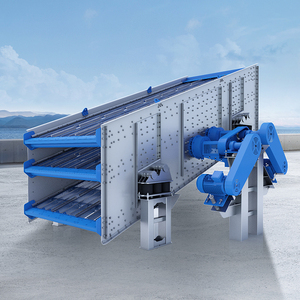
Aggregate Vibrating Screen Machine for Stone Crusher Plant 60-350t/h Ore Processing 30kW Motor
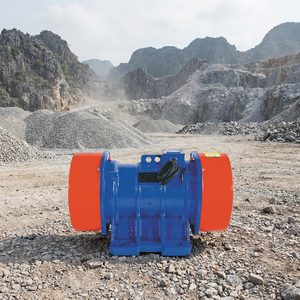
Vibrating Screen Vibrating Feeder & Hopper Vibration Motor for Ore Processing Heavy Load
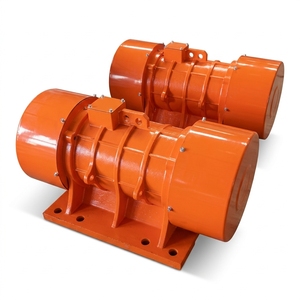
Three Phase Vibration Motor IP65 Waterproof Adjustable Exciting Force for Mining Cement Machinery
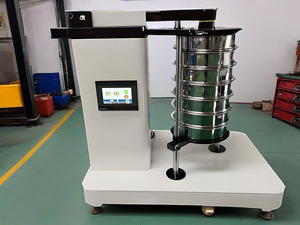
High-Accuracy Stainless Steel Laboratory Rotap Sieve Shaker Vibrating Motor Circular Screen
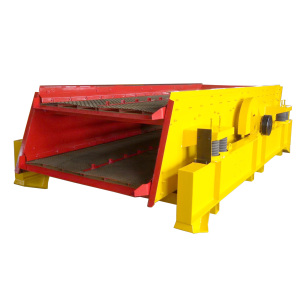
DUOLING Circular Vibrating Screen AC Motor 1-200 Tons Capacity Long Working Life Bearing
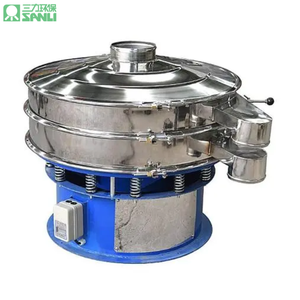
Durable Stainless Steel Rotary Vibrating Screen Motor Easy-Clean for Food Processing (Wheat/Flour)
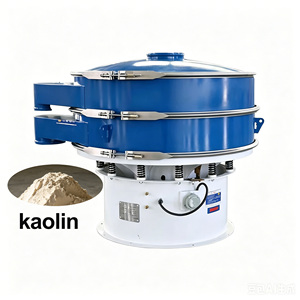
Multi-Layer Rotary Vibrating Screen Motor | Kaolin Clay Processing | 1-5 Decks 100-500 Mesh
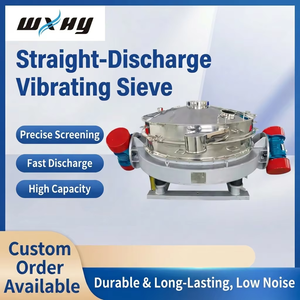
HY-1200-1s Direct Discharge Motor Vibrating Screen 380V Heavy Industrial Grade
China Flameproof Electric Motor Manufacturing: Explosion Containment Physics, IEC 60079 Standards, and Global Procurement Risk Mitigation
A comprehensive analysis of Ex d flameproof mechanical engineering, thermal class isolation under VFD harmonic stress, and strategic sourcing methodologies from leading Chinese motor manufacturers.
1. Structural Flamepath Physics & Explosive Pressure Containment
In modern petrochemical plants, underground coal mines, grain processing facilities, and offshore oil platforms, electric motors operate under constant exposure to volatile gases (such as methane, hydrogen, and ethylene) and combustible dust clouds. Identifying a top-tier China flameproof electric motors supplier requires an in-depth understanding of the strict physical principles governing explosion-protected machine envelopes.
Unlike standard Totally Enclosed Fan Cooled (TEFC) industrial motors, an Ex d flameproof electric motor is designed on a fundamental premise: an internal explosion must never propagate to the surrounding combustible atmosphere. When a spark, electrical arc, or stator insulation breakdown ignites a gas-air mixture within the motor frame, the enclosure withstands the internal detonation pressure (often exceeding 10 to 12 bar / 145–174 psi) without structural rupture or permanent plastic deformation.
Critical Flamepath Principle: As hot, expanding combustion gases escape through the precision-machined joint gaps (spigot, planar, or cylindrical shaft paths), the flame gap metal surfaces absorb thermal energy rapidly. This cools the escaping gas front below the Auto-Ignition Temperature (AIT) of the external hazardous zone atmosphere.
Leading Chinese motor manufacturers utilize high-tensile ductile iron (such as QT450-10 or HT250) and heavy-section cast steel frames, processed through 5-axis CNC machining centers. Machining tolerances for flame gaps are maintained at micro-meter levels, ensuring joint clearances remain strictly within IEC 60079-1 and GB/T 3836.2 specification limits across all operating temperature gradients.
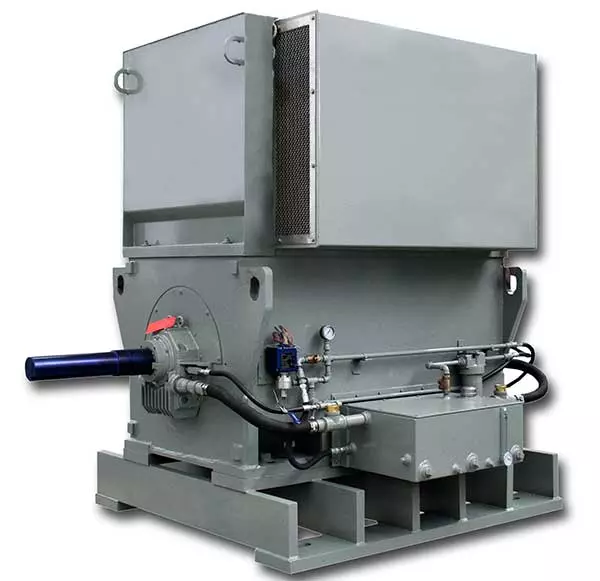
Explosion-Proof Motor Technical Profile
Explosion containment testing verifies that flame path cooling dynamics prevent ignition of external Class I, Div 1 / Zone 1 atmospheres even under peak internal pressure transients.
Request Flamepath Compliance DossierGlobal Protection Standard Matrix: Ex d vs Ex e vs Class I Div 1
| Protection Concept | IECEx / ATEX Code | North American Code | Primary Safety Mechanism | Suitable Hazardous Zone |
|---|---|---|---|---|
| Flameproof Enclosure | Ex d I Mb / Ex d IIB/IIC Gb | Class I, Div 1, Groups B, C, D | Withstands internal explosion & cools escaping flame front | Zone 1, Zone 2, Mining Underground |
| Increased Safety | Ex eb / Ex ec Gc | Class I, Zone 2 / Div 2 | Prevents sparks, arcs, & excessive surface temperature | Zone 2 (No internal sparks under normal operation) |
| Pressurized Enclosure | Ex pxb / Ex pyb Gb | Class I, Div 1 / Div 2 Pressurized | Maintains positive internal pressure of inert gas/air | Zone 1, Zone 2 (Ideal for ultra-high HP ratings) |
| Dust Ignition Proof | Ex tb / Ex tc Db/Dc | Class II, Div 1 / Div 2 | Prevents dust entry and limits surface temperature rise | Zone 21, Zone 22 (Grain mills, Coal processing) |
Why Partnering With China's Top Flameproof Suppliers Secures Global Industrial Operations
Combining over a century of heritage engineering expertise with state-of-the-art Chinese high-capacity manufacturing, heavy-voltage testing laboratories, and global quality certifications.
Century-Old Engineering Pedigree
Rooted in over 120 years of legacy custom motor engineering (incorporating design principles from WorldWide Electric and Louis Allis standards), our partner facilities bring decades of field-proven metallurgy and electromagnetic expertise to severe-duty Ex d motors.
ISO 9001:2015 & MIL-SPEC Quality
Every motor line undergoes rigorous quality assurance audited under ISO 9001:2015, EASA-AR100, IEEE 841, and MIL-STD-2037 Navy-sealed winding protocols to guarantee operational uptime under extreme moisture, vibration, and thermal shocks.
Up to 20,000 HP Heavy Capacity
From compact fractional-power 380V vibration motors for laboratory sieves to massive 20,000 HP Above-NEMA high-voltage asynchronous motors for power generation, mining ball mills, and crude oil pipelines.
VPI Class H Insulation Technology
Utilizing full Vacuum Pressure Impregnation (VPI) with 100% solventless Class H resin chemistry, eliminating internal micro-voids, resisting partial discharge, and protecting windings against VFD high-frequency voltage spikes (d V / d t).
Full Load & Explosive Test Stand
In-house testing facilities equipped with dynamic load absorption dynamometers, vibration spectrum analyzers, noise chambers, hydro-static shell pressure testing, and thermal rise logging devices up to 13.8kV ratings.
Global Logistics & Rapid Field Support
Seamless international export compliance, emergency outage dispatch, OEM replacement spare parts management, and on-site field engineering support across North America, Europe, Southeast Asia, and the Middle East.
Future Procurement & Technological Trends in Flameproof Electric Motors (2025–2030)
Stay ahead of regulatory shifts, energy efficiency mandates, and digital transformation trends reshaping global industrial motor procurement strategies.
Trend 1: Smart IIoT Integration & Wireless Condition Monitoring in Ex d Environments
Procurement directors are rapidly shifting from reactive maintenance to AI-driven predictive health monitoring. Next-generation Chinese flameproof motors are increasingly specified with embedded, intrinsically safe (Ex ia) wireless sensors. These sensors monitor tri-axial vibration, stator winding temperature, bearing acoustic emissions, and moisture ingress in real time, transmitting telemetry via WirelessHART or LoRaWAN without compromising explosion-proof flamepath integrity.
Trend 2: Mandated IE4 / IE5 Super-Premium Efficiency Compliance
With global net-zero targets and rising industrial power tariffs, international buyers are requiring suppliers to comply with IEC 60034-30-1 IE4 (Super Premium Efficiency) and IE5 (Ultra Premium Efficiency) levels. Chinese manufacturers are adopting high-permeability cold-rolled silicon steel laminations, optimized copper slot-fill factors, and Permanent Magnet Synchronous Motor (PMSM) technologies within Ex d frames to achieve up to 97.2% energy conversion efficiency.
Trend 3: Carbon Border Adjustment Mechanism (CBAM) & Green Manufacturing
European and North American procurement policies increasingly weigh the embodied carbon footprint of heavy industrial machinery. Leading Chinese motor suppliers are integrating recycled copper, green-certified aluminum casting, and solar-powered manufacturing lines, providing certified Environmental Product Declarations (EPDs) to lower buyer scope 3 emissions under CBAM regulations.
Trend 4: Modular Flameproof Vibration Duty & Variable Frequency Driven Systems
As aggregate, mining, and food processing lines automate, motors must seamlessly interface with Variable Frequency Drives (VFDs) down to zero speed under full load torque. Future procurement contracts emphasize custom-wound anti-corona magnet wire, insulated drive-end bearings (to block destructive shaft currents), and dual Ex d certified external cooling blowers for wide speed regulation bands.
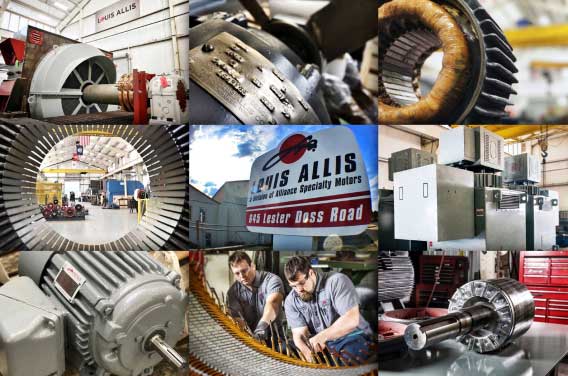
Precision Engineering & Customization Capabilities
Standard off-the-shelf motors often fail under severe environmental stresses such as intense vibration in aggregate sieving, abrasive kaolin dust, or corrosive offshore salt spray. A premier China flameproof electric motors supplier excels in total mechanical and electrical customization.
Our engineering teams utilize advanced Finite Element Analysis (FEA) to simulate structural frame resonance, thermal dissipation under overload conditions, and explosive shock wave propagation within cast enclosures. Whether your project demands specialized shaft extensions, custom mounting flange dimensions (NEMA C-face, D-flange, or IEC B3/B5/B35), or MIL-SPEC marine coatings, custom engineering ensures exact drop-in replacements for obsolete OEM units.
Consult an OEM Application EngineerFrequently Asked Questions by Global EPC Contractors & Purchasing Directors
Get clear, authoritative answers to essential technical and commercial questions when sourcing flameproof electric motors from China.
Q1: What is the fundamental difference between Ex d (Flameproof) and Ex e (Increased Safety) motors?
Ex d (Flameproof): The enclosure is structurally designed to withstand an internal explosion without rupturing, and flame gaps cool escaping gases to prevent igniting the outer atmosphere. Ex e (Increased Safety): The motor is engineered NOT to produce arcs, sparks, or dangerous hot spots during normal operation, relying on strict thermal margins rather than explosive containment. Ex d is required for higher-risk Zone 1 environments.
Q2: How do top Chinese suppliers verify international compliance with ATEX and IECEx standards?
Reputable suppliers hold official type-examination certificates issued by EU Notified Bodies (such as TÜV, DEKRA, or LCIE) and global IECEx bodies. Certification involves hydrostatic shell proof pressure testing (typically at 1.5x maximum explosion pressure), flamepath length/gap verification, thermal rise testing, and dust/water IP testing (IP65/IP66).
Q3: Why are vibration motors specified differently for vibrating screens, hoppers, and feeders?
Vibration motors feature eccentric adjustable counterweights on both shaft ends to generate targeted centrifugal force. Unlike standard drive motors, vibration duty motors require heavy-duty reinforced spherical roller bearings, high-tensile nodular cast iron end bells, and Class H VPI insulation to withstand continuous G-force acceleration (up to 10G–15G) without mechanical fatigue.
Q4: Can Chinese Ex d motors be safely driven by Variable Frequency Drives (VFDs)?
Yes, provided they are VFD-rated. The motor must feature inverter-duty magnet wire (corona resistant), Class F or H VPI insulation, insulated non-drive-end bearings to stop capacitive shaft currents, and independent Ex d auxiliary cooling fans if operating continuously at low speeds where shaft-driven fans lose airflow efficiency.
Q5: What critical parameters must buyers provide when requesting a flameproof motor quotation?
Buyers should specify: (1) Output Power (kW/HP) & Speed (RPM/Poles), (2) Operating Voltage & Frequency (e.g., 380V 50Hz, 460V 60Hz, 6.6kV), (3) Hazardous Zone Classification (e.g., Ex d IIC T4 Gb / Class I Div 1), (4) Duty Cycle (S1 continuous vs S3 intermittent), (5) Mounting Type (B3, B5, V1), and (6) Ambient Temperature Range (-40°C to +60°C).
Q6: What is the typical lead time and quality testing protocol prior to international shipment?
Standard production cycles range from 2 to 5 weeks depending on frame size and customization. Pre-shipment inspection includes full no-load testing, winding resistance check, high-potential dielectric breakdown test, insulation resistance (megger) measurement, dynamic balance vibration analysis (ISO 10816), and hydrostatic flamepath verification.