
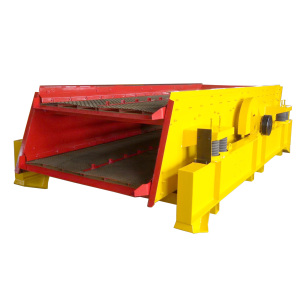
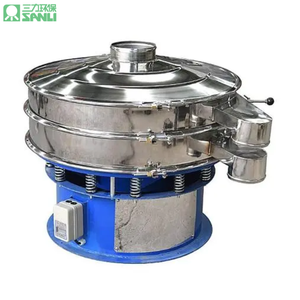
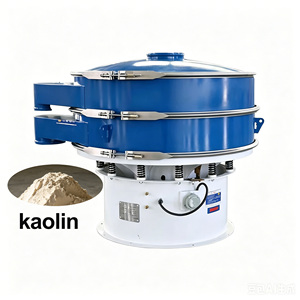
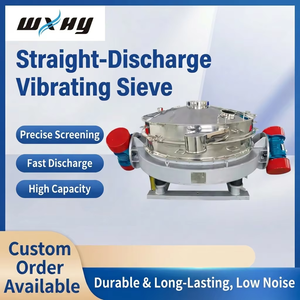
Featured Industrial Motors & Screening Machinery
Engineered for high-viscosity compounding, heavy vibration sieving, and continuous industrial shock loads.
1. Technical Engineering of Rubber Mill Electric Motors
Rubber processing plants—spanning internal Banbury mixers, open rubber mixing mills (two-roll mills), twin-screw strainers, and precision calenders—represent one of the most demanding electromechanical environments in modern manufacturing. Rubber compounding requires low-speed, extreme-torque drive operations characterized by continuous shock loads, harsh thermal stress cycles, and highly volatile particulate contamination (such as fine carbon black and silica dust).
As a premier China Rubber Mill Electric Motors Manufacturer & Supplier, our engineering paradigm centers on overcoming mechanical inertia and severe duty cycles. When raw synthetic or natural elastomer blocks are fed into a two-roll mill or Banbury rotor chamber, the instantaneous load torque can surge up to 250% to 300% of the motor's rated nominal load. Standard NEMA Design B or general industrial IEC motors quickly succumb to rotor bar cracking, winding insulation degradation, or shaft shear under these extreme operating profiles.
Information Gain Insight: The mechanical torque ($T$) required during the initial polymer shearing phase is calculated by $T = \frac{9550 \times P}{n} \times K_s$, where $P$ is power in kW, $n$ is rotational speed in RPM, and $K_s$ represents the dynamic shock loading factor (typically $K_s \ge 2.25$ for rubber processing). Our rubber mill motors are engineered with heavy forged steel shafts and Class H VPI insulation to sustain $K_s = 2.50$ continuously without mechanical hysteresis.
Insulation Integrity & Vacuum Pressure Impregnation (VPI)
Thermal management and dielectric strength determine motor lifespan in rubber mills. Our heavy-duty AC synchronous and slip-ring induction motors feature 100% copper windings treated with dual-cycle Vacuum Pressure Impregnation (VPI) utilizing high-grade solventless epoxy resin. This creates a monolithic, void-free moisture- and dust-proof barrier compliant with NEMA MG1 Part 31 and IEEE 841 requirements, protecting the stator against abrasive carbon black deposition and thermal degradation up to Class H temperatures (180°C operating rating maintained with a conservative Class B temperature rise).
Electromechanical Drive Topology Matrix for Rubber Processing
| Motor Drive Architecture | Starting / Breakdown Torque | Energy Efficiency Rating | VFD Harmonics & Control | Ideal Mill Application |
|---|---|---|---|---|
| High-Torque AC Induction (VPI) | 250% - 280% Nominal Torque | IE3 / IE4 Premium Efficiency | High VFD Compatibility with Insulated Bearings | Open Rubber Mixing Mills (Two-Roll), Refiners |
| Synchronous Direct-Drive Motor | 300% Peak Transient Load | IE5 Ultra-Premium Efficiency | Requires Precision Closed-Loop Vector Drive | Heavy Duty Banbury Internal Mixers (>1,000 HP) |
| Permanent Magnet Synchronous (PMSM) | 250% Constant Low-Speed Torque | IE5 Direct-Drive (No Gearbox) | Ultra-low Harmonic Noise with SiC Inverters | 4-Roll Precision Calenders & Twin-Screw Extruders |
| Wound Rotor / Slip-Ring Motor | 300% High Starting Torque (Low Current) | IE2 / IE3 Equivalent | Rotor Resistance Speed Control | Legacy High-Inertia Rubber Cracking Mills |
2. Global Procurement Trends in Rubber Mill Motors (2025–2035)
The global elastomer machinery market is undergoing a rapid transition toward decarbonization, continuous process automation, and zero-unplanned-downtime manufacturing. Procurement officers, plant directors, and OEM buyers must navigate several evolving technological shifts when procuring high-power industrial motors from top-tier Chinese manufacturers:
A. Gearless Direct-Drive Technology Adoption
Traditional rubber compounding lines rely on high-speed induction motors coupled with massive, multi-stage helical reduction gearboxes. Modern procurement strategies increasingly favor low-speed, high-torque direct-drive Permanent Magnet Motors (PMSM). By eliminating mechanical gearboxes, tire manufacturers reduce mechanical energy losses by 8% to 14%, remove lubricating oil maintenance overhead, and dramatically decrease overall machine footprint.
B. Mandatory IE4/IE5 Carbon Neutrality Directives
With strict energy efficiency standards enforced across the EU, North America, and East Asia (such as IEC 60034-30-1), industrial rubber mills operating continuously (24/7/365 S1 duty cycle) require premium efficiency drive systems. Procurement teams are evaluating Total Cost of Ownership (TCO) over a 20-year operational horizon rather than initial capital outlay. High-efficiency motors pay back their cost delta within 9 to 14 months of continuous rubber compounding operation.
C. Smart IoT & Embedded Vibration Diagnostics
Unplanned motor downtime on a primary Banbury line can cost rubber processing facilities up to $50,000 per hour. Modern rubber mill motor procurement contracts now explicitly mandate integrated edge-computing sensor suites. Our standard motor build options incorporate tri-axial wireless vibration sensors, PT100/RTC stator winding resistance thermal detectors, SPM (Shock Pulse Method) bearing monitoring, and insulated AEGIS grounding rings to prevent electrical fluting caused by VFD high-frequency shaft currents.
3. Key Technological & Manufacturing Development Trends
To maintain leadership as the best manufacturer and supplier, continuous R&D is imperative. Industrial motor engineering for rubber processing is evolving across three core domains:
Advanced Insulation Engineering
Integration of Nanocomposite Corona-Resistant Magnet Wire and Class H VPI resins designed to withstand $dV/dt$ voltage spikes exceeding 12,000 V/µs caused by long VFD cable runs.
Forced Liquid & Dual Cooling
Transition from IC411 (Self-Ventilated Surface Cooling) to IC86W (Water-to-Air Heat Exchanger) or IC666 (Fully Enclosed Fan-Cooled Air-to-Air Heat Exchanger) ensuring 100% rated torque at zero speed.
High-Fatigue Forged Rotors
Rotor designs utilize solid copper/copper-alloy rotor bars silver-brazed to end-rings, coupled with dynamic balancing to ISO 1940 Grade G1.0, eliminating fatigue failure from heavy torque reversals.
4. Enterprise Advantages & Manufacturing Quality Baseline
Drawing upon over a century of inherited heavy manufacturing expertise and operating out of modern ISO 9001:2015 certified production centers, our enterprise delivers high-horsepower motor solutions engineered for the world's most severe industrial tasks.
Whether delivering one-off custom replacement motors for legacy equipment or supplying bulk OEM packages for international rubber mill lines, our facility integrates comprehensive fabrication, CNC shaft machining, dynamic balancing, and full-load VFD test bays up to 20,000 HP capacity.
Custom Engineering & Retrofit Flexibility
Drop-in replacement designs matching exact legacy footprint, shaft height, flange dimensions, and electrical parameters (AC/DC) for vintage or specialized mills.
MIL-SPEC & IEEE Certification Standards
Strict quality assurance protocols adhering to NEMA MG, IEEE 841, EASA AR100, IEC 60034, UL, and MIL-STD-2037 Navy Sealed Winding specifications.
Global Field Support & Emergency Service
24/7 technical dispatch, predictive vibration analysis, remote diagnostic monitoring, and rapid emergency outage repair support across continents.
5. Rubber Mill Motor Procurement FAQ
Request Custom Engineering Specs & Global Quotations
Partner with China's leading rubber mill motor manufacturer. Consult our technical engineering team for custom electric motor designs up to 20,000 HP.
Get Catalog