⚙️ Executive Overview: The Engineering Evolution of Axial Fan Duty Motors
Axial fan duty motors constitute the thermal core of modern industrial processing, energy storage thermal management, ventilation infrastructure, and power generation systems. Unlike standard general-purpose induction motors, an electric motor deployed specifically for axial fan duty operates under unique aerodynamic loading, continuous unidirectional or reversible axial thrust vectoring, and severe environmental exposure.
When selecting premier industrial manufacturing partners across China’s specialized motor production clusters, procurement executives and senior reliability engineers must look beyond surface-level unit pricing. A comprehensive audit of direct winding insulation integrity, rotor balance dynamics (ISO 1940 G2.5 standard), rotor bar conductivity, thermal margin reserves, and total cost of ownership (TCO) over an operational life cycle exceeding 50,000 continuous duty hours is paramount.
Core Procurement Insight: Operating an axial fan motor at just 5°C above its thermal insulation design limit degrades winding insulation lifespan by up to 50%. Top-tier Chinese manufacturers now integrate Class H (180°C) VPI (Vacuum Pressure Impregnation) insulation systems as standard for continuous S1 duty axial fan applications.
Aerodynamic Load Profiling & Motor Duty Cycles
Axial flow fans impart a combination of radial aerodynamic drag and continuous axial thrust upon the motor shaft and bearing assembly. Standard motor configurations frequently suffer premature bearing failure caused by electro-spark erosion and axial play misalignment. Specially tailored axial fan duty motors incorporate deep-groove or angular-contact dual ball bearings lubricated with high-temperature synthetic grease, paired with preloaded wave springs to absorb thermal expansion along the shaft axis.
💡 Motor Topology Benchmark: AC vs. DC vs. Electronically Commutated (EC)
Choosing the optimal electromagnetic topology is critical for achieving optimal airflow dynamics (CFM/Watt) and regulatory energy compliance (IE3, IE4, and IE5 Ultra-Premium Efficiency standards).
| Performance Metrics |
Shaded Pole / Standard AC Induction |
Brushless Direct Current (BLDC) |
Electronically Commutated (EC) PMSM |
| Electrical Efficiency Range |
45% – 68% (IE1 / IE2) |
75% – 85% |
88% – 94% (IE4 / IE5) |
| Speed Modulation |
Fixed Voltage / Frequency Tied |
Voltage Step Regulation |
Integrated PWM / 0-10V / Modbus RS485 |
| Thermal Dissipation Profile |
High Rotor Losses (Heat in Core) |
Moderate Controller Losses |
Ultra-Low Rotor Losses (Cooler Operation) |
| Operational Life (L10h) |
20,000 – 35,000 Hours |
30,000 – 45,000 Hours |
50,000+ Hours Continuous Duty |
| Primary Application Target |
Exhaust Ducts, Commercial HVAC |
Cabinet Cooling, 12V/24V Mobile |
Data Centers, Energy Storage, Hydroponics |
The Superiority of Electronically Commutated (EC) Systems
EC motor technology bridges AC line voltage compatibility with the inherent efficiency of brushless DC permanent magnet rotors. By eliminating rotor copper losses and utilizing integrated onboard microprocessors for sensorless vector control (Field Oriented Control - FOC), EC axial fan duty motors reduce energy consumption by 30% to 50% compared to traditional AC shaded-pole or permanent split capacitor (PSC) motors. This thermal margin translates directly into reduced thermal stress on winding varnish and prolonged dielectric strength over decades of service.
🔧 Detailed Technical Breakdown of Core Fan Motor Categories
Below is an in-depth engineering assessment of the eight key product archetypes featured in our product matrix above, outlining their optimal industrial use cases, structural materials, and protective ratings.
⚡
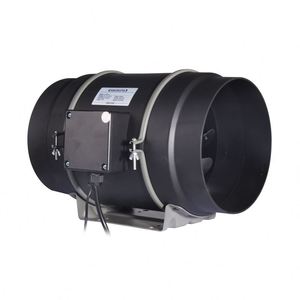
1. EC Inline Duct Fan Motors
Designed for agricultural, hydroponic, and precision cleanroom environments. Features onboard PWM pulse controllers, ultra-quiet EC brushless drive, and lightweight plastic-composite housing preventing dynamic resonance at variable speeds.
🧪
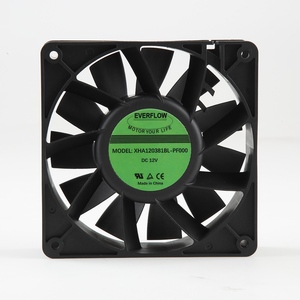
2. High-Speed Energy Storage Fans
Compact 120x120x38mm 4200 RPM heavy-duty AC/DC units explicitly engineered for battery energy storage systems (BESS) and inverter racks. Built with dual precision ball bearings and IP68 sealed stator potting.
🔥
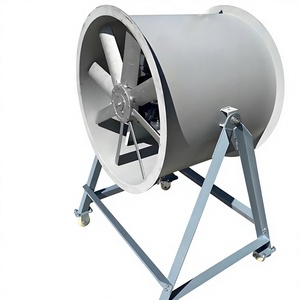
3. Explosion-Proof Duct Fan Motors
Heavy-gauge carbon/stainless steel construction with ATEX / IECEx certified flameproof external motors. Engineered to safely purge high-temperature volatile organic compounds (VOCs) and hazardous process fumes.
💧
4. Stainless 100% Copper AC Motors
Utilizes 100% oxygen-free high-conductivity copper magnet wire combined with precision stainless steel shrouds. Delivers maximum moisture corrosion resistance in industrial washdown environments.
🏽
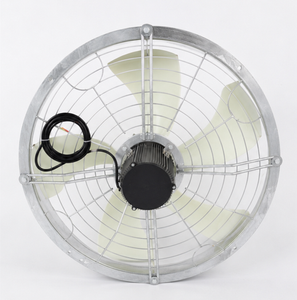
5. Heavy-Duty High-CFM Tube Axial
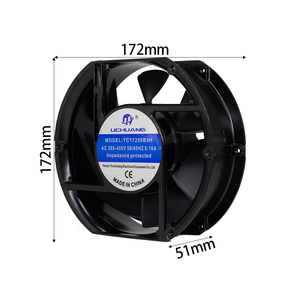
Size 17250 220V AC tube axial motors designed for high static pressure cooling of power generation cabinets, transformer rooms, and high-density industrial machinery housings.
🔄
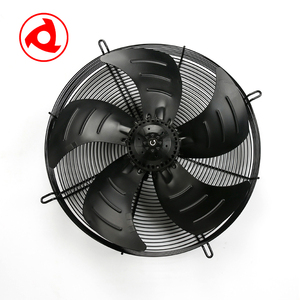
6. YWF External Rotor Axial Motors
Classic external rotor fan architecture where the rotor revolves around the internal stator. This space-saving design maximizes blade attachment stability, minimizes dynamic unbalance, and enhances heat transfer.
🛡
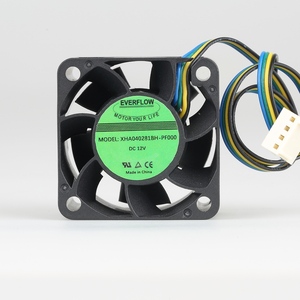
7. Micro IP67 High-RPM DC Motors
Extremely high-speed (up to 34,000 RPM) micro axial units built with PBT engineering plastics. Provides targeted spot-cooling for micro electronics, military-spec hardware, and mobile medical equipment.
❄
8. Spindle Inverter Cooling Motors
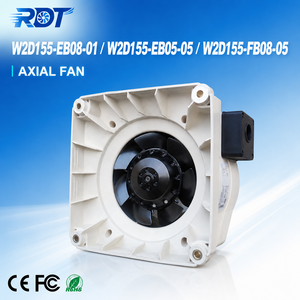
150mm heavy-duty continuous duty (S1) axial fan motors specialized for spindle inverter ventilation, CNC machinery, and high-frequency variable speed drive (VSD) cabinets.
📈 Global Sourcing Trends & Procurement Roadmap (2025–2030)
The global industrial motor sector is undergoing structural technological shifts. Procurement managers sourcing from top-tier Chinese manufacturing ecosystems must align their supply chain criteria with the following key industry drivers:
1. Widespread Adoption of IE5 Ultra-Premium Efficiency Mandates
Governments across North America, the European Union, and Asia-Pacific are enforcing stricter Minimum Energy Performance Standards (MEPS). Industrial end-users can no longer afford the parasitic losses of legacy IE1 or IE2 fan motors operating 24/7. Future-proof procurement requires mandating minimum IE4 or EC equivalent performance to mitigate carbon taxation and rising industrial electricity costs.
2. Transition to Smart Predictive Maintenance (IoT & Vibration Sensing)
Leading Chinese original equipment manufacturers (OEMs) are embedding low-cost digital MEMS vibration sensors, RS-485 Modbus telemetry, and thermal thermistors (PT100/PTC) directly into the motor end-bells. Real-time condition monitoring allows plant engineers to predict bearing spalling and rotor eccentricity weeks before catastrophic structural breakdown occurs.
3. Material Resilience & Magnetics Standardization
Fluctuations in raw material pricing—such as electrolytic copper, high-grade silicon steel laminations (35WW270/50WW470), and rare-earth Neodymium (NdFeB) magnets—have prompted leading manufacturers to refine hybrid rotor topologies. Ferrite-based permanent magnet synchronous reluctance motors (SynRM) are emerging as cost-stable, high-efficiency alternatives for high-volume industrial ventilation lines.
🏭 Manufacturing Heritage & Quality Control Protocol
Combining time-tested electrical engineering standards—inspired by legacy heavy-industry leaders like Louis Allis—with China's agile, high-scale digital manufacturing ecosystem provides global buyers with an unparalleled quality-to-cost ratio.
📜
ISO 9001:2015
Stringent quality management protocols across raw lamination stamping, winding, and assembly.
🛡
MIL-SPEC & Navy Standard
Capability to deliver sealed winding systems meeting extreme military, shock, and vibration standards.
⚡
VPI Insulation System
100% solid epoxy resin vacuum pressure impregnation ensures void-free dielectric moisture resistance.
🔧
Custom Up to 20,000 HP
Full engineering versatility ranging from sub-fractional micro cooling fans to massive industrial blowers.
Testing & Verification Methodology
Every industrial axial fan duty motor leaving the factory floor undergoes rigorous end-of-line verification, including:
- High-Potential (Hi-Pot) & Surge Resistance Testing: Validating copper turn-to-turn insulation under peak voltage transients.
- Dynamic Rotor Balancing (ISO 1940 Grade G2.5): Precision two-plane balancing to eliminate mechanical vibration and reduce bearing fatigue.
- Airflow & Static Pressure Chamber Testing (AMCA 210 Standard): Quantifying exact CFM output across varying static pressure curves.
- Ingress Protection Verification: IP54, IP65, IP67, and IP68 submersion/dust chamber verification.