
High-Voltage Alternators & Heavy-Duty Vibration Motors
Certified to ISO 9001:2015, CE, IEEE, and NEMA MG Standards for Extreme Duty Power & Processing Equipment
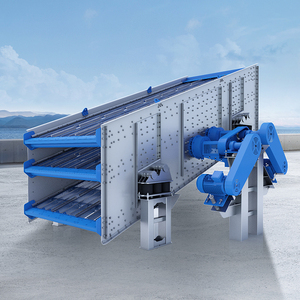
Aggregate Vibrating Screen Machine for Stone Crusher Plant 60-350t/h Ore Processing 30kW Motor High Output Finished Sand
Contact Us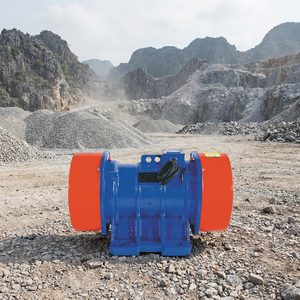
Vibrating Screen Vibrating Feeder & Hopper Vibration Motor for Ore Processing Heavy Load Capacity Durable Engine
Contact Us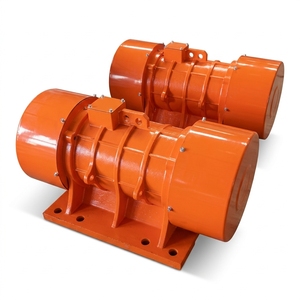
Three Phase Vibration Motor IP65 Waterproof Adjustable Exciting Force for Vibrating Screen Silo Hopper Mining Cement Machinery
Contact Us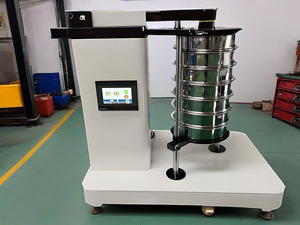
High-Accuracy Stainless Steel Laboratory Rotap Sieve Shaker Vibrating Motor Circular Vibrating Screen for Particle Size
Contact Us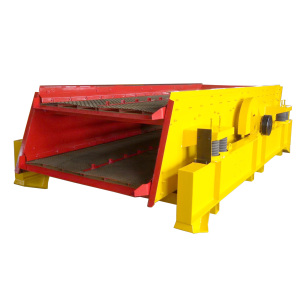
DUOLING Circular Vibrating Screen AC Motor 1-200 Tons Capacity Long Working Life for Ore Core Component Bearing Mining Screening
Contact Us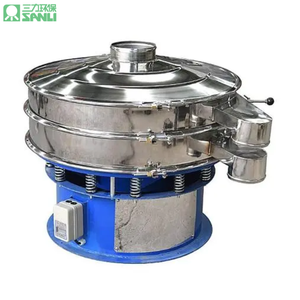
Durable Stainless Steel Rotary Vibrating Screen Motor-Easy-Clean for Food Processing (Dried Fruit Wheat Flour Sieving)-380V/220V
Contact Us
Multi-Layer Rotary Vibrating Screen Vibration Motor | Kaolin Clay Processing | 1-5 Decks Customizable | 100-500 Mesh Industrial
Contact Us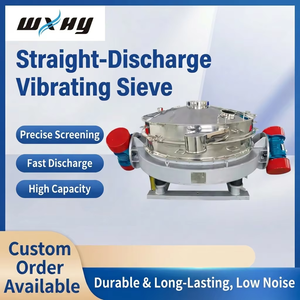
HY-1200-1s Direct Discharge Motor Vibrating Screen 380V CN Heavy Industry Specification
Contact UsCE Certified High Voltage Alternators: Technical Architecture & Global Compliance Framework
High voltage alternators—operating typically across 3.3 kV, 6.6 kV, 10.5 kV, 11 kV, and 13.8 kV ratings—form the critical backhaul of primary continuous generation and emergency standby infrastructure in utility power stations, heavy mining operations, offshore oil platforms, and continuous industrial processing plants. Achieving a CE Certification (Conformité Européenne) for high voltage alternators demands stringent adherence to directives including the Low Voltage Directive 2014/35/EU, Electromagnetic Compatibility (EMC) Directive 2014/30/EU, Machinery Directive 2006/42/EC, and harmonized standard EN 60034 (Rotating Electrical Machines).
As a global OEM manufacturer and direct exporter with over a century of continuous electrical machine innovation, our facility engineers high voltage synchronous alternators and industrial vibrating drives engineered to withstand violent harmonic oscillation, extreme thermal cycling, and harsh environmental contaminants. By incorporating Vacuum Pressure Impregnation (VPI) with solventless epoxy resin systems and Class H mica tape insulation, our high-voltage alternators guarantee dielectric strength exceeding 25 kV under rigorous surge comparison tests.
SEO & Technical Insight: Unlike standard low-voltage generators (< 1000V) where copper skin depth and thermal dissipation are handled via standard drip-proof enclosures, High Voltage (HV) alternators require specialized magnetic flux distribution, anti-corona slot shielding, and non-destructive partial discharge (PD) monitoring to ensure continuous mean time between failures (MTBF) exceeding 100,000 operating hours.
Stator & Rotor Winding Integrity in Extreme Duty Alternators
The primary point of electrical breakdown in high voltage power generation is dielectric insulation degradation caused by partial discharge, slot abrasion, and thermal degradation. Our high voltage alternator manufacturing processes utilize precision form-wound coils crafted from high-purity oxygen-free copper bar stock. Each coil is wrapped with multiple layers of glass-backed mica tape, protected by semi-conductive slot paint to dissipate capacitive surface charges, and finished with conductive top-coat tape to suppress slot corona discharge.
- Form-Wound Coils with Semi-Conductive Shielding: Eliminates electrical stress concentration around stator tooth corners, preventing partial discharge activity up to 15 kV operating levels.
- Class H Insulation System with Class B Temperature Rise: Operating the alternator below its maximum thermal threshold increases winding lifespan exponentially according to the Arrhenius rate equation.
- Brushless Digital Excitation with Permanent Magnet Generator (PMG): Provides 300% short-circuit current sustained capability for 10 seconds, enabling rapid recovery during severe motor starting transients.
- MIL-STD-2037 Navy Sealed Winding Standards: Optional moisture-proof immersion sealing available for subsea, marine vessel, and ultra-humid tropical mining installations.
Technical Specifications Matrix: High Voltage Alternators vs Standard Industrial Generators
Comprehensive engineering comparison for B2B procurement managers, EPC contractors, and electrical plant engineers.
| Engineering Parameter | CE Certified High Voltage Alternator | Standard Low Voltage Alternator | Operational Impact & Value Gain |
|---|---|---|---|
| Voltage Range | 3,300 V - 13,800 V (3.3kV - 13.8kV) | 220 V - 690 V | Drastically reduces line current, allowing up to 80% reduction in copper cabling cross-section. |
| Insulation & Impregnation | Class H Mica Tape + Full VPI Tank Dip | Class H Standard Dip & Bake | Eliminates voids, prevents moisture ingress, and resists partial discharge degradation over decades. |
| Excitation Architecture | Brushless AVR + PMG (Sustained Short-Circuit) | Shunt / Auxiliary Winding Excitation | Ensures voltage stability during heavy inductive load startup (e.g. 350t/h stone crusher vibrating motors). |
| Corona Suppression | Semi-Conductive Outer Tape & Slot Paint | Not Required (< 1000V) | Prevents localized ionization of air, eliminating internal insulation tracking and flashovers. |
| Enclosure Protection | IP55 / IP56 / IC81W (Water Cooled) / IC611 | IP23 Open Drip Proof (ODP) | Allows continuous operation in dust-heavy, chemical-laden, or abrasive aggregate processing environments. |
| Global Certification | CE, ISO 9001:2015, IEEE 115, IEC 60034 | Basic Regional Approvals | Unrestricted global export compliance with mandatory safety and EMC grid-synchronization standards. |
Why Global Procurement Leaders Choose Our High Voltage Alternator Engineering
With a heritage spanning over 120 years in specialty electric motor and alternator manufacturing (built upon the foundational legacy of Louis Allis engineering and global power conversion solutions), our facility in Alabama, USA, combined with international export hubs, delivers unparalleled technical depth for high-stakes industrial facilities.
Century-Old Engineering Legacy
Over 120 years of custom electrical machinery design, pioneering field-proven solutions for Above-NEMA frames up to 20,000 HP.
Rigorous Certification Standards
ISO 9001:2015, CE Declaration of Conformity, EASA-AR100 repair standards, and strict adherence to MIL-STD-2037 Navy specifications.
Georator & Frequency Conversion
Specialized integration of Georator permanent magnet generators, 50Hz/60Hz/400Hz frequency converters, and custom rotary transformers.
Synergy Between High Voltage Alternators and Heavy Machinery Drives
High voltage power generation does not exist in isolation—it directly powers massive mechanical infrastructure such as aggregate vibrating screen machines, stone crushers (60-350t/h capacity), heavy-duty mining hoists, and multi-layer rotary sieves. Operating high-capacity vibration motors (such as 30kW IP65 3-phase units) directly from high voltage step-down networks requires precise alternator voltage regulation (AVR response time < 10 milliseconds) to prevent brownouts during intense cyclic load surges.
Our high voltage alternators are specifically tuned for low sub-transient reactance ($X''_d$), limiting transient voltage dip to less than 15% when sudden heavy-load vibration motors or multi-deck screening equipment (like Kaolin clay 100-500 mesh processors) engage simultaneously across industrial plants.
Future Procurement Trends in High Voltage Alternators & Industrial Power Equipment
As global energy frameworks transition toward decarbonization, hybrid microgrids, and digitized industrial automation, international procurement officers must adapt their sourcing criteria. Based on empirical trade data and market research, the following key trends will dominate high voltage alternator procurement through 2030:
1. Digital Twin & Telemetry Integration
Future CE-certified alternators are embedded with IoT sensor arrays monitoring stator slot temperature (RTD PT100), bearing vibration (accelerometers), and online partial discharge. Buyers prioritize equipment with native Modbus/RS485 and Ethernet/IP protocols for predictive maintenance.
2. Grid-Forming Inverter Compatibility
With increased integration of solar and wind microgrids, high voltage synchronous alternators are increasingly tasked with providing rotary inertia and fault-current contribution. Procurement strategies focus heavily on alternator short-circuit ratios (SCR > 0.5) to maintain dynamic grid stability.
3. Extreme Environment IP Rating Requirements
Procurement specs have shifted from basic IP23 enclosures to total enclosure designs (IP55/IP56 with air-to-water heat exchangers - IC81W). This protects critical stator copper from corrosive marine salt air, chemical plant atmospheres, and fine silica dust in quarry screening operations.
4. Total Cost of Ownership (TCO) Sourcing
Modern EPCs evaluate suppliers not on upfront CAPEX, but on 25-year lifecycle OPEX. High efficiency ratings (exceeding 97.5% at nominal power factor 0.8) save hundreds of thousands of dollars in fuel and parasitic losses over the alternator’s service lifespan.
Next-Generation Technological Trends in High Voltage Alternator Design
Research and development in high-voltage synchronous machinery is undergoing a renaissance driven by materials science and electromagnetic design software. Below is a breakdown of breakthroughs currently being integrated into our export-grade high voltage alternators:
1. Advanced Nanocomposite Insulation Systems
Traditional mica tape relies on organic binders that degrade under prolonged localized heating. Next-generation Class H and Class N insulation systems incorporate silica or alumina nanoparticles suspended in epoxy resin. This nanocomposite barrier increases dielectric breakdown voltage by up to 35% while doubling thermal conductivity, allowing faster heat dissipation from the inner copper strands to the stator core.
2. Adaptive Harmonic Suppression Windings
Non-linear loads—such as variable frequency drives (VFDs) powering aggregate vibrator screens or heavy mining conveyors—inject high-order space harmonics (5th, 7th, 11th) back into the alternator stator. Our engineering team utilizes custom 2/3rd pitch coil designs and skewing stator slots to effectively cancel the 3rd, 9th, and 15th harmonic voltage components, maintaining Total Harmonic Distortion (THD) under 2% even under heavy industrial distortion.
3. Permanent Magnet Pilot Exciters (PMG) as Standard Specification
Modern CE-marked high voltage alternators are increasingly discarding traditional self-excited shunt systems. A shaft-mounted Permanent Magnet Generator supplies clean, independent AC power to the Automatic Voltage Regulator (AVR). This guarantees that sudden main line short-circuits or extreme motor start-up surges do not collapse the exciter field voltage, maintaining crisp voltage recovery under all operational scenarios.
Frequently Asked Questions (FAQ) for High Voltage Alternators Sourcing
Ready to Elevate Your Power Infrastructure?
Connect directly with our senior application engineers for CE certified high voltage alternator sizing, custom excitation design, or heavy-duty motorization solutions for industrial screening and processing plants.