
Electric Motor Industry Insights & Technical Articles

Discover technical knowledge, motor maintenance guides, engineering innovations, and industry updates from our team of specialty electric motor experts.

0%

Why Choose Vertical Pump Motors for Global Applications?

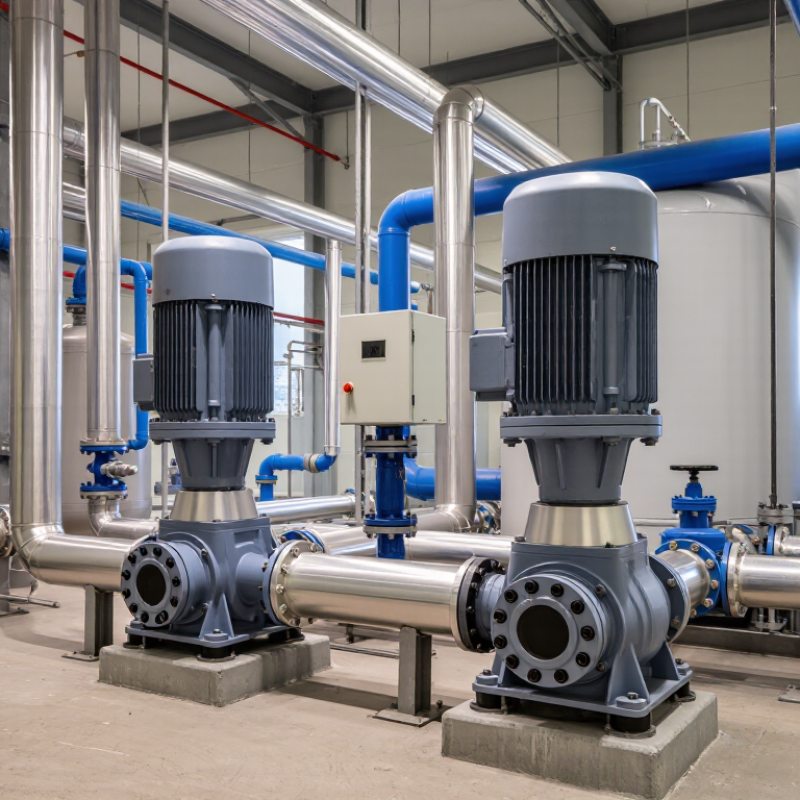
Across water, power, irrigation, and process industries, Vertical Pump Motors support equipment that often operates continuously. Their vertical arrangement saves valuable floor space and suits deep-well, turbine, mixed-flow, and multistage pump systems. In crowded municipal stations, this can leave clearer access around valves and pipelines. It also places the motor above potential flood levels, although site design still matters.

The U.S. Department of Energy reports that pumping systems can represent nearly 20% of industrial electricity consumption. Its Improving Pumping System Performance sourcebook also identifies major savings through efficient equipment, proper sizing, and system optimization. The International Energy Agency has similarly emphasized that electric motor systems consume more than half of global electricity. These figures explain why motor efficiency matters beyond the purchase price. A few percentage points can become substantial energy costs over years of operation.

As pump specialist Igor J. Karassik stated, “The pump is the heart of any fluid-handling system.” Vertical Pump Motors extend that principle by combining mechanical alignment, compact installation, and dependable torque delivery. They can simplify maintenance in some installations, but they are not automatically the best choice. Thrust loads, lubrication, vibration, ambient temperature, grid standards, and local service capability require careful review. Global projects also face different voltage, frequency, enclosure, and efficiency requirements. Reports provide useful direction, not a finished design. That is where engineering experience becomes decisive. A technically correct motor can still disappoint when commissioning data, spare parts, or operator training receive too little attention.
Why Choose Vertical Pump Motors for Global Applications?

Vertical Motor Design: Thrust Ratings for Deep-Well and Process Pumps

Why Choose Vertical Pump Motors for Global Applications?

Vertical motor design matters when a pump must lift fluid through deep columns or manage process pressure. Unlike many horizontal arrangements, a vertical motor may carry substantial downward or upward thrust from the pump assembly. That load reaches the thrust bearing, housing, and foundation. Small errors become expensive. In field work, operators often notice vibration before they see bearing damage. This is why thrust rating deserves more attention than nameplate horsepower alone.

For deep-well pumps, calculate steady thrust from impeller weight, hydraulic force, shaft weight, and column friction. Include startup, shutdown, and changing water levels. Process pumps add different challenges, including hot fluids, changing density, pressure surges, and frequent cycling. A motor rated for continuous thrust may still need higher short-term capacity. Ask for both values. Bearing life depends on load, speed, lubrication, alignment, and temperature. A generous rating cannot rescue poor installation.

Reliable selection begins with measured duty data, not assumptions. Confirm thrust direction, maximum axial load, pump speed, service factor, ambient temperature, altitude, and power frequency. Check the motor’s thrust bearing arrangement and allowable shaft movement. Local standards and site rules should be reviewed by a qualified engineer. A common field lesson is copying specifications from an older well, even when the new pump is heavier. That shortcut looked efficient. It was not. Leave room for transient loads, but avoid oversized equipment without evidence; it can raise cost and complicate maintenance. Clear documentation helps technicians compare readings during commissioning and future inspections.

Global Standards: IEC 60034, NEMA MG 1, and API 610 Compliance

Why Choose Vertical Pump Motors for Global Applications?

Global Standards: IEC 60034, NEMA MG 1, and API 610 Compliance

For global pumping projects, a vertical motor must fit more than a mounting frame. It must match electrical networks, site conditions, and pump behavior. IEC 60034 provides a common technical foundation for rotating machines, including rating, efficiency, temperature rise, insulation, and testing. This helps engineers compare performance across countries. Still, the standard does not remove every project decision. Frequency, altitude, ambient temperature, and starting duty remain critical.

NEMA MG 1 adds practical requirements widely used in North American installations. Its guidance covers motor construction, ratings, dimensions, performance, and testing. When IEC and NEMA requirements appear together, a detailed comparison is essential. Similar terms may describe different test methods or tolerances. Small differences matter. A motor can pass a routine review yet fail to suit a high-inertia pump or weak electrical grid.

API 610 focuses on centrifugal pump design and operating reliability. For a vertical pump package, the motor should support specified thrust, vibration, alignment, coupling, and protection requirements. Review the complete data sheet, not only the motor certificate. Check test records, efficiency data, bearing details, insulation class, enclosure rating, and site derating calculations. In commissioning work, overlooked cable entries and insufficient cooling have caused avoidable delays. That lesson is easy to dismiss. It should not be. Standards improve confidence, but careful engineering still determines whether the motor survives real service.

Energy Efficiency: IE3 and IE4 Classes Under IEC 60034-30-1

Why Choose Vertical Pump Motors for Global Applications?

Vertical pump motors deserve attention because pumping often runs for thousands of hours yearly. The International Energy Agency reports that electric motor systems consume more than half of global electricity. Small efficiency gains can therefore produce measurable savings across water, cooling, irrigation, and process facilities.

IEC 60034-30-1 classifies IE3 as Premium Efficiency and IE4 as Super Premium Efficiency. These classes compare motor losses under defined test conditions. They do not guarantee identical field savings. Pump duty, speed control, voltage, temperature, and maintenance still matter. In practical installations, an IE4 motor can reduce operating losses against an IE3 design, especially at steady, heavily loaded duty points. The actual result needs measurement.

Real sites are messier. Vertical arrangements can reduce floor space, but they demand careful attention to thrust loads, shaft alignment, bearing life, and coupling geometry. The U.S. Department of Energy identifies motor-driven equipment as a major industrial energy user, reinforcing the value of system-level selection. A higher efficiency motor paired with an oversized pump may waste more energy than a correctly sized IE3 system. That assumption is easy to miss. Engineers should review efficiency maps, variable-frequency-drive compatibility, starting current, ambient conditions, and local grid requirements before specifying IE4. IEC classification is authoritative, yet field verification remains essential. Personally, I would not approve a premium class from the nameplate alone. Performance data and commissioning records matter more.

Worldwide Compatibility: 50/60 Hz Systems and 400–480 V Networks

Why Choose Vertical Pump Motors for Global Applications?

Worldwide Compatibility: 50/60 Hz Systems and 400–480 V Networks

Vertical pump motors suit international projects because their architecture adapts well to different installations. A 50 Hz supply produces lower motor speed than a 60 Hz supply. For a two-pole motor, that difference is roughly 3,000 versus 3,600 rpm before slip. Engineers must therefore verify pump curves, bearing loads, and flow requirements. The International Energy Agency reports that electric motor systems consume around half of global electricity. Small efficiency gains can matter across thousands of operating hours.

Many industrial networks use 400–480 V three-phase power. A properly selected motor can serve these systems, but voltage alone is not enough. Frequency, insulation class, starting current, enclosure protection, and local grid stability also require checking. IEC 60034 guidance supports consistent motor testing and performance evaluation. Field commissioning often exposes simple problems, such as incorrect rotation or an unsuitable overload setting. These details are easy to underestimate.

Tips: Confirm the nameplate before ordering. Check both 50 and 60 Hz performance. If a variable frequency drive is planned, verify its output range and motor insulation. Leave space above the pump for lifting. A universal motor is rarely truly universal. The U.S. Department of Energy identifies pumping systems as major industrial energy users, so efficiency testing deserves attention. Recheck assumptions. They may be wrong.

Why Choose Vertical Pump Motors for Global Applications? - Worldwide Compatibility: 50/60 Hz Systems and 400–480 V Networks

Application or Electrical Dimension Typical Global Value Compatibility Benefit Technical Consideration Selection Guidance
Power-supply frequency 50 Hz or 60 Hz, three-phase AC Supports common industrial grids across Europe, Asia, Africa, the Americas, and other regions. Motor speed and pump operating point change with frequency. Confirm the required frequency before finalizing speed, head, flow, and power calculations.
Nominal voltage range 400–480 V line-to-line Covers widely used low-voltage industrial networks without requiring a medium-voltage motor. The motor nameplate must match the available supply and connection method. Verify rated voltage, allowable tolerance, starting method, and local electrical regulations.
Synchronous speed at 50 Hz 2-pole: 3,000 rpm
4-pole: 1,500 rpm
6-pole: 1,000 rpm
Provides standard speed options for high-head, general-purpose, and high-flow pumping duties. An induction motor runs slightly below synchronous speed because of slip. Use the actual rated speed from the motor data sheet for hydraulic calculations.
Synchronous speed at 60 Hz 2-pole: 3,600 rpm
4-pole: 1,800 rpm
6-pole: 1,200 rpm
Allows the same basic motor design to serve higher-speed pumping systems on 60 Hz networks. Changing from 50 Hz to 60 Hz can affect flow, head, shaft power, noise, and vibration. Recalculate pump performance rather than assuming identical duty-point behavior.
Common motor connection Three-phase, six-terminal star/delta-capable designs are common in this voltage class. Can support different starting arrangements when the nameplate provides compatible dual-voltage ratings. A star/delta starter requires a motor designed for the intended line voltage and six accessible terminals. Follow the exact nameplate connection diagram; never select connections from voltage alone.
Pump arrangement Vertical inline, vertical turbine, mixed-flow, and multistage configurations Supports compact layouts, deep-water lifting, booster duties, cooling-water circulation, and process pumping. Axial thrust, shaft alignment, bearing arrangement, and coupling design vary by pump type. Match the motor thrust capability and mounting arrangement to the pump’s mechanical design.
Mounting configuration Vertical flange, vertical foot-and-flange, or dedicated vertical pump mounting Makes the motor adaptable to different pump frames and installation footprints. Mounting dimensions, shaft extension, flange size, and pilot diameter must be compatible. Check the applicable dimensional standard and the complete pump-motor interface drawing.
Variable-frequency-drive operation Suitable when the motor is specifically rated for inverter-fed operation. Enables adjustable flow and pressure, soft starting, and improved process control. Low-speed cooling, bearing currents, insulation stress, and harmonic effects require evaluation. Confirm the allowable frequency range, minimum speed, cable length, and drive compatibility.
Efficiency and operating cost High-efficiency three-phase motor designs are widely available in this voltage range. Lower electrical losses can reduce energy consumption during long operating periods. Total energy use depends on motor efficiency, pump efficiency, duty point, controls, and operating hours. Compare efficiency at the actual load point, not only at rated motor output.
Environmental protection Protection levels commonly range from IP55 upward, depending on the application. Allows selection for indoor plant rooms, dusty areas, humid locations, and exposed installations. An IP rating addresses enclosure protection; it does not by itself define corrosion resistance or hazardous-area approval. Select enclosure, insulation, heating, and coating requirements according to the site environment.
International standardization IEC motor ratings, dimensions, efficiency classes, and testing practices are widely referenced internationally. Simplifies technical comparison and specification across multinational projects. Local codes may impose additional requirements for efficiency, safety, wiring, or certification. Specify the required standard, efficiency class, certification, and documentation before procurement.
Recommended project checks Voltage, frequency, rated output, speed, current, duty point, thrust, mounting, enclosure, and ambient conditions Creates a consistent specification for international sourcing and replacement planning. A motor that matches voltage and frequency may still be unsuitable if mechanical or thermal requirements differ. Approve the motor only after electrical, hydraulic, mechanical, environmental, and regulatory checks are complete.

Note: Actual motor ratings, allowable voltage variation, efficiency, protection level, speed, and mounting dimensions must be confirmed from the selected motor nameplate and technical documentation.

Protection and Reliability: IP55 Enclosures and Continuous-Duty Operation

Vertical pump motors often work in demanding spaces, from irrigation stations to cooling systems. Their protection and duty rating deserve close attention.

An IP55 enclosure limits dust entry and protects against water jets from any direction. It does not permit immersion or careless washing. In field service, technicians commonly inspect cable glands, terminal covers, and drain paths after installation. Small gaps can defeat a strong enclosure rating. Condensation also matters, especially when warm motors stop in cool, humid rooms. Space heaters or controlled ventilation may help, but only when correctly specified.

Continuous-duty operation, often identified as S1 duty, allows the motor to run steadily at its rated load. This supports stable pumping and reduces repeated thermal cycling. Yet “continuous” does not mean unlimited overload. Correct voltage, frequency, alignment, cooling airflow, and pump sizing remain essential. A motor running beside a hot pipe may need derating. High altitude can reduce cooling efficiency too. Check the data, not assumptions. During maintenance, record current, vibration, bearing temperature, and unusual noise. These simple observations can reveal developing problems before a shutdown. IP55 and continuous-duty capability provide a reliable foundation, but installation quality still decides much of the result.

FAQS

Which standards should a vertical pump motor meet for international projects?

IEC 60034 covers ratings, efficiency, temperature rise, insulation, and testing. NEMA MG 1 adds construction, dimensions, performance, and testing guidance. API 610 focuses on pump package reliability and operating requirements. Compare requirements carefully. Similar terms may use different test methods.

Does IEC 60034 compliance guarantee reliable field operation?

No. Frequency, altitude, ambient temperature, starting duty, and cooling still matter. A certified motor may struggle with high inertia or a weak electrical grid. Standards improve confidence. They do not replace engineering judgment.

What is the difference between IE3 and IE4 motor efficiency?

IE3 means Premium Efficiency, while IE4 means Super Premium Efficiency. IE4 generally has lower motor losses under defined test conditions. Actual savings depend on loading, speed control, voltage, and maintenance. The nameplate is not enough.

Can an IE4 motor always save more energy than an IE3 motor?

Not always. An oversized pump can waste more energy than a correctly sized IE3 system. Review pump curves, operating hours, efficiency maps, and load conditions. Measure performance during commissioning when possible. Assumptions can be wrong.

Can one vertical motor operate on both 50 Hz and 60 Hz systems?

It may, but engineers must verify both operating points. A two-pole motor runs near 3,000 rpm at 50 Hz and 3,600 rpm at 60 Hz. Speed changes affect flow, head, bearing loads, and pump behavior. Check both curves.

Are 400–480 V networks suitable for vertical pump motors?

Many motors can serve these three-phase networks with proper selection. Voltage alone is insufficient. Check frequency, insulation, starting current, enclosure protection, and grid stability. Confirm the complete nameplate before ordering.

What should engineers check when using a variable frequency drive?

Verify the drive output range and motor insulation compatibility. Check cooling performance, low-speed operation, overload settings, and starting behavior. Cable routing and entry details also deserve attention. Small omissions cause delays.

What physical details matter during vertical pump motor installation?

Confirm thrust capacity, shaft alignment, bearing life, coupling geometry, and vibration limits. Leave enough overhead space for lifting equipment. Inspect cable entries and cooling paths before commissioning. These details seem minor. They are not.

Which documents should be reviewed before approving a motor?

Review the complete data sheet, test records, efficiency results, bearing information, insulation class, and enclosure rating. Include site derating calculations for altitude and ambient temperature. Commissioning records should confirm rotation, overload settings, vibration, and operating performance. I would not approve a premium motor from its label alone.

Conclusion

Vertical Pump Motors are engineered to deliver dependable performance in deep-well, process, and other demanding pumping applications. Their vertical design supports substantial thrust loads, helping maintain stable operation when pumps must lift fluid over significant distances or work under continuous mechanical stress. Compliance with international requirements such as IEC 60034, NEMA MG 1, and API 610 also promotes consistent quality, safety, and compatibility across global projects.

Energy efficiency is another major advantage, with IE3 and IE4 classes under IEC 60034-30-1 helping reduce power consumption and operating costs. These motors can be configured for both 50 Hz and 60 Hz systems, as well as common 400–480 V networks, making them suitable for varied electrical environments. IP55 protection helps guard internal components against dust and water, while continuous-duty capability supports reliable, long-term operation in industrial facilities.

Amelia

Amelia

Amelia is a seasoned marketing professional with a strong understanding of the company’s products, customers, and evolving market needs. Through her work, she combines strategic insight, clear communication, and practical industry knowledge to help audiences make informed decisions. She regularly......