
Electric Motor Industry Insights & Technical Articles

Discover technical knowledge, motor maintenance guides, engineering innovations, and industry updates from our team of specialty electric motor experts.

0%

Shredder Motors determine how steadily a machine handles paper, wood, plastics, metals, or mixed feedstock. Their torque, speed, cooling method, and duty rating directly affect cutting performance. A motor that looks powerful on paper may struggle when material enters unevenly. Real operating conditions matter.

This guide introduces the main motor types used in industrial and commercial shredders. Three-phase induction motors remain common because they are durable, widely supported, and suitable for continuous workloads. Single-phase motors can serve smaller machines, although their starting torque and thermal capacity may be limited. Synchronous motors, including permanent-magnet designs, can offer precise speed control and improved efficiency, but their higher purchase price may require careful justification. Some heavy-duty shredders use hydraulic drives. These systems can produce strong low-speed torque and tolerate sudden load changes, yet they need pumps, fluid management, and trained maintenance.

The details matter.

Motor selection should match shaft speed, gearbox ratio, cutter design, material density, and expected operating hours. Variable-frequency drives can adjust speed and soften startup, reducing mechanical shock in suitable systems. However, incorrect settings may cause overheating or unstable operation. Manufacturer data, verified load calculations, and service records provide stronger evidence than marketing labels. An experienced operator will also watch vibration, unusual noise, temperature rise, and current draw.

A simple type-based comparison can be useful, but it is not perfect. Two shredders with identical motors may perform differently because their cutters, gearboxes, and control systems are not the same. Understanding these differences helps buyers, engineers, and maintenance teams choose Shredder Motors with greater confidence and fewer costly assumptions.
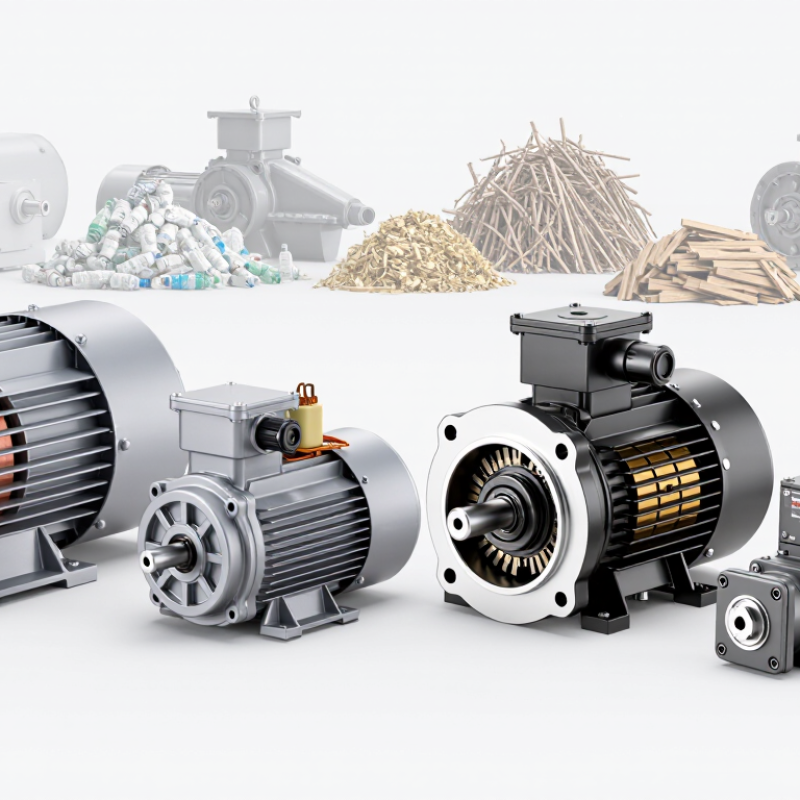
What Are the Main Types of Shredder Motors?

Classify Shredder Motors by Power Source, Torque, and Duty Cycle

What Are the Main Types of Shredder Motors?

Shredder motors can be classified by power source, torque, and duty cycle. Electric motors dominate fixed installations because they deliver stable speed and simpler maintenance. AC induction motors suit heavy industrial shredders, while DC motors offer easier speed control in smaller systems. Hydraulic motors remain useful where shock loads, remote power units, or compact layouts matter. The U.S. Department of Energy reports that motor-driven equipment consumes roughly 69% of industrial electricity, so motor efficiency deserves serious attention.

Torque changes the cutting experience. High-torque, low-speed motors handle dense feedstock with less risk of sudden stalling. A gearbox can multiply torque, but it also adds losses, heat, and maintenance points. Direct-drive systems reduce mechanical parts, although their initial cost may be higher. That shortcut is tempting, but often wrong. Engineers should compare starting torque, overload capacity, rotor inertia, and real material density, not only rated horsepower.

Duty cycle describes how long the motor works and how often it rests. IEC 60034-1 identifies operating classes such as S1 continuous duty, S3 intermittent duty, and S6 continuous periodic duty. An S1 motor may run for hours beside a conveyor. An S3 motor may need cooling between short shredding cycles. In practice, feed jams, dust, and frequent reversals can exceed laboratory assumptions. Field results can disagree. Selecting a larger motor is not always safer; poor ventilation can still shorten insulation life.

Electric Motors: IE3–IE4 Induction and PM Designs at 50/60 Hz

What Are the Main Types of Shredder Motors?

Electric motors drive most industrial shredders, with induction and permanent magnet designs being the main choices. IE3 induction motors offer dependable torque and simple maintenance. IE4 models reduce electrical losses during long operating cycles. They suit machines that face repeated starts, shock loads, and dusty work areas. At 50 or 60 Hz, the motor must match the local power supply and control system. A poor match can cause heating, vibration, or weak starting performance.

Permanent magnet motors can deliver higher efficiency, especially at changing speeds and partial loads. They often work with variable frequency drives, allowing smoother control when material density changes. This helps a shredder handle film, timber, or mixed scrap without constant manual adjustment. However, PM systems may require more careful commissioning and technical support. They are not automatically better for every machine. That assumption deserves review.

Tips: Check the required torque, rotor speed, duty cycle, and overload rating before choosing a motor. Measure the real load, not only the nameplate capacity. Leave space for ventilation and routine inspection. IE4 can lower energy use, but savings depend on operating hours and control settings. In practice, the quietest motor is not always the most efficient one. Reliability still matters.

Hydraulic Motors: 200–350 bar Systems for High Starting Torque

Hydraulic motors are a strong choice for industrial shredders that need high starting torque. At 200–350 bar, they can turn a heavy rotor even when material is wedged between the cutting tools. This is valuable for dense waste, timber, rubber, and other irregular feedstock. Unlike electric motors, hydraulic drives can tolerate frequent stall conditions when the circuit includes suitable protection.

Torque depends on pressure, motor displacement, and mechanical efficiency. A larger displacement motor produces more torque at the same pressure, but it usually turns more slowly. In practice, operators often balance rotor speed against cutting force. High pressure alone is not enough. A correctly sized relief valve, clean filtration, and stable oil temperature protect the motor during repeated shock loads. The hydraulic hoses also need enough internal diameter to limit pressure loss.

Field inspections often reveal a simple problem: the motor is blamed when the pump, valve, or filter is restricting flow. Heat marks near fittings can indicate excessive resistance. Unusual noise may suggest aeration or low oil level. These details matter. A small installation mistake can reduce starting performance significantly. Calculations help, but real feedstock is unpredictable, and laboratory torque figures may not match a cold morning startup. Engineers should test the complete drive system under realistic loads, then review pressure, speed, temperature, and vibration before final adjustment.

Diesel Power Units: 50–500 kW Prime Movers for Mobile Shredders

What Are the Main Types of Shredder Motors?

Diesel power units are common prime movers for mobile shredders, covering roughly 50–500 kW. They provide strong torque when processing dense timber, scrap, or mixed construction waste. This range supports both compact machines and high-throughput systems. A diesel engine also allows operation away from fixed electrical supplies. That flexibility matters on remote worksites.

Engine selection should match the shredder’s duty cycle, not only its peak power. A 100 kW unit may perform well during steady feeding but struggle with repeated overloads. Cooling capacity, hydraulic efficiency, fuel consumption, and service access deserve equal attention. In field inspections, blocked radiators and neglected filters often reduce output before engine wear becomes obvious. I have seen operators specify too much power, then lose efficiency through unnecessary fuel use. More power is not always better.

Tips: Check the required torque first. Keep cooling screens clean. Confirm the engine’s emissions requirements for the operating region. Review fuel use at normal load, not just maximum output. Leave room for maintenance access. A useful trial should include difficult material, because easy feedstock can hide weaknesses. Record noise, vibration, and temperature during testing. Expect some compromises; mobile performance rarely comes without them.

Choose by Torque, Duty Rating, and IP55 Protection Under IEC 60034-5

What Are the Main Types of Shredder Motors?

Shredders commonly use three-phase induction motors because they deliver steady torque and tolerate demanding starts. Synchronous and permanent-magnet motors can improve efficiency, but their controls are usually more complex. Hydraulic motors suit mobile or highly variable systems, especially where overload response matters. However, hydraulic packages need careful maintenance around hoses, oil temperature, and filtration.

Torque should match the cutter shaft, material density, and starting load. A motor with insufficient starting torque may stall when thick timber enters suddenly. Oversizing is not automatically safer. It can increase energy use, impact stress, and installation cost. Check the duty rating too. S1 continuous duty suits long, uninterrupted operation. Intermittent duty may fit batch shredding, but cooling pauses must be realistic. IEC 60034 duty classifications should be reviewed with the motor’s actual load cycle.

Tips: Under IEC 60034-5, IP55 means protection against harmful dust deposits and water jets from any direction. It is useful in dusty processing areas, but it is not waterproof. Inspect cable glands, terminal covers, and cooling passages regularly. A clean exterior does not guarantee a dry interior. Record current, vibration, and temperature during peak loads. Real measurements often reveal that the chosen motor is working harder than the design estimate.

FAQS

What are the main power sources for shredder motors?

Electric motors suit fixed installations with stable speed and simpler maintenance. Hydraulic motors fit mobile systems, compact layouts, and heavy shock loads.

When should a hydraulic motor power a shredder?

Choose one when high starting torque matters. Systems operating around 200–350 bar can turn a blocked rotor. Relief valves, clean filters, and stable oil temperatures remain essential.

How does torque affect shredding performance?

High torque at low speed helps process dense timber, rubber, and irregular material. Insufficient starting torque may cause sudden stalling. Rated horsepower alone is not enough.

Is direct drive better than using a gearbox?

Direct drive reduces mechanical parts, heat sources, and maintenance points. A gearbox can multiply torque but adds losses and service needs. The shorter path is not always better.

Which duty cycle should a shredder motor use?

S1 continuous duty suits long operation beside a conveyor. S3 intermittent duty fits short batches with cooling pauses. S6 supports repeated loaded and unloaded periods. Real jams may change everything.

Does a larger motor always provide safer operation?

No. Oversizing can increase energy use, impact stress, and installation cost. Poor ventilation may still damage insulation. Bigger is not automatically safer.

What does IP55 protection mean for a shredder motor?

IP55 limits harmful dust deposits and protects against water jets from any direction. It is not waterproof. Check cable glands, terminal covers, and cooling passages.

How can operators confirm the motor is correctly sized?

Measure current, vibration, temperature, pressure, and speed during peak loads. Test realistic feedstock, including cold starts and sudden jams. Calculations help, but field results can disagree.

Conclusion

Shredder Motors can be classified according to their power source, torque characteristics, and duty cycle. Electric motors are widely used in fixed installations, including IE3–IE4 induction motors and permanent-magnet designs operating at 50 or 60 Hz. They provide efficient, controllable performance for continuous or intermittent processing. Hydraulic motors, typically used in 200–350 bar systems, deliver high starting torque and can handle sudden load changes, making them suitable for demanding shredding applications.

For mobile equipment, diesel power units ranging from 50 to 500 kW can provide dependable prime-mover performance where grid electricity is unavailable. Selecting the right motor requires evaluating starting and operating torque, duty rating, cooling requirements, and expected material loads. Enclosure protection is also important: an IP55 rating under IEC 60034-5 can help protect the motor from dust and water exposure in challenging working environments.

Amelia

Amelia

Amelia is a seasoned marketing professional with a strong understanding of the company’s products, customers, and evolving market needs. Through her work, she combines strategic insight, clear communication, and practical industry knowledge to help audiences make informed decisions. She regularly......