
Electric Motor Industry Insights & Technical Articles

Discover technical knowledge, motor maintenance guides, engineering innovations, and industry updates from our team of specialty electric motor experts.

0%

Selecting reliable Pulverizer Motors requires more than comparing horsepower and price. These motors drive demanding systems that crush coal, minerals, biomass, and other materials under continuous mechanical stress. Heat, vibration, dust, uneven loading, and frequent starts can quickly expose weak designs. Buyers must examine torque, insulation class, cooling method, enclosure rating, efficiency, shaft strength, bearing life, and service support.

Dr. Anil Chatterjee, an industrial motor specialist, offers a practical reminder: “A pulverizer motor must match the real load, not merely the brochure rating.” That point matters when comparing China’s leading manufacturers and suppliers. A 500 kW motor may appear suitable, yet the wrong starting torque can cause trips, belt stress, or premature coupling damage. Small details matter.

This guide reviews manufacturers through an engineering and purchasing lens. It considers factory experience, testing procedures, customization capacity, delivery reliability, documentation, and after-sales assistance. It also looks beyond impressive websites. A supplier should provide credible test records, clear dimensional drawings, protection details, and traceable quality controls. Claims need evidence.

Still, no ranking is perfect. Project conditions differ. A supplier successful in cement production may not suit a biomass pulverizing line. Local voltage, ambient temperature, altitude, and maintenance skills can change the final decision. Buyers should request technical data and inspect references before signing an order. The cheapest option can become expensive. Careful comparison remains essential when choosing Pulverizer Motors for stable, efficient, and safer operation.
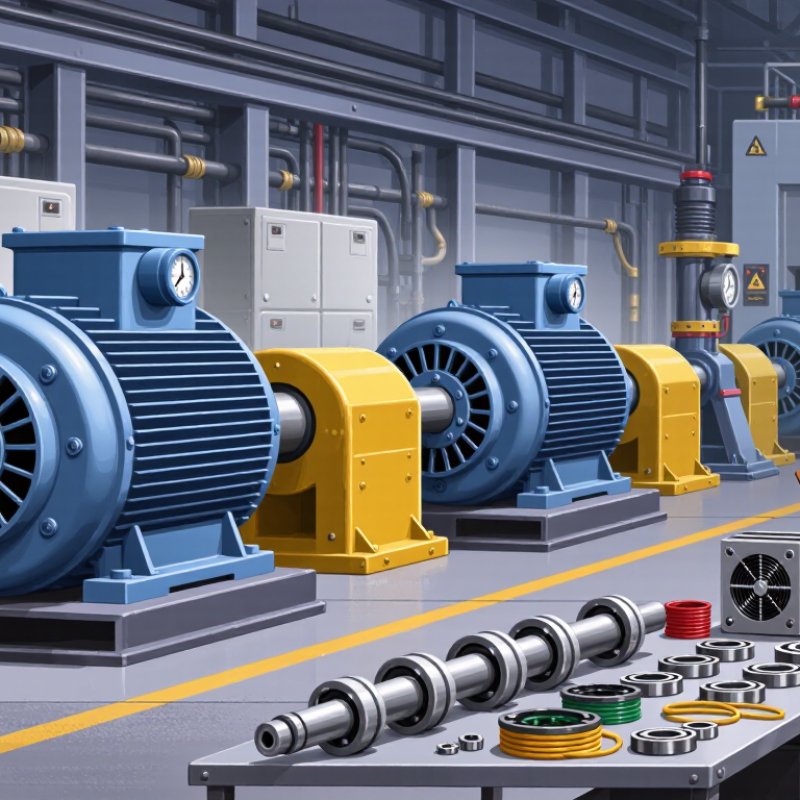
China Top Pulverizer Motors Manufacturers Suppliers?

What Are Pulverizer Motors and How Do They Work?

A pulverizer motor is the power source behind a grinding system. It converts electrical energy into rotational force for crushing coal, minerals, biomass, or other approved materials. Most units use rugged induction motors with high starting torque. Their shafts turn a grinding table, disc, or rotating impact assembly.

Inside the machine, the motor transfers torque through a direct coupling or gearbox. The grinding parts reduce feed material against rollers, liners, or hammers. Airflow then carries fine particles toward a classifier or collection chamber. Larger particles return for another pass. This cycle depends on stable motor speed and sufficient torque. A sudden overload can cause vibration, heat, or a protective shutdown.

In practical inspections, technicians check bearing temperature, insulation resistance, current balance, and coupling alignment. A slight misalignment can become expensive. Variable-frequency drives may control speed and reduce mechanical shock during startup. However, incorrect settings can lower grinding efficiency. Buyers comparing manufacturers and suppliers should request load curves, efficiency data, protection ratings, factory test records, and maintenance guidance. Dust levels also matter, because poor sealing can shorten motor life. The design is rarely perfect. Ambient temperature, material moisture, and operating habits can change performance more than expected. Reliable suppliers explain these limits instead of promising effortless operation.

Key Features of China-Made Pulverizer Motors

China-made pulverizer motors are built for demanding grinding lines, where dust, heat, and continuous loads test every component. In field inspections, buyers often check vibration levels before reading the nameplate. A rigid cast housing reduces movement and helps protect internal parts. That matters during long shifts. Many models use copper windings and high-grade insulation, supporting stable torque and improved heat resistance. Properly balanced rotors also reduce noise and bearing stress.

Power options commonly cover small workshop machines and larger industrial pulverizers. The motor’s service factor should match the pulverizer’s starting load, not only its running power. Some suppliers offer high-efficiency designs to reduce energy loss during extended operation. Cooling fins and correctly sized fans help release heat from the frame. However, cooling performance can fall when fine powder blocks air passages. Regular cleaning is easy to overlook.

A sealed bearing system can extend service life in dusty areas, while reinforced terminal boxes improve connection safety. Buyers should request insulation test results, vibration data, and overload protection details. Factory test records provide useful evidence, but they do not replace an operating trial. Ask for shaft dimensions, mounting measurements, and duty ratings before installation. Perfect specifications are rare. A careful match usually matters more than the highest advertised power.

Leading Pulverizer Motor Manufacturers in China

China’s leading pulverizer motor manufacturers often combine high-volume production with application-focused engineering. They design motors for grinding systems that face dust, vibration, heat, and frequent starting cycles. Field experience matters.

During factory visits, buyers should inspect winding lines, rotor balancing equipment, bearing assembly, and final testing stations. Copper winding quality affects temperature rise and service life. Balanced rotors help reduce vibration during continuous operation. Sealed bearings can protect internal parts from abrasive dust, although sealing alone is not enough.

A qualified manufacturer should match power, speed, voltage, insulation class, and duty cycle to the pulverizer. It should also provide load testing, vibration measurements, and insulation resistance records before shipment. Ask for clear drawings and test data. Vague answers deserve caution.

Products intended for export should be assessed against applicable IEC requirements and destination-market regulations. Experienced technical teams explain these details without hiding behind complex language. Some suppliers respond quickly but document poorly. That weakness deserves attention.

After-sales support separates a capable factory from a simple equipment seller. Useful support includes wiring guidance, spare bearing recommendations, troubleshooting, and remote commissioning assistance. Lead times should be realistic, especially for customized shafts or mounting dimensions. Still, no factory is perfect. A motor may meet its datasheet yet perform poorly with unsuitable feed material or unstable voltage. Pilot testing with actual material, feed rate, and operating temperature can reveal these gaps. Buyers should record results carefully before approving larger orders.

China Top Pulverizer Motors Manufacturers Suppliers? - Leading Pulverizer Motor Manufacturers in China

Comparative reference table of commonly supplied motor configurations and purchasing specifications for industrial pulverizer applications. Actual ratings should be confirmed against the pulverizer load, starting method, duty cycle, ambient conditions, and applicable standards.

Motor Configuration Typical Pulverizer Application Common Rated Power Range Typical Voltage and Frequency Typical Speed Enclosure and Cooling Efficiency Class Starting and Control Options Key Purchasing Requirements
Three-Phase Squirrel-Cage Induction Motor General-purpose pulverizers, crushers, mills, and grinding systems with stable operating loads. Approximately 5.5–315 kW 380–415 V, 50 Hz; other IEC voltage configurations are available for export markets. Approximately 750–3,000 r/min, depending on pole count and frequency. TEFC; commonly IP55 or higher for industrial installations. IE3 commonly specified Direct-on-line, star-delta, soft starter, or variable-frequency drive. Confirm continuous-duty rating, starting current, shaft dimensions, mounting arrangement, and thermal protection.
High-Torque Induction Motor Heavy-duty pulverizers requiring high breakaway torque or frequent loaded starts. Approximately 30–500 kW 380–690 V, 50 Hz; medium-voltage versions may be used for larger installations. Approximately 750–1,500 r/min for high-torque low-speed drive systems. TEFC or enclosed air-to-air cooled construction; IP55–IP66 options. IE3 or IE4, depending on design and rating. Reduced-voltage starter, soft starter, or medium-voltage starter. Check locked-rotor torque, acceleration time, inertia of the pulverizer rotor, and allowable voltage drop.
Variable-Frequency-Drive-Compatible Motor Pulverizers requiring adjustable throughput, controlled acceleration, or energy optimization. Approximately 7.5–315 kW 380–415 V, 50 Hz base frequency; suitable for inverter-fed operation. Variable speed, commonly within 25–100% of rated speed. TEFC with reinforced insulation and independent cooling when low-speed operation is required. IE3 or IE4 VFD control with ramped start, overload protection, and speed feedback where required. Verify inverter-duty insulation, bearing-current protection, minimum cooling speed, and harmonic conditions.
Explosion-Protected Motor Pulverizing combustible powders or operating in areas where flammable dust may be present. Approximately 7.5–250 kW 380–690 V, 50 Hz; configuration depends on the hazardous-area design. Approximately 750–3,000 r/min. Flameproof or dust-protected enclosure; protection level must match the hazardous-area classification. IE3 commonly available; certification requirements vary by market. Direct-on-line, soft starter, or certified VFD package where permitted. Specify dust group, temperature class, zone or division, cable entry requirements, and required conformity certification.
High-Efficiency Premium Motor Continuous-duty pulverizing lines where electricity consumption and operating cost are major concerns. Approximately 11–500 kW 380–690 V, 50 Hz; 60 Hz versions may be supplied for relevant markets. Approximately 1,000–3,000 r/min. TEFC, generally IP55 or above, with Class F insulation and Class B temperature rise commonly specified. IE4 commonly available VFD, soft starter, or direct-on-line starting according to motor size and grid capacity. Compare full-load efficiency, part-load performance, power factor, service factor, and lifecycle cost.
Medium-Voltage Induction Motor Large-capacity pulverizers and centralized grinding systems with high installed power. Approximately 315–2,500 kW 3.3–13.8 kV, 50 or 60 Hz, subject to project requirements. Approximately 500–1,500 r/min. Enclosed air-to-air or air-to-water cooled construction; protection level selected for the site. IE3 or project-specific efficiency level. Medium-voltage soft starter, reduced-voltage starter, or VFD. Review insulation coordination, partial-discharge performance, starting current, vibration limits, and protection relay settings.
Brake Motor Pulverizer systems requiring rapid stopping, positioning, or controlled rotor hold during maintenance. Approximately 1.5–90 kW 380–415 V, 50 Hz; brake voltage and rectifier configuration must be specified. Approximately 750–3,000 r/min. TEFC; brake assembly commonly enclosed and protected against industrial dust. IE2 or IE3, depending on motor size and brake design. Direct-on-line, soft starter, or VFD with compatible brake control. Specify braking torque, stopping time, brake duty, release time, and emergency-stop requirements.
Synchronous Reluctance Motor High-efficiency pulverizers with variable-speed operation and a suitable drive system. Approximately 15–315 kW Typically 380–690 V, 50 Hz base frequency, with dedicated drive control. Variable speed, commonly up to approximately 3,000 r/min. TEFC; enclosure and cooling selection follows the site environment. IE4 or higher system efficiency Dedicated variable-frequency drive is normally required. Evaluate motor-drive compatibility, low-speed torque, overload capacity, commissioning support, and replacement availability.
Technical note: The ranges above are representative industry values rather than a quotation or a guarantee of availability. Final motor selection should be based on pulverizer power demand, material characteristics, rotor inertia, required throughput, ambient temperature, altitude, dust exposure, starting method, installation standard, and local electrical regulations.

How to Choose a Reliable Chinese Pulverizer Motor Supplier

When comparing Chinese pulverizer motor suppliers, start with operating evidence, not catalogue claims. Ask for test reports showing rated power, efficiency, insulation class, vibration, noise, and temperature rise. IEC 60034-1 and IEC 60034-30-1 provide useful reference points for motor performance and efficiency classification. A supplier should explain how its motor handles pulverizer dust, frequent starts, overloads, and long operating hours.

Look for measurable factory controls. Request winding resistance records, rotor balancing data, load-test videos, and sample inspection reports. The International Energy Agency has reported that electric motor systems consume about 53% of global electricity. Small efficiency losses can therefore become serious operating costs. Check whether the quoted efficiency applies at the actual load, not only at full load. That detail matters.

Ask for traceable materials, production dates, spare-part availability, and clear warranty procedures. Confirm shaft dimensions, mounting type, voltage, frequency, protection rating, and cooling method before ordering. A reliable supplier will provide drawings and respond with specific figures. Vague promises are a warning sign.

I once focused too heavily on purchase price. That was a mistake. A cheaper motor may require stronger cooling or more frequent bearing replacement. Request a sample or factory audit when possible. Verify certificates independently, and compare at least three suppliers using the same technical checklist. Fancy documents alone prove little. Performance records matter more.

How to Choose a Reliable Chinese Pulverizer Motor Supplier

This procurement framework assigns practical evaluation weights to the factors that most directly affect pulverizer motor reliability, operating cost, delivery security, and long-term service. Buyers should verify each factor through technical documents, factory audits, sample testing, and customer references.

Quality Standards, Customization, and Export Services

Choosing top pulverizer motor manufacturers and suppliers requires more than comparing power ratings. Quality standards should be visible in daily production details. Reliable suppliers commonly operate under ISO 9001 quality systems and provide motors tested against relevant IEC requirements. Test records should cover insulation resistance, vibration, temperature rise, and load performance. Ask for documented results.

A pulverizer motor may work in dusty, hot, and highly abrasive environments. Its enclosure, cooling method, bearings, and shaft design must match these conditions. Experienced engineers can recommend suitable protection levels, starting methods, and duty ratings. They should also explain why a motor fits your mill, rather than simply offering the largest model. Small details matter. For example, balanced rotors can reduce vibration during continuous grinding.

Customization is often essential for export projects. Suppliers may adjust voltage, frequency, mounting dimensions, shaft size, cable entries, paint systems, and terminal-box positions. Clear drawings prevent costly installation errors. Good suppliers confirm these points before production. They also use traceable components and final inspection reports. That makes communication easier across different technical teams.

Export service should include secure packaging, moisture protection, accurate documents, and practical shipping coordination. Support after delivery is equally important, especially when local technicians need wiring or commissioning guidance. No supplier gets every application right on the first attempt. A careful supplier admits uncertainty and checks operating data again. That honesty can be more valuable than a confident sales promise. Mistakes still happen, so response speed and corrective action deserve close attention.

FAQS

What environments are these pulverizer motors designed for?

They suit dusty, hot, abrasive grinding areas and continuous industrial operation. Fine powder can still block cooling passages.

Why is a rigid cast housing important?

It limits movement and protects internal parts during long shifts. Less movement can mean lower bearing stress.

How do copper windings and insulation support motor performance?

Copper windings help maintain stable torque. High-grade insulation improves heat resistance, though it cannot solve every cooling problem.

What power rating should buyers select?

Match the motor to the pulverizer’s starting load and running power. The biggest model is not always the best choice.

Which cooling details deserve attention?

Check the cooling fins, fan size, and airflow path. Clean blocked passages regularly. This step is easy to forget.

What documents should buyers request before purchase?

Request insulation results, vibration data, temperature-rise records, load tests, and overload protection details. Factory records help, but operating trials still matter.

Which mounting details must be confirmed before installation?

Confirm shaft dimensions, mounting measurements, voltage, frequency, and duty rating. Clear drawings prevent awkward installation mistakes.

Can the motor be customized for export projects?

Suppliers may adjust shaft size, cable entries, mounting dimensions, terminal-box positions, voltage, and frequency. Confirm every detail before production.

What should reliable export support include?

It should include moisture-resistant packaging, accurate documents, shipping coordination, and commissioning guidance. Support after delivery matters.

How should buyers judge supplier reliability?

Look for documented quality systems, traceable components, and final inspection reports. Honest suppliers admit uncertainty and recheck operating data. Confidence alone is not proof.

Conclusion

Pulverizer Motors are essential power sources for industrial pulverizing equipment, converting electrical energy into the high-speed rotation needed to crush, grind, and process various materials. This article explains their operating principles and highlights the key advantages of China-made Pulverizer Motors, including efficient performance, durable construction, stable operation, flexible power options, and competitive production capabilities.

It also introduces how to evaluate reliable Chinese suppliers by considering manufacturing experience, technical expertise, product consistency, communication, and after-sales support. In addition, the article discusses quality standards, inspection procedures, customization options, and export services. Buyers can learn how to select motors that match their equipment requirements, working environment, voltage specifications, and production goals while ensuring dependable delivery and long-term operational value.

Evelyn

Evelyn

Evelyn is a dedicated marketing professional with a deep understanding of the company’s products, industry trends, and customer needs. Through a thoughtful combination of market research, strategic communication, and practical product knowledge, Evelyn helps transform complex information into......