
Electric Motor Industry Insights & Technical Articles

Discover technical knowledge, motor maintenance guides, engineering innovations, and industry updates from our team of specialty electric motor experts.

0%

Choosing the right Crusher Duty Motors is a practical decision, not a simple catalogue comparison. These motors power demanding equipment in quarries, cement plants, recycling yards, and aggregate facilities. They face heavy starting loads, repeated impact, dust, vibration, and long operating hours. A reliable choice must match the crusher’s torque requirements, duty cycle, voltage, enclosure, and installation environment.

For global buyers, motor selection should begin with real operating conditions. A jaw crusher may need strong locked-rotor torque during material loading. A cone crusher may require steady power under changing feed conditions. In dusty areas, an appropriately protected enclosure can reduce contamination risks. Buyers should also verify cooling methods, insulation class, bearing design, service factor, and compatibility with variable-frequency drives. Small specification errors can create expensive downtime.

Field experience shows that nameplate power alone rarely tells the full story. Supplier documentation, test certificates, warranty terms, and regional service support deserve equal attention. Standards and certification requirements can differ between markets, so technical confirmation is essential. Not every premium motor suits every plant. Sometimes, an oversized model increases purchase and operating costs without improving performance.

The strongest purchasing process combines manufacturer expertise with site data, maintenance records, and qualified engineering review. Ask for starting current, acceleration time, ambient temperature limits, and recommended maintenance intervals. Check the details. They matter. This guide examines leading Crusher Duty Motors for international buyers, while acknowledging an important limitation: product availability, certification, and support can change by region and project size. Reliability is built through verified specifications, realistic expectations, and careful installation.
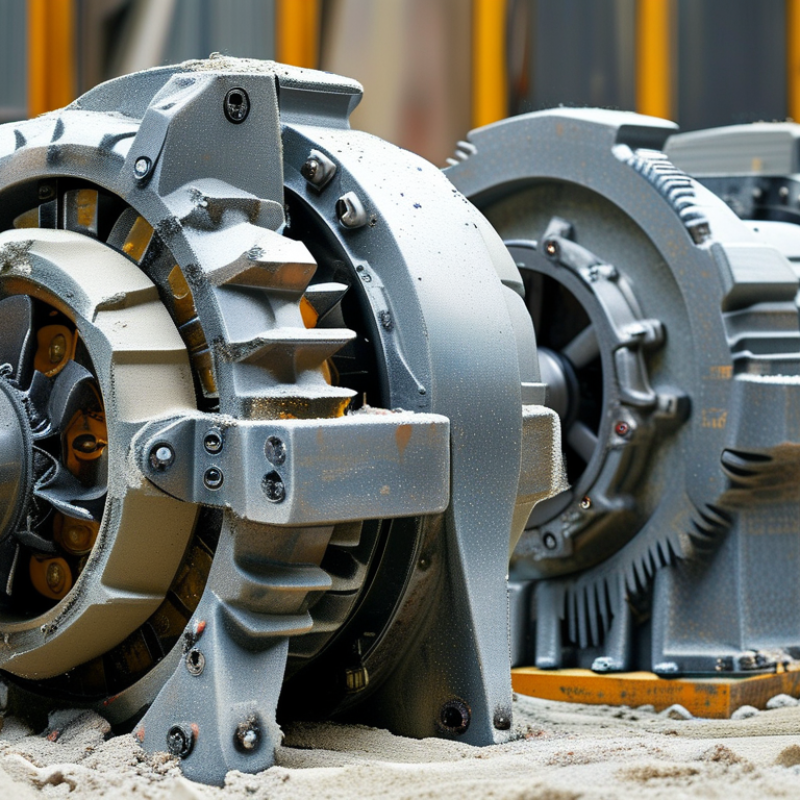
Top Crusher Duty Motors for Global Buyers?

Crusher Duty Motor Basics: 30–500 HP, High Starting Torque, and NEMA Designs

Crusher duty motors commonly span 30–500 HP, covering compact jaw crushers and larger cone or impact machines. Their demanding work requires high starting torque, strong overload capacity, and reliable operation under vibration, dust, and repeated starts. Starting torque matters most when the chamber contains packed material. A motor that starts smoothly on an empty test bench may struggle in production.

NEMA MG 1 provides recognized guidance for motor construction, performance, insulation, and enclosure selection. It does not, by itself, certify a motor as “crusher duty.” Buyers should verify locked-rotor torque, breakdown torque, service factor, starting frequency, and thermal limits. A severe-duty enclosure, commonly TEFC, helps protect internal components from abrasive dust. However, enclosure protection cannot compensate for poor ventilation or misaligned couplings.

The U.S. Department of Energy reports that motor-driven systems consume about 70% of industrial electricity, making correct sizing financially important. The IEA’s Energy Efficiency Market Report estimated motor systems represented roughly 53% of global electricity use. Those figures explain why efficiency still matters, even in high-torque applications. Yet maximum efficiency is not the only target. Oversizing a 500 HP motor for a 300 HP load can reduce operating efficiency and increase starting stress. I have seen specifications focus heavily on horsepower while overlooking flywheel inertia and restart conditions. That is a costly gap. Confirm the supply voltage, duty cycle, ambient temperature, altitude, and control method before comparing quotations.

Enclosure Selection: IP55–IP66 Protection Against Dust, Water, and Washdown

Crusher duty motors often operate beside conveyors, screens, and transfer points where fine mineral dust settles quickly. Enclosure selection therefore matters as much as horsepower.

IEC 60529 defines IP55 as protection against harmful dust deposits and water jets from any direction. IP66 adds dust-tight construction and stronger water-jet protection.

That distinction becomes practical during washdown. A hose directed at a motor’s terminal box can expose weak gaskets, cable entries, and drain plugs. IP66 may suit wet aggregate plants, coastal sites, and frequent cleaning. IP55 can remain suitable for enclosed, drier crushers with controlled maintenance.

The U.S. Department of Energy reports that motor-driven systems consume about 69% of industrial electricity in the United States.

Poor sealing can increase downtime, but over-specifying protection may raise cost and reduce cooling flexibility. IP ratings do not measure corrosion resistance, impact strength, chemical exposure, or bearing life. That assumption fails.

Check the complete installation. Inspect shaft seals, terminal-box compression, cooling passages, and condensation drains. A 2024 industrial maintenance survey from a major reliability association found contamination and lubrication issues remain leading contributors to motor failures. The enclosure cannot correct neglected maintenance.

In my experience, IP66 is valuable only when cable glands, covers, and washdown procedures match the rating. Otherwise, the label creates false confidence. Temperature, dust concentration, cleaning pressure, and service access should guide the final selection.

Power and Speed Matching: 4–12 Pole Motors for Crusher Drive Systems

Crusher drive systems punish weak motor selection. Jaw, cone, and impact crushers demand different torque patterns. A 4-pole motor often provides a useful balance between speed and torque. At 50 Hz, its rated speed is commonly near 1,500 rpm before slip. A 6-pole motor runs closer to 1,000 rpm and produces stronger shaft torque.

Speed matters.

For heavy feed, hard rock, or frequent starts, 8-, 10-, or 12-pole motors can reduce mechanical shock. Their lower speeds suit direct-drive arrangements and high-torque applications. However, a larger pole count does not automatically mean better performance. Engineers must compare absorbed power, starting torque, rotor inertia, and crusher flywheel energy. A variable-frequency drive can improve starting control, but it cannot repair an undersized motor. Check the real load curve, not only the crusher’s maximum rating.

Site conditions also influence the selection. Dust-resistant enclosures, sealed bearings, reinforced shafts, and suitable cooling are important near crushing chambers. Voltage and frequency must match the destination grid, especially for 50 Hz and 60 Hz projects. Allowance for altitude, ambient heat, and voltage fluctuation improves reliability.

A perfect spreadsheet is not enough. Field measurements may reveal uneven feeding, belt slip, or repeated blockages. That evidence can change the preferred motor from a fast 4-pole design to a slower 6- or 8-pole option. Leaving a reasonable service margin is wise, but excessive oversizing may reduce efficiency and increase starting stress.

Efficiency and Reliability: IE3/IE4 Ratings, Class F Insulation, and Bearings

Top Crusher Duty Motors for Global Buyers?

Crusher duty motors face shock loads, dust, vibration, and frequent starts. Efficiency matters, but survival matters more. IE3 and IE4 ratings, defined under IEC 60034-30-1, help buyers compare tested efficiency across motor sizes. The difference appears continuously. A 200 kW motor running thousands of hours can turn small efficiency gains into measurable energy savings.

The International Energy Agency has reported that motor-driven systems consume nearly half of global electricity. This makes efficient selection commercially important, not merely technical. However, IE4 is not automatically the best choice. Variable-speed drives, starting torque, ambient temperature, and cooling conditions can change real performance. A motor may look excellent on paper and still disappoint in a poorly matched crusher.

Class F insulation provides stronger thermal tolerance than Class B, supporting demanding operating conditions. Yet insulation class alone cannot prevent failures caused by contamination or overload. Bearings need equal attention. Sealed arrangements, suitable grease, and vibration monitoring can extend service life under heavy radial loads. Industry maintenance studies repeatedly identify lubrication and alignment as major failure factors. That detail is easy to ignore. It should not be. The European Commission’s motor-system assessments also emphasize system-level efficiency, showing why buyers should evaluate the motor, drive, load, and maintenance plan together.

This comparison uses representative nominal efficiency values for four-pole, 50 Hz low-voltage motors aligned with IEC 60034-30-1 IE3 and IE4 efficiency classes. IE4 motors generally reduce electrical losses at the same rated output. Class F insulation supports operation with a 155°C insulation-system thermal class, while properly selected bearings help maintain reliability under continuous-duty conditions.

Global Buyer Checklist: IEC/NEMA Standards, 50/60 Hz, Voltage, and Service Factor

Selecting a crusher-duty motor starts with the electrical system, not the catalog. The U.S. Department of Energy’s Motor Systems Market Assessment estimates that motor-driven equipment uses about 68% of industrial electricity. Small specification errors therefore become expensive. Confirm the plant standard: IEC motors commonly use 380–415 V at 50 Hz, while NEMA installations often specify 460 V at 60 Hz. A 50 Hz motor connected to a 60 Hz supply may change speed, torque, cooling, and current. Do not assume compatibility.

Check the nameplate against IEC 60034-1 or NEMA MG 1. Confirm rated voltage, frequency, efficiency class, enclosure, insulation system, and temperature rise. Crushers produce high starting inertia and repeated shock loads. The starting method must match the available fault level and control panel. Soft starters and variable-frequency drives can reduce mechanical stress, but only when the motor’s cooling and torque characteristics are suitable.

Service factor requires careful judgment. NEMA commonly lists 1.15, but it is not permission to run continuously above rated load. IEC practice emphasizes duty types such as S1 and S3 instead. Specify the real duty cycle, ambient temperature, altitude, starts per hour, and dust exposure. A 1.15 factor can still fail under poor ventilation. I have seen procurement teams compare only horsepower and voltage; that shortcut looked efficient, but the overlooked starting current caused delays and redesign. Use measured operating data where possible, not assumptions.

FAQS

: What does an IP55 enclosure protect against?

: IP55 limits harmful dust deposits and water jets from any direction. It suits enclosed, relatively dry crusher areas. It may not withstand frequent washdown.

When is IP66 a better choice?

IP66 provides dust-tight protection and stronger water-jet resistance. Consider it for wet aggregate plants, coastal locations, or regular hose cleaning. Check every gasket and cable entry.

Does an IP rating protect against corrosion?

No. IP ratings do not measure corrosion, impact strength, chemicals, or bearing life. That assumption can cause trouble.

What should technicians inspect besides the motor enclosure?

Inspect shaft seals, terminal-box compression, cooling passages, and condensation drains. Check cable glands after washdown. A sealed box cannot fix neglected maintenance.

How should motor speed match a crusher?

A 4-pole motor commonly runs near 1,500 rpm at 50 Hz. A 6-pole motor runs near 1,000 rpm and provides more shaft torque. Lower speeds may reduce shock during heavy feeding.

Are 8-, 10-, or 12-pole motors always better?

No. They may suit hard rock, heavy feed, or frequent starts. Compare starting torque, absorbed power, rotor inertia, and flywheel energy. More poles do not guarantee better performance.

Can a variable-frequency drive solve an undersized motor problem?

No. It can improve starting control and reduce mechanical stress. It cannot repair an undersized motor. Confirm cooling and torque suitability before using one.

What electrical details must buyers verify?

Match voltage and frequency with the plant supply. Common systems include 380–415 volts at 50 Hz and 460 volts at 60 Hz. Speed, torque, cooling, and current may change between frequencies.

Is a 1.15 service factor permission for continuous overload?

No. It is not a permanent overload allowance. Confirm duty cycle, ambient heat, altitude, starts per hour, and ventilation. I once treated that factor too casually.

What field information can improve motor selection?

Record feeding patterns, belt slip, blockages, starts, temperature, and actual current. A spreadsheet helps, but field evidence may change the choice. Perfect planning is not enough.

Conclusion

Crusher Duty Motors are engineered for demanding crushing applications where high starting torque, frequent load changes, and continuous mechanical stress are common. Available in ranges from 30 to 500 HP, these motors typically use robust NEMA designs and can be selected with 4-, 6-, 8-, or 12-pole configurations to match crusher speed, torque, and drive-system requirements. Choosing the correct enclosure is also essential: IP55 to IP66 protection helps guard against dust, moisture, spray, and washdown conditions.

For reliable long-term operation, buyers should evaluate IE3 or IE4 efficiency ratings, Class F insulation, durable bearings, and an appropriate service factor. Global purchasers must also confirm compatibility with IEC or NEMA standards, local voltage requirements, and both 50 Hz and 60 Hz power systems. Careful attention to starting performance, thermal capacity, enclosure protection, speed, and maintenance conditions can improve uptime, reduce energy consumption, and ensure the motor is properly matched to the crusher.

Clara

Clara

Clara is a dedicated marketing professional with extensive experience in product communication, content strategy, and customer-focused storytelling. As a valued member of our company, she combines a strong understanding of market trends with in-depth knowledge of our products and services, helping......