
Electric Motor Industry Insights & Technical Articles

Discover technical knowledge, motor maintenance guides, engineering innovations, and industry updates from our team of specialty electric motor experts.

0%

Choosing Induced Draft Fan Motors requires more than matching horsepower to a fan nameplate. These motors operate in demanding environments, often handling hot gases, dust, vibration, and continuous thermal loads. A poor selection may cause overheating, unstable airflow, or premature bearing failure. The U.S. Department of Energy identifies motor-driven systems as a major industrial energy opportunity, while the International Energy Agency reports that electric motor systems consume roughly 40% of global electricity. Efficiency matters.

The correct decision begins with operating conditions. Check airflow, static pressure, gas temperature, altitude, duty cycle, starting torque, and speed-control requirements. A motor serving a steel furnace may need different insulation and cooling than one used in a commercial boiler room. NEMA MG 1 guidance helps engineers evaluate motor construction, temperature rise, service factors, and application suitability. AMCA testing practices also emphasize measuring fan performance under realistic field conditions, not relying only on catalog values. Catalog values can mislead.

Variable frequency drives may reduce energy use during changing demand, but they also introduce harmonics, bearing-current risks, and cooling concerns at low speed. The U.S. DOE’s fan-system guidance recommends examining the entire system rather than selecting a motor in isolation. That approach is practical, yet sometimes overlooked.

This guide explains how to compare motor efficiency, enclosure type, insulation class, protection level, and maintenance needs. It also considers compliance, lifecycle cost, and supplier documentation. Real installations are rarely perfect. Dust levels change, sensors drift, and operators may run equipment outside its design point. A reliable choice leaves room for those realities.
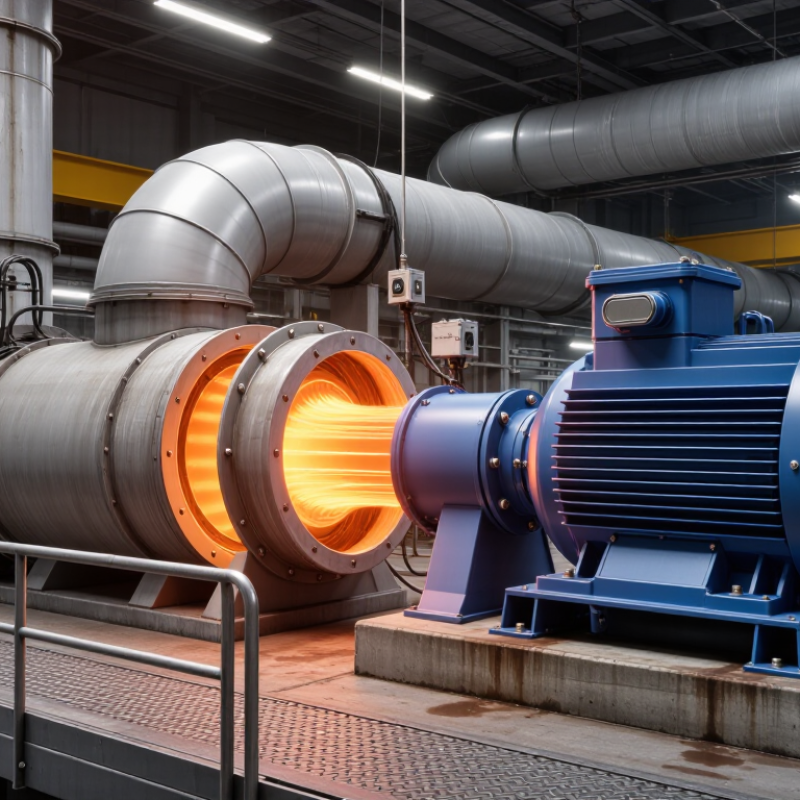
How to Choose Induced Draft Fan Motors?

Understanding the Role of Motors in Induced Draft Fan Systems

How to Choose Induced Draft Fan Motors?

In an induced draft fan system, the motor does more than rotate the fan wheel. It controls the airflow that removes hot gases from a furnace or boiler. Stable motor performance helps maintain negative pressure inside the combustion chamber. This protects process efficiency and supports safer operation. An undersized motor may overheat during continuous duty. An oversized motor can waste energy and increase starting stress.

Begin by matching the motor to the fan’s operating point. Check required airflow, static pressure, rotational speed, and shaft power. Do not rely only on the motor’s rated horsepower. Fan resistance can change when ducts collect dust or dampers move. A motor with suitable service factor provides useful capacity, but it should not hide poor system calculations. That shortcut can fail.

Temperature and installation conditions matter greatly. Hot surroundings can reduce motor life, especially near an uninsulated fan casing. Select insulation suitable for the measured ambient temperature, and confirm the enclosure protects against dust and moisture. Variable-speed control may improve draft regulation and reduce energy use. However, it can introduce heat, vibration, or electrical compatibility issues. Review bearing loads, starting torque, cooling airflow, and maintenance access before approval. A small inspection window, a clean terminal box, and reachable grease points can save hours later. The quietest motor is not always the best choice. Reliability depends on the whole system, not one nameplate value.

Matching Motor Power to Fan Load and Operating Conditions

Choosing an induced draft fan motor starts with the real fan load, not a catalog rating. Calculate airflow, static pressure, gas temperature, and density at operating conditions. The U.S. Department of Energy’s Improving Fan System Performance sourcebook notes that fan systems can represent a significant share of industrial electricity use, making correct sizing financially important. A larger motor is not automatically safer.

Use the fan curve to identify the operating point. Then estimate shaft power from airflow and pressure, while including fan, bearing, drive, and motor losses. Gas density changes with temperature and altitude. A hot furnace exhaust stream may require more careful calculation than normal air. Allow capacity for startup torque, dirty filters, damper position, and expected process variation. However, excessive margin can keep the motor below its efficient load range. It may also increase purchase and operating costs.

The U.S. DOE MotorMaster+ guidance emphasizes evaluating motors across actual load profiles, rather than relying only on nameplate horsepower. IEC 60034-30-1 data also shows that higher efficiency classes reduce electrical losses during continuous operation. A variable-speed drive can help when demand changes, but it cannot repair an incorrect fan selection. Check minimum speed, cooling, harmonics, and motor insulation. A neat calculation can still be wrong. Field measurements matter. Record amperage, pressure, temperature, and vibration after commissioning, then compare them with the design point. Industry experience often reveals one overlooked detail: the fan load changes more than the process team expected.

How to Choose Induced Draft Fan Motors?

Matching motor power to the fan load requires checking airflow, static pressure, fan efficiency, and operating margin. The chart compares calculated air power, estimated motor input power, and a practical motor rating for representative operating conditions.

Air power is calculated as airflow × static pressure. Estimated motor input includes fan, drive, and motor losses. Select the next suitable standard motor size above the calculated input power, then verify starting torque, speed control, ambient temperature, altitude, and service factor.

Selecting the Appropriate Motor Type and Speed

How to Choose Induced Draft Fan Motors?

Selecting the right motor begins with the fan’s operating duty, not its nameplate power alone. Measure required airflow, static pressure, ambient temperature, and expected operating hours. A motor that runs near its rated load usually performs more efficiently than an oversized unit. However, real systems rarely stay constant.

A totally enclosed, fan-cooled induction motor suits many induced draft applications. It is mechanically simple, widely serviceable, and tolerant of demanding industrial conditions. Pairing it with a variable frequency drive allows speed control when process demand changes. That can reduce energy use, but only when the motor, drive, and fan are correctly matched. Permanent magnet motors may offer higher efficiency and compact size. They also require compatible controls and more careful commissioning.

Speed selection deserves careful attention. Fan airflow changes with speed, while pressure changes approximately with speed squared. Power can rise sharply as speed increases. Check the fan curve, motor torque, maximum speed, and drive limits before adjustment. Keep operating points away from unstable regions and excessive vibration. I have seen calculations look perfect while dirty filters pushed the motor beyond its expected load. That detail is easy to miss. Leave reasonable capacity for fouling, voltage variation, and seasonal conditions, but avoid excessive oversizing. Verify current, vibration, temperature, and airflow during commissioning. Recheck them after several weeks of operation.

Checking Environmental, Electrical, and Installation Requirements

Choosing an induced draft fan motor starts with the environment around the equipment. Measure the expected air temperature, humidity, dust concentration, and corrosive exposure. A motor beside a hot flue may need higher insulation protection than one in a clean utility room. Check altitude, because thin air reduces cooling efficiency. Outdoor installations also need suitable enclosure protection against rain and washdown.

Electrical requirements must match the motor and the power system. Confirm voltage, phase, frequency, full-load current, starting current, and available fault capacity. If a variable-frequency drive will control speed, verify motor insulation, cooling, and drive compatibility. Oversizing is not always safer. It can increase starting stress and reduce operating efficiency. Install correctly rated overload protection, grounding, and disconnect equipment according to local electrical requirements. Never estimate these values from appearance.

Installation details often decide whether the motor performs reliably. Check shaft alignment, belt tension, coupling condition, rotation direction, and bearing access. Leave enough space for cooling air and future maintenance. Before startup, remove shipping restraints and turn the assembly by hand. Listen for rubbing. Measure vibration after the fan reaches operating speed. A common mistake is accepting a quiet no-load test as proof of success; duct resistance may change everything. Record readings during commissioning, then review them after the first week. Small changes can reveal loose mounts, dirty filters, or unexpected airflow resistance.

Comparing Efficiency, Maintenance Needs, and Total Operating Cost

How to Choose Induced Draft Fan Motors?

Motor selection should begin with operating conditions, not purchase price. The IEA’s Energy Efficiency Market Report 2016 estimates that electric motor systems consume about 53% of global electricity and nearly 72% of industrial electricity. That scale makes small efficiency differences financially important. For an induced draft fan, compare full-load efficiency, partial-load performance, and compatibility with variable-speed control. Fan power generally follows the cube of speed, so a modest speed reduction can reduce electricity demand sharply. However, a spreadsheet can still mislead. Oversized motors may run inefficiently, while undersized units can overheat during peak draft conditions.

Maintenance directly changes total operating cost. The U.S. Department of Energy’s Improving Fan System Performance guide emphasizes airflow management, alignment, lubrication, and condition monitoring. In practice, vibration readings, bearing temperature, belt tension, and damper position deserve regular checks. A clogged inlet or poorly adjusted damper can force the motor to work harder every hour. Keep it practical. Record current, power factor, operating hours, and discharge temperature during normal production. Then compare these readings with commissioning data. IEC 60034-30-1 efficiency classes help standardize motor comparisons, but they do not replace site measurements. A field lesson is easy to miss: the most efficient motor on paper may not deliver the lowest total cost after downtime, spare parts, controls, and maintenance labor are included.

How to Choose Induced Draft Fan Motors? - Comparing Efficiency, Maintenance Needs, and Total Operating Cost

Motor Option Typical Full-Load Efficiency Typical Power Factor Recommended Speed Control Routine Maintenance Interval Estimated Annual Maintenance Cost Estimated 10-Year Total Cost Best-Fit Application
Standard-Efficiency Induction Motor 91.5% 0.82–0.86 Across-the-line starter or VFD 12 months US$1,450 US$538,600 Low-duty or low-runtime fan systems where initial purchase cost is the main priority.
Premium-Efficiency Induction Motor 95.0% 0.86–0.90 VFD preferred for variable airflow 12 months US$1,550 US$528,260 General-purpose induced-draft fans operating for long hours with established maintenance support.
Synchronous Reluctance Motor 96.0% 0.90–0.96 Dedicated VFD required 12 months US$1,700 US$526,000 High-runtime systems where reduced electrical losses and precise speed control justify the drive investment.
Permanent-Magnet Synchronous Motor 97.5% 0.95–0.99 Dedicated VFD required 12 months US$1,850 US$523,810 Continuous-duty fans with high energy prices, strict efficiency targets, or limited space for motor cooling.
Comparison Basis: Representative values for a 75 kW motor delivering a constant 60 kW shaft load, operating 8,000 hours per year for 10 years. Electricity is calculated at US$0.10 per kWh. The estimated 10-year total cost includes electricity, routine maintenance, and an indicative initial motor-and-drive allowance of US$6,000 for the standard-efficiency induction motor, US$7,500 for the premium-efficiency induction motor, US$10,000 for the synchronous reluctance motor, and US$14,000 for the permanent-magnet synchronous motor. Values are engineering estimates for comparison and should be verified against the actual duty cycle, fan curve, ambient conditions, control method, and local energy and labor costs.

FAQS

What does an induced draft fan motor control?

It drives the fan wheel and helps remove hot gases from a furnace or boiler. Stable speed supports steady negative pressure.

How should motor size be selected?

Match airflow, static pressure, speed, and shaft power at the fan’s operating point. Rated horsepower alone is not enough.

What happens if the motor is undersized?

It may overheat during continuous operation. This can shorten service life and reduce draft stability.

Is an oversized motor always safer?

No. It may waste energy and create greater starting stress. Bigger is not automatically better.

Which environmental conditions should be checked?

Measure temperature, humidity, dust, corrosive exposure, and altitude. Thin air can reduce cooling efficiency.

What electrical details require confirmation?

Check voltage, phase, frequency, full-load current, starting current, and available fault capacity. Never estimate them from appearance.

Can variable-speed control reduce energy use?

It may improve draft regulation and reduce energy use. However, it can add heat, vibration, or compatibility problems.

What installation checks support reliable operation?

Verify alignment, belt tension, coupling condition, rotation direction, grounding, and cooling clearance. Leave room for maintenance.

What should happen before and after startup?

Remove shipping restraints and turn the assembly by hand. Check rubbing, vibration, and operating readings after the first week.

Is a quiet no-load test enough?

No. Duct resistance may change under real conditions. A quiet test can give false confidence. That deserves reflection.

Conclusion

Choosing the right Induced Draft Fan Motors is essential for achieving stable airflow, reliable operation, and efficient system performance. The motor should be matched to the fan’s required load, including airflow volume, static pressure, operating temperature, and expected duty cycle. Selecting adequate power capacity helps prevent overheating, overloading, and unnecessary energy consumption. Motor type and speed should also suit the fan design and control method, allowing the system to respond effectively to changing process conditions.

Before making a final decision, evaluate environmental and installation factors such as dust, moisture, ambient temperature, enclosure protection, electrical supply, available space, and maintenance access. A motor with suitable efficiency and dependable construction can reduce operating costs over time, while simple maintenance requirements help limit downtime. Comparing purchase price with energy use, service needs, expected lifespan, and replacement costs will provide a clearer view of total ownership value. A balanced selection should support safe, efficient, and dependable induced draft fan performance.

Amelia

Amelia

Amelia is a seasoned marketing professional with a strong understanding of the company’s products, customers, and evolving market needs. Through her work, she combines strategic insight, clear communication, and practical industry knowledge to help audiences make informed decisions. She regularly......