
Electric Motor Industry Insights & Technical Articles
Discover technical knowledge, motor maintenance guides, engineering innovations, and industry updates from our team of specialty electric motor experts.
Choosing reliable Ball Mill Motors requires more than comparing prices or catalog photographs. China has a broad manufacturing base, including established motor producers, specialized industrial suppliers, and export-focused trading companies. Their products may serve cement plants, mining operations, ceramics factories, and mineral-processing lines. However, application conditions differ sharply. A motor driving a 3.2-meter mill faces different demands from one serving a small laboratory unit.
This guide examines China’s leading manufacturers and suppliers through practical engineering criteria. These include rated power, starting torque, voltage options, insulation class, enclosure protection, cooling design, bearing quality, and braking requirements. A suitable motor must tolerate continuous operation, dust, vibration, and frequent load changes. Site conditions matter. Altitude, ambient temperature, foundation quality, and maintenance skills can affect service life. Variable-frequency drive compatibility also deserves careful review, especially where speed control improves grinding efficiency.
Specifications can look impressive.
Yet documents do not replace verification. Buyers should request test reports, dimensional drawings, efficiency data, warranty terms, spare-parts support, and references from comparable installations. Factory audits or live video inspections may reveal details missed in brochures, such as assembly cleanliness or testing equipment. My experience suggests that communication quality often predicts project reliability. Still, this is not absolute. Even a responsive supplier may lack experience with a specific mill design. Therefore, this article compares manufacturers and suppliers with a balanced approach, recognizing both their strengths and possible limitations. The goal is not to promote one name blindly, but to help buyers select a dependable Ball Mill Motors partner for safe, efficient, and maintainable operation.
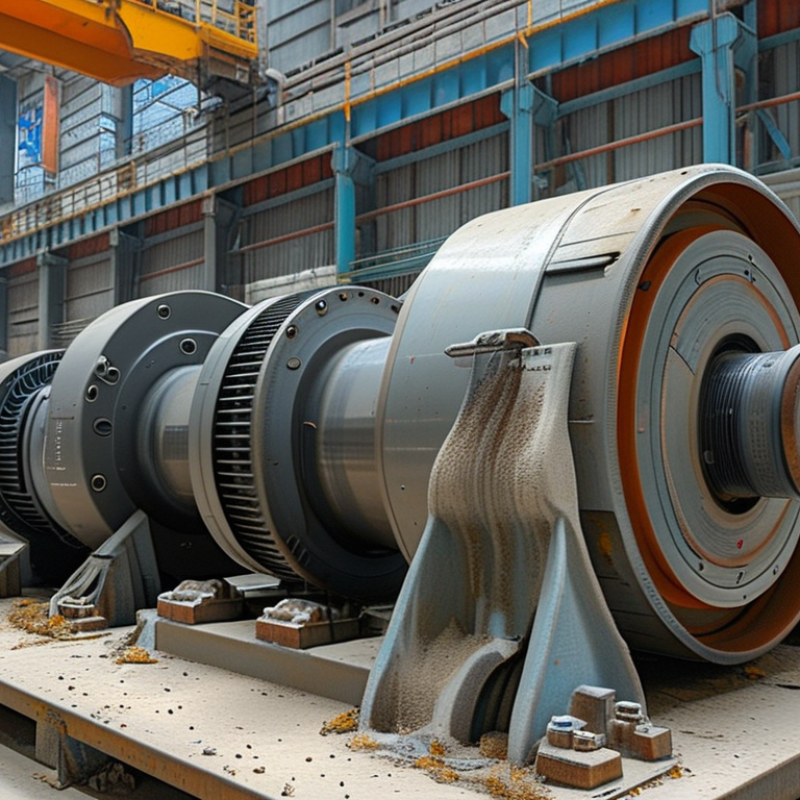
What Are Ball Mill Motors and Why Are They Important?
What Are Ball Mill Motors and Why Are They Important?
A ball mill motor converts electrical power into steady rotational force. This force turns a heavy, cylindrical shell filled with grinding media and ore. The motor must start smoothly, tolerate high inertia, and maintain stable torque during changing loads. In practical installations, a weak motor can cause overheating, stalled starts, uneven grinding, or unwanted production delays.
The U.S. Department of Energy reports that motor-driven systems consume about 70% of industrial electricity. Ball mill motors therefore deserve attention beyond their nameplate power. Correct sizing affects energy use, bearing stress, ventilation, and maintenance intervals. The International Energy Agency has also reported that electric motor systems consume roughly half of global electricity. These figures explain why efficiency matters, even when the motor appears to be only one part of the mill.
Engineers usually examine mill diameter, charge weight, ore hardness, starting torque, duty cycle, and site altitude. A high-efficiency motor can reduce losses, but efficiency alone does not guarantee good operation. Cooling may be inadequate. Harmonic distortion may be overlooked. A neat specification sheet is not enough. Field measurements often reveal the real problem: voltage imbalance, poor alignment, or a motor running far below its useful load. IEC 60034-30-1 efficiency classifications provide a technical reference, but application conditions still decide performance. Suppliers should provide test records, protection details, vibration limits, and service support, not only a price.
China Top Ball Mill Motors Manufacturers and Suppliers? - What Are Ball Mill Motors and Why Are They Important?
| Evaluation Dimension | Typical Technical Information | Why It Matters for Ball Mills |
|---|---|---|
| Motor Definition | An electric motor that supplies rotating torque to a ball mill through a direct coupling, gearbox, or gear-and-pinion drive. | It converts electrical energy into the mechanical rotation required to grind raw materials, ores, cement clinker, or other bulk solids. |
| Common Motor Type | Three-phase asynchronous induction motors are widely used. Synchronous motors may be selected for large mills or installations requiring high power-factor performance. | The motor type affects starting performance, efficiency, maintenance requirements, and compatibility with the mill drive system. |
| Typical Power Range | Small and laboratory mills may use motors below 10 kW; industrial ball mills commonly use motors from several dozen kilowatts to several megawatts, depending on mill size and duty. | Correct power sizing helps the mill maintain the required grinding capacity without excessive energy consumption or motor overload. |
| Rated Voltage | Low-voltage motors are commonly used for smaller installations, while medium-voltage motors are often applied to higher-power industrial drives. The actual voltage must match the site electrical system. | Voltage compatibility influences starting current, cable sizing, switchgear selection, installation cost, and operational safety. |
| Operating Speed | Common motor speeds include approximately 750, 1,000, 1,500, or 3,000 revolutions per minute at 50 Hz, depending on the number of poles. The mill shell normally rotates much more slowly through gearing. | The selected speed determines the transmission ratio and helps achieve the proper mill rotational speed for cascading or cataracting grinding action. |
| Starting Method | Possible methods include direct-on-line starting for suitable small motors, star-delta starting, soft starters, liquid-resistance starters, and variable-frequency drives. | Ball mills have high inertia and may start under a loaded condition. A suitable starting system limits electrical and mechanical stress. |
| Torque Requirement | The motor must provide sufficient starting torque and continuous torque to overcome mill inertia, material load, grinding media resistance, and transmission losses. | Insufficient torque can cause failed starts, overheating, production interruptions, or damage to couplings, gears, and bearings. |
| Duty Classification | Continuous-duty operation is normally required for production ball mills. Motor selection should consider frequent starts, process interruptions, ambient conditions, and the mill load profile. | A motor designed for the actual duty cycle is more likely to provide stable performance and a longer service life. |
| Protection Rating | Enclosure and ingress protection should be selected for the operating environment. Dusty mineral-processing areas generally require a suitably enclosed motor and effective sealing. | Protection against dust, moisture, and foreign particles reduces insulation deterioration, bearing contamination, and unplanned downtime. |
| Cooling System | Common arrangements include air-cooled motors with external fans. Larger or special-duty motors may require enhanced cooling systems based on site conditions and heat output. | Effective cooling prevents excessive winding and bearing temperatures during continuous, high-load grinding operation. |
| Efficiency and Power Factor | High-efficiency motor designs reduce electrical losses. Power factor correction or synchronous-motor technology may be considered for large power systems. | Improved efficiency lowers operating costs, while a better power factor can reduce reactive-power demand and electrical-system losses. |
| Drive Arrangement | Typical arrangements include motor-to-gearbox drives, ring-gear and pinion drives, and specialized gearless drive systems for very large mills. | The drive arrangement determines torque transmission, maintenance access, alignment requirements, installation space, and total system efficiency. |
| Key Selection Data | Mill diameter and length, target throughput, material characteristics, installed power, mill speed, voltage, frequency, altitude, ambient temperature, dust level, and starting condition. | Complete technical data enables suppliers and engineers to select a motor that is compatible with both the mill and the complete electrical system. |
| Supplier Qualification Factors | Evaluate verified technical documentation, applicable standards, testing records, quality-control procedures, spare-parts availability, installation support, and after-sales service capability. | A qualified supplier can reduce integration risks and support reliable operation throughout the motor’s service life. |
Note: Motor power, voltage, speed, enclosure, and starting specifications must be confirmed through a project-specific engineering assessment. Actual requirements vary with mill design, process material, capacity, and site electrical conditions.
FAQS
: It converts electrical power into steady rotational force. The force turns a heavy shell containing grinding media and ore. Smooth starting matters.
Correct sizing helps manage starting torque, energy use, bearing stress, cooling, and maintenance intervals. An undersized motor may overheat or stall.
Review mill diameter, charge weight, ore hardness, duty cycle, voltage, altitude, and starting method. Site conditions can change the decision.
No. Cooling, voltage balance, harmonic distortion, alignment, and actual loading also affect performance. A polished specification sheet proves very little.
Request rated power, starting torque, insulation class, cooling method, enclosure protection, vibration limits, and operating conditions. Ask how each value was tested.
Inspect winding areas, terminal boxes, bearing housings, balancing equipment, and testing benches. Review temperature-rise results and load-test records.Clean floors are not proof.
Options can include voltage, frequency, shaft dimensions, mounting position, bearing design, and special protection. Unnecessary changes may delay delivery and complicate spare-parts planning.
Confirm spare-part access, installation guidance, remote troubleshooting, response times, and local technical support. A delayed repair can extend an unexpected shutdown.
Not automatically. A low quote may hide weaker bearings, limited testing, or expensive replacement delays. Independent inspection can reveal problems before shipment.The cheapest option may fail.
Conclusion
Ball Mill Motors are essential power sources for grinding equipment used in mining, cement, metallurgy, and other heavy industries. They provide the torque, reliability, and continuous operating performance required to rotate large, heavily loaded mills. This article explains the main motor types, including high- and low-voltage solutions, along with important specifications such as rated power, speed, efficiency, protection level, starting method, and cooling design. It also considers how motor selection should match mill size, material characteristics, operating conditions, and maintenance requirements.
When evaluating Chinese manufacturers and suppliers, buyers should review production experience, engineering capabilities, testing procedures, quality management, customization services, delivery performance, and after-sales support. A dependable supplier should be able to provide accurate technical documentation, stable product quality, suitable control systems, and solutions adapted to different installation environments. Comparing certifications, inspection records, warranty terms, spare-parts availability, and communication efficiency can help customers identify a reliable partner and achieve safe, efficient, and cost-effective ball mill operation.